Flying with Electric Wheelchairs: Airline Travel Guide for B2B Buyers
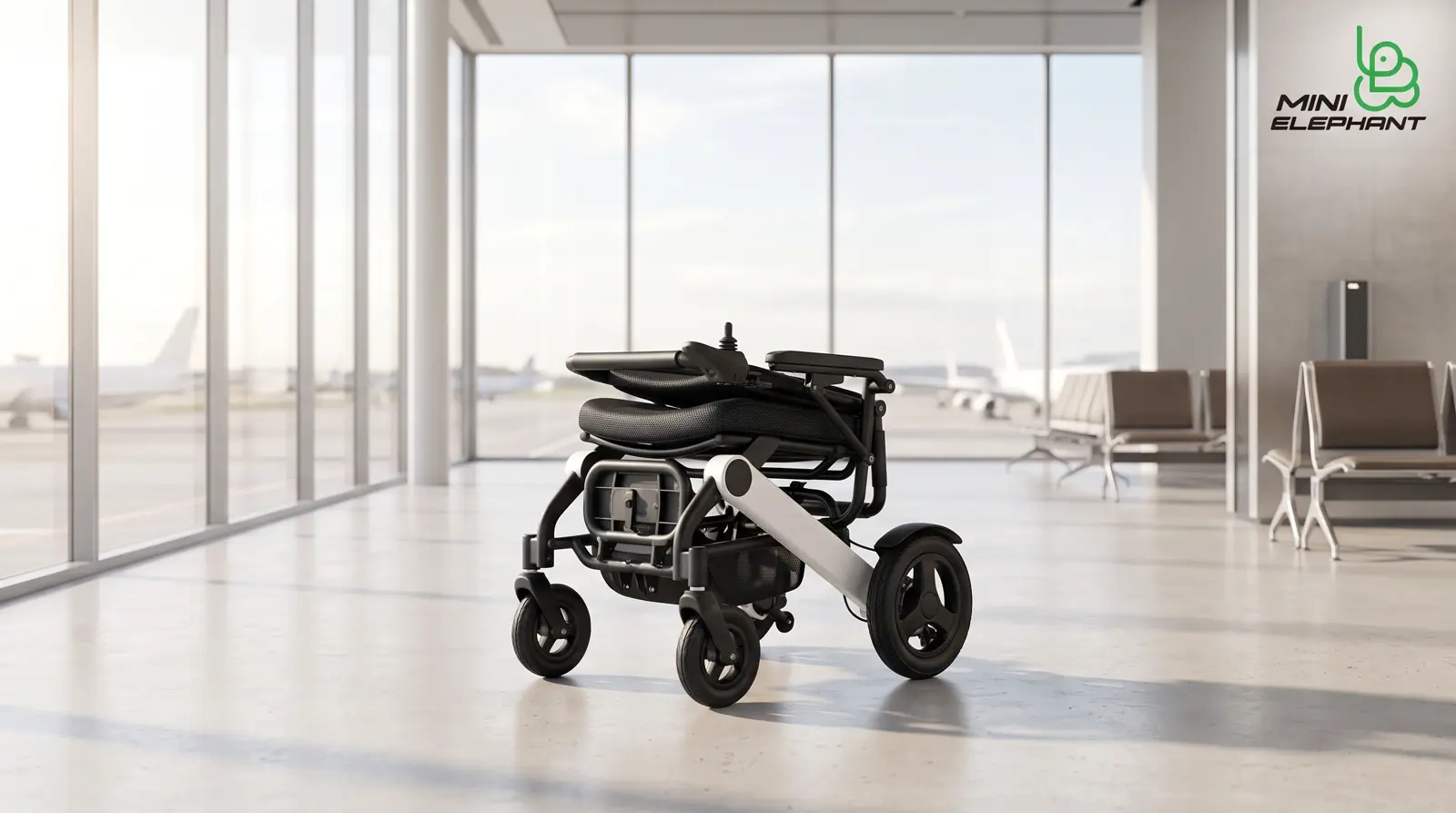
Flying with an Electric Wheelchair: What B2B Buyers Must Know
Air travel is one of the strongest growth drivers for lightweight folding electric wheelchairs — and one of the most misunderstood specifications in the catalog. Airlines apply strict rules to lithium batteries, and airport assistance teams handle wheelchairs at speed. For importers, a wheelchair that clears airline requirements opens a market segment competitors cannot reach: the travel mobility buyer. This guide covers the battery rules, the wheelchair specifications that matter, and what to verify before stocking travel-ready models.
The Travel Mobility Opportunity
Passenger numbers with reduced mobility are rising steadily. Airlines in every major region now report a growing share of requests for wheelchair assistance, and many carriers allow folding mobility aids to travel free of charge when checked at the gate or at check-in. For the end user, the decision is simple: a folding electric wheelchair that fits in a car trunk and clears airline battery rules replaces both a manual chair and a scooter on a single trip.
For distributors, this creates a clearly defined customer profile — the active senior or part-time wheelchair user who travels several times a year. These buyers are typically willing to pay a premium for portability, and they research specifications online before contacting a dealer. Airline-friendly models therefore generate strong search demand and high-quality leads.
Lithium Battery Rules for Air Travel
The critical limit is the battery's watt-hour (Wh) rating, not its voltage or capacity in amp-hours. The rules differ for batteries installed in the wheelchair versus spare batteries carried separately:
- Battery installed in the mobility aid. Up to 300Wh may be carried with airline approval; batteries above 300Wh generally require approval from the airline's head office, and some carriers refuse them entirely. Passengers must declare the wheelchair battery at booking or check-in, typically at least 48 hours before departure.
- Spare lithium batteries. Spares are normally limited to 100Wh each in carry-on luggage, with two 160Wh spares allowed only with airline approval. Spare batteries are never permitted in checked baggage, and terminals must be protected against short circuit.
- Documentation. Airlines commonly request the battery's UN38.3 test report and a material safety data sheet (MSDS). A manufacturer that provides these documents with each unit saves the distributor and the end user significant friction.
To calculate watt-hours, multiply voltage by amp-hours: a typical 24V, 16Ah lithium pack works out to roughly 384Wh, which places it above the 300Wh threshold and confirms why the removable-battery design and advance approval matter. Always check the exact rating printed on the battery label and confirm the policy with the target airline.
Why LiFePO₄ helps. Lithium iron phosphate chemistry is inherently more stable than other lithium chemistries, which is why several airlines are more accommodating with LiFePO₄-powered mobility aids. All MiniRedone models use removable 16Ah LiFePO₄ batteries with UN38.3 and MSDS documentation included.
Wheelchair Specifications That Matter for Air Travel
|---------------|----------------|------------------------|
The B2B Angle: Serving the Travel Segment
|--------|-------------|---------------|
The 42-47kg class has a decisive advantage here. Most competing lightweight electric wheelchairs weigh 50kg or more, which pushes them past the comfortable manual-handling limit for airport staff and increases the chance of handling damage. Lighter models with zero push resistance also let caregivers roll the chair through the terminal manually when needed.
Verification Checklist for Importers
1. Confirm the exact battery watt-hour rating and whether it exceeds 300Wh.
2. Verify the battery is removable without tools.
3. Request the UN38.3 test report and MSDS in advance — per battery model.
4. Measure folded dimensions against a standard sedan trunk (roughly 500L).
5. Confirm total weight including battery (not just the frame).
6. Ask for a one-hand folding demonstration video.
7. Check whether the manual-override mode has zero rolling resistance.
FAQ
Q: Can I take an electric wheelchair on a plane?
A: Folding electric wheelchairs can normally be checked at the gate or with baggage when the battery rules are met. The passenger must declare the battery watt-hour rating to the airline in advance, typically at least 48 hours before departure.
Q: What is the watt-hour limit for wheelchair batteries?
A: Batteries installed in a mobility aid up to 300Wh generally need airline approval; above 300Wh requires approval from the airline's head office. Spare batteries are limited to 100Wh each (two 160Wh spares with approval) and must travel in carry-on luggage.
Q: Do passengers need to remove the wheelchair battery?
A: Many airlines require removable batteries to be taken out and carried in the cabin. A tool-free removable battery makes this procedure simple and reduces the risk of the chair being held at check-in.
Q: What documents do airlines request for a wheelchair battery?
A: The UN38.3 test report and the material safety data sheet (MSDS) are the standard documents. Importers should ensure these accompany every unit and are available to end users on request.
Q: Why does total weight matter so much for air travel?
A: Airport staff handle wheelchairs manually between the gate, the aircraft hold, and baggage reclaim. Heavier units are harder to handle, more likely to be dropped, and more likely to be refused by handling teams that have weight limits.
The B2B Bottom Line
The travel segment rewards specifications that are hard to fake: real weight, real folded size, a removable battery with clean documentation, and a smooth manual-push mode. Distributors who stock airline-friendly models — and who can answer battery questions instantly — will capture a growing market of travelers who currently leave their wheelchairs at home. Verify the specifications above, keep the battery documentation ready, and the travel mobility segment becomes a reliable source of premium orders.
**Need airline-friendly electric wheelchair models for your market?** [Contact the MiniElephant export team](https://www.semwheelchair.com/contact) for weight and dimension sheets, battery documentation, and travel-case options.
Interested in MiniElephant Electric Wheelchairs?
Get a customized quotation and product recommendation from our export team. Response within 24 hours.