Electric Wheelchair Caster Wheel Comparison for B2B Buyers
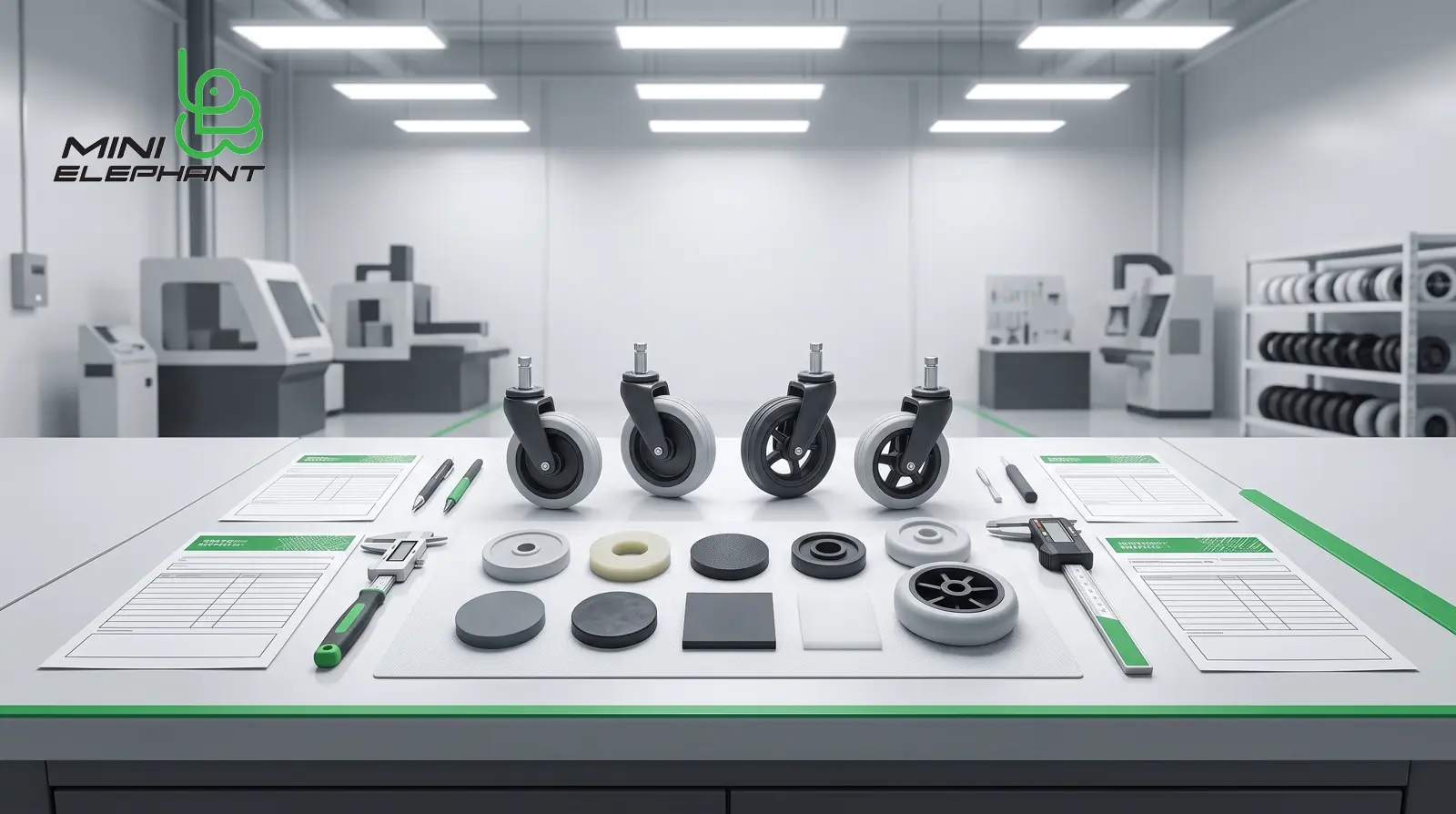
For B2B buyers, an electric wheelchair caster wheel is not a generic accessory. Its diameter, width, tire material, fork, axle, bearing arrangement, mounting height, and relationship to the drive wheels can affect the delivered configuration, parts plan, packaging, and service process. The correct comparison starts with the exact electric wheelchair model, not with a product photograph.
Why Caster Wheels Need a Configuration Record
A front caster is the smaller wheel assembly that guides an electric wheelchair while the driven wheels provide propulsion. It may look simple, but a visually similar caster can differ in fork geometry, wheel diameter, axle size, tire profile, bearing type, mounting hardware, and clearance around the frame or footrest. Those differences matter when an importer orders replacement parts or approves a revised production sample.
For every electric wheelchair model under review, ask the supplier to identify the caster-wheel assembly by the exact product configuration and, where available, its part number or assembly reference. Keep a record of the wheel dimensions, fork, axle, mounting point, tire material, compatible fasteners, service instructions, and any model or revision limitations. This creates a controlled reference for samples, production orders, receiving inspection, and after-sales support.
This guide is a commercial buying framework. It does not replace the electric wheelchair operating manual, approved service procedure, technical training, local requirements, or an individual suitability assessment.
Compare the Whole Caster Assembly, Not Just the Wheel
The wheel itself is only one part of the assembly. During an electric wheelchair sample review, document the full set of visible interfaces:
1. Wheel diameter and width: Measure the installed wheel using a repeatable method and record whether the tire is inflated, solid, or another documented construction.
2. Tread and material: Request the stated tire material and intended maintenance guidance. Do not turn a material description into an unsupported terrain, puncture, or durability guarantee.
3. Fork and swivel: Record the fork geometry, swivel housing, mounting dimensions, and clearance to the frame, footrest, battery enclosure, and nearby hardware.
4. Axle and bearings: Identify the wheel axle, bearing arrangement, spacers, washers, and fasteners as supplied on the approved electric wheelchair sample.
5. Mounting height: Check whether the installed caster position affects seat angle, ground clearance, footrest geometry, steering feel, folding, or product stability as described in supplier documentation.
A buyer should not assume that a caster from a different electric wheelchair, or even a visually similar production revision, can be substituted without supplier confirmation.
B2B Comparison Table: What to Request
| --- | --- | --- |
The table is an RFQ and sample-review tool, not a declaration that one design is universally better. The best caster-wheel arrangement depends on the exact electric wheelchair frame, wheelbase, drive system, seating package, intended operating conditions, and documented support plan.
Check the Caster on the Actual Electric Wheelchair
A loose caster on a bench cannot show every integration issue. Inspect the assembly on the approved electric wheelchair sample. Photograph the front, side, underside, and folded position where relevant. Record seat width, footrest configuration, tire type, drive-wheel size, and accessories fitted during the review.
Look for observable matters: whether the caster turns through its intended range without contacting a guard or footrest; whether cables and covers remain protected; whether the wheel is correctly seated; whether visible fasteners are complete; and whether the product remains within the supplier's stated setup. Do not loosen hardware, adjust bearings, change tire pressure, or modify a caster assembly outside the manufacturer's instructions.
If the electric wheelchair is a folding model, include the approved folding and storage sequence in the sample review. Confirm that the caster does not create an unexpected obstruction, and verify how the assembly is protected during packing and transport. A component that performs normally in a showroom may still need specific packaging protection for export handling.
Incoming Inspection and Dealer Stocking
For each shipment, compare a selected sample of caster assemblies against the approved record. Check the correct model, wheel size, tire finish, fork, hardware, visible condition, packaging, and any part identification agreed in the purchase specification. Separate a damaged, incomplete, or uncertain assembly from stock and use the supplier's service channel rather than fitting it to an electric wheelchair as a trial.
A practical dealer parts plan distinguishes between a complete caster assembly and approved service components. Ask whether wheels, tires, bearings, forks, axles, spacers, or fasteners are supplied separately; what the compatibility conditions are; and what records the dealer should retain. A clear list avoids replacing one visible part while leaving an incompatible interface in place.
Questions to Add to Your Electric Wheelchair RFQ
Before approving an electric wheelchair order, include these questions:
- What caster-wheel assembly is supplied on the quoted model and configuration?
- Which dimensions, tire construction, mounting hardware, and part references are documented for that assembly?
- Which electric wheelchair models or revisions are compatible with the proposed replacement assembly?
- What inspection, cleaning, adjustment, and replacement procedures are approved?
- How should the caster assembly be protected in export packaging?
- Which complete assemblies and service components can be ordered for dealer stock?
- How will a change in wheel, fork, bearing, tire, or mounting hardware be communicated before production?
A specific written answer is more valuable than a broad standard-configuration statement. It lets the buyer align the approved sample, purchase order, catalogue, spare-parts list, and incoming inspection procedure around the same electric wheelchair configuration. For every electric wheelchair order, retain the approved caster record with the production documents.
Practical Conclusion for Importers
A dependable electric wheelchair caster-wheel comparison is about traceability. Document the complete assembly, inspect it on the actual product, define approved service boundaries, and plan replacement support before the first shipment. That process helps dealers give their teams a clear reference without making unsupported performance or safety promises for each electric wheelchair configuration.
MiniElephant can discuss configuration details and wholesale enquiries for its MiniRedone folding electric wheelchair range. Request the exact product information, sample configuration, and service-part references relevant to your intended market before confirming an electric wheelchair order. Contact the MiniElephant export team for a product or quotation discussion.
Interested in MiniElephant Electric Wheelchairs?
Get a customized quotation and product recommendation from our export team. Response within 24 hours.