Electric Wheelchair Compliance Guide 2026: CE, FDA, and ISO Standards for B2B Importers
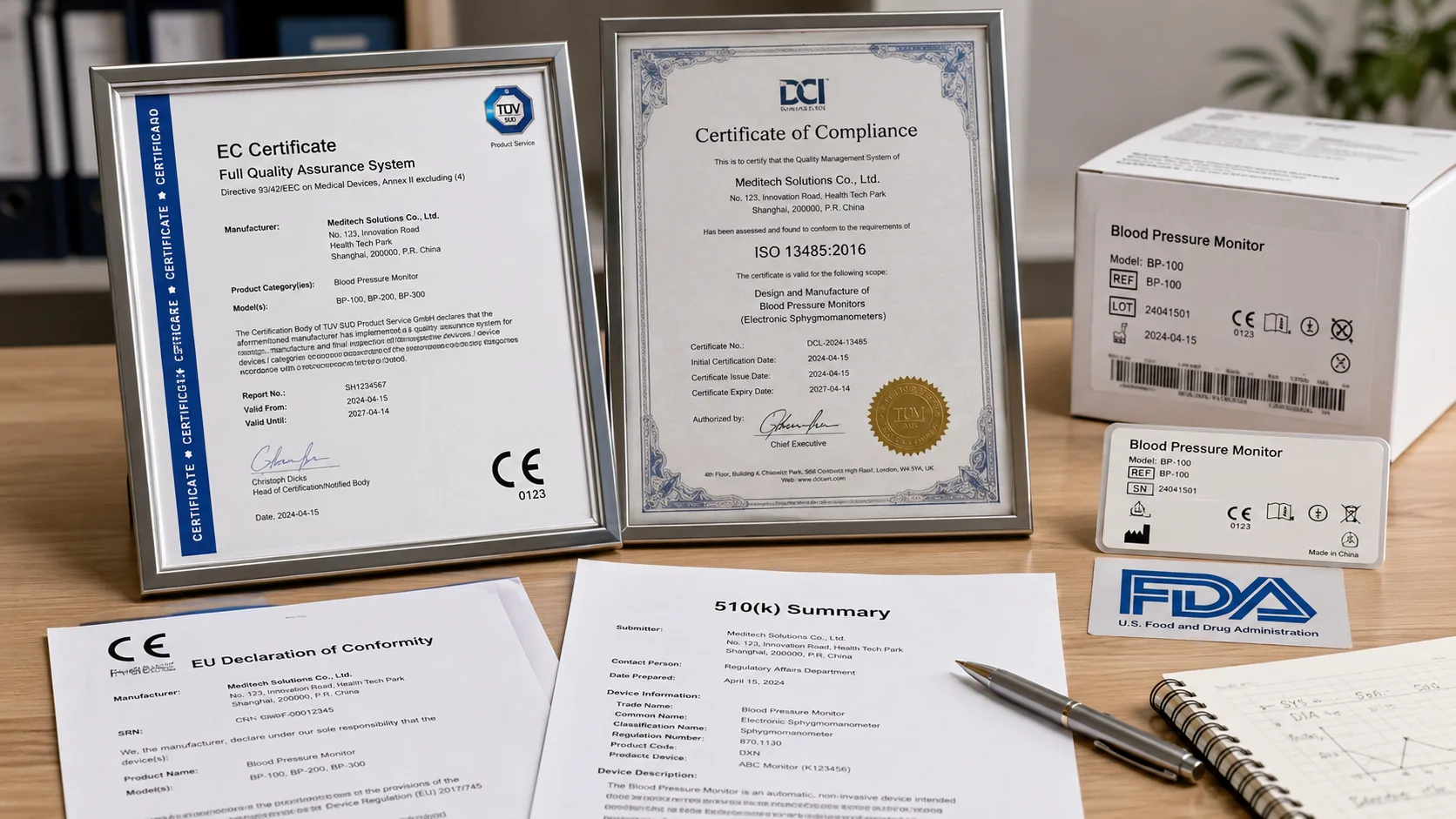
Why Certification Determines Market Access
For B2B importers of electric wheelchairs, product certification is not optional paperwork — it is the gatekeeper that determines which markets you can enter, how fast you can launch, and how defensible your product positioning is against competitors.
In 2026, the regulatory landscape continues to evolve, with tighter medical device classification in the EU, FDA registration process updates in the United States, and growing harmonization across Asia-Pacific markets. This guide provides a structured overview of the certification landscape for B2B importers sourcing electric wheelchairs.
Certification Quick Reference
|-------------------------|--------|---------------|---------------------------|
EU Market: CE Marking Under MDR
Since the EU Medical Device Regulation (MDR) 2017/745 replaced the earlier MDD directive, certification requirements for electric wheelchairs have become more stringent.
Classification:
Electric wheelchairs are classified as Class I medical devices under MDR (the lowest risk class). This means:
- Self-declaration of conformity is possible, but requires comprehensive technical documentation
- ISO 13485 quality management system is strongly recommended (not legally required for Class I, but demanded by buyers)
- A Post-Market Surveillance (PMS) plan must be in place
- EU Authorised Representative is required for non-EU manufacturers
Technical Documentation Requirements:
|----------|---------|
**Important for B2B importers:** If you import under your own brand (OEM), you are considered the "manufacturer" under MDR and bear responsibility for CE compliance. If you import under the manufacturer's brand, the original manufacturer maintains CE responsibility — but you should always verify and request their DoC.
US Market: FDA Requirements
The US Food and Drug Administration regulates electric wheelchairs as medical devices.
Registration Pathway:
1. Establishment Registration — Every facility that manufactures or imports medical devices must register annually
2. Device Listing — Each device model must be listed with the FDA
3. 510(k) Pre-Market Notification — Required for powered wheelchairs classified under Product Code ITI (Class II). A 510(k) submission demonstrates that your device is "substantially equivalent" to a legally marketed predicate device
4. Quality System Regulation (QSR) — Equivalent to ISO 13485, covering design controls, production, and post-market surveillance
Timeline for importers:
|------|---------------|
Pro tip: The most common FDA pitfall for new importers is failing to designate a US agent. Every foreign device manufacturer must name a US-based agent for FDA communications.
ISO 13485: The Universal Baseline
While not legally mandated in all markets, ISO 13485 certification is increasingly expected by institutional buyers worldwide.
What ISO 13485 covers:
- Design control processes
- Document and record management
- Supplier management and incoming inspection
- Production and process controls
- Non-conformance and corrective action (CAPA)
- Customer feedback and post-market surveillance
Why it matters for B2B importers:
- Hospitals, care homes, and government tenders often require ISO 13485 certification as a pre-qualification criterion
- It reduces the burden of individual customer audits — one certification satisfies most buyers
- It signals manufacturing maturity and quality commitment
All MiniElephant wheelchairs are manufactured under an ISO 13485-certified quality management system.
Battery-Specific Certifications
Electric wheelchair batteries require their own set of certifications:
|-------------|-------------|----------|
Demand full battery certification documentation before placing your first order. Delays in battery certification are one of the most common shipment hold-ups for first-time importers.
Market-Specific Requirements
|--------|----------------|-------|
Checklist for B2B Importers
Before signing a supply agreement, verify that your manufacturer provides:
- [ ] CE Declaration of Conformity (current, not expired)
- [ ] FDA Establishment Registration Number and Device Listing
- [ ] ISO 13485 Certificate (valid, with scope covering electric wheelchairs)
- [ ] UN38.3 Test Report (valid, matching your battery model)
- [ ] IEC 62133 Test Report (valid)
- [ ] ISO 7176 Test Reports (stability, braking, structural)
- [ ] User manuals in your target market language
- [ ] Service/repair manuals in English
- [ ] Labeling compliance with your market's requirements (CE mark, UDI, symbols)
The MiniElephant Commitment
Every MiniRedone electric wheelchair ships with:
- CE marking under EU MDR (Class I self-declaration with full technical documentation)
- FDA establishment registration and device listing
- ISO 13485-certified manufacturing quality system
- UN38.3, MSDS, and IEC 62133 battery certificates
- ISO 7176 safety test reports
- OEM/ODM certification support for distributor-branded products
**Request our certification package:** [www.semwheelchair.com/contact](https://www.semwheelchair.com/contact) — we provide full technical documentation and certification support for B2B partners.
Interested in MiniElephant Electric Wheelchairs?
Get a customized quotation and product recommendation from our export team. Response within 24 hours.