Electric Wheelchair Comfort: Reclining vs Standard Models
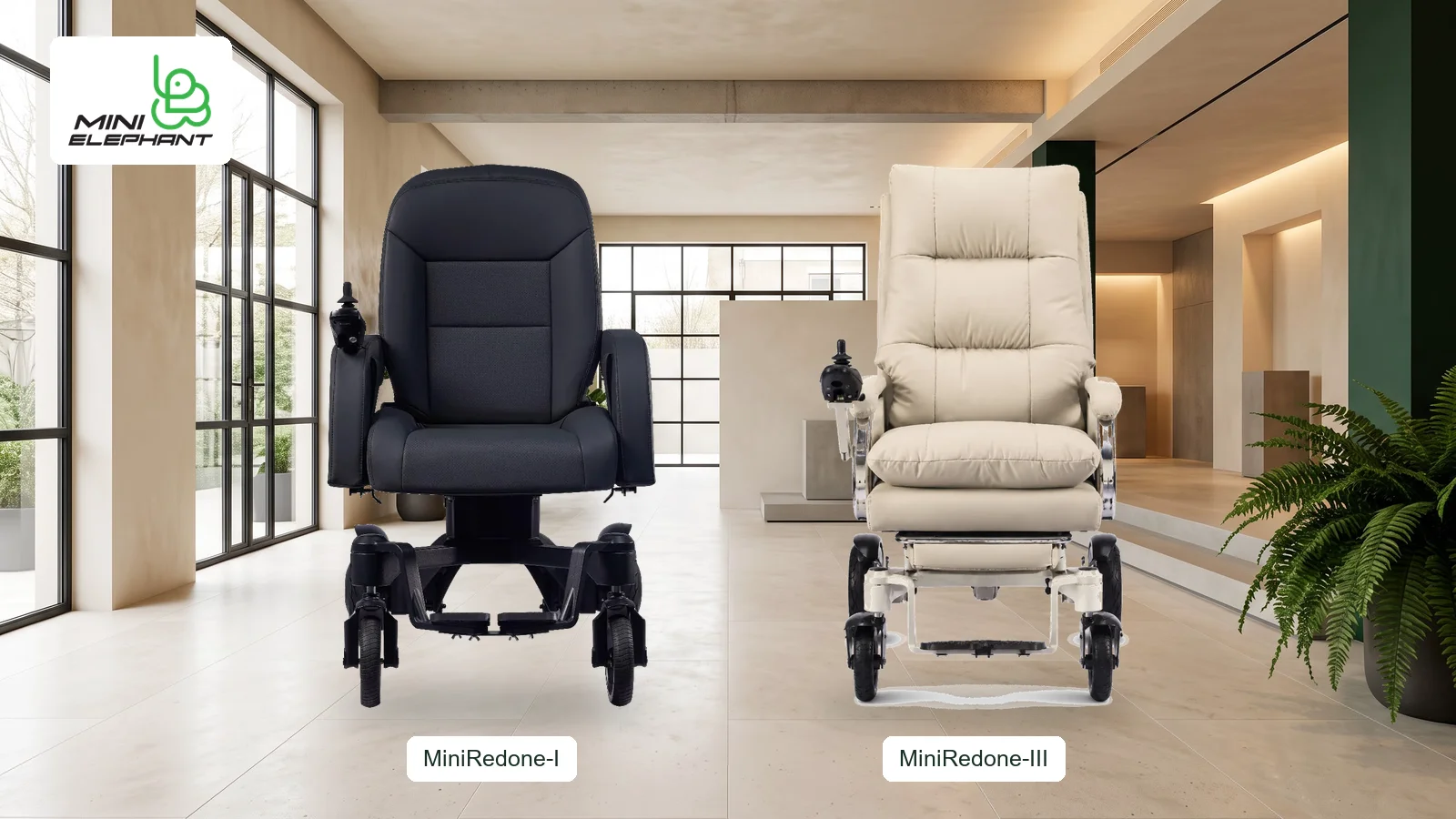
A reclining electric wheelchair is not automatically more comfortable than a standard model. Start with the seat, backrest, armrests and controls; then decide whether a documented backrest-recline option adds useful flexibility. For MiniElephant buyers, MiniRedone-III lists an optional reclining backrest, while MiniRedone-I provides a standard-model comparison. Confirm the exact supplied configuration before ordering.
Choosing an electric wheelchair is a whole-product decision, not a search for the longest feature list. A high backrest can feel different from a lower one, but height alone does not establish fit. A softer cushion can look luxurious without being right for every rider. Likewise, the word “reclining” does not tell a buyer how a mechanism works, which positions are permitted, or whether it is included in the quotation.
This electric wheelchair guide compares standard seating with optional backrest recline from a practical buyer perspective. It is a product-selection framework, not a clinical recommendation or a claim that either design prevents pressure injuries. Individual seating needs should be discussed with an appropriate professional where necessary.
What Is a Reclining Electric Wheelchair?
A reclining electric wheelchair changes the angle between the backrest and seat through a specified adjustment mechanism. The mechanism may be manual or powered, depending on the product. The adjustment range, locking method and permitted uses must come from the manufacturer's documentation, not from a photograph.
A standard electric wheelchair, as used in this comparison, is a model supplied without a confirmed reclining-backrest configuration. “Standard” does not necessarily mean basic cushioning, low quality or no adjustment anywhere else. It also does not prove that every part is fixed: armrests, footrests or accessories may have their own model-specific arrangements.
Recline is different from tilt-in-space. Recline changes the seat-to-backrest relationship; tilt-in-space changes the orientation of the seating assembly while generally maintaining that relationship. A reclining backrest does not establish that tilt-in-space, powered leg-rest elevation or a lie-flat position is available.
Electric Wheelchair Comfort: Compare the Whole Seating System
Before selecting an electric wheelchair with extra movement, compare the everyday contact points and the environment in which it will be used.
| --- | --- | --- | --- |
An electric wheelchair can have premium finishes with standard seating, or a reclining backrest with a configuration that still needs careful review. Evaluate what the person will actually touch and operate, rather than using one optional feature as a shortcut for comfort.
MiniRedone-I vs MiniRedone-III: A Model-Specific Starting Point
The MiniRedone-I electric wheelchair is a useful standard-model starting point. Its published product information describes a magnesium alloy frame, modular seating and a folding design. The listed features do not establish a reclining-backrest option for that quoted configuration.
The MiniRedone-III electric wheelchair is presented as a premium high-back model. Its feature list includes seat and back cushioning, a headrest, and a reclining backrest option. “Option” matters: buyers should ask whether that mechanism is included in the specific sample, quotation and production order.
| --- | --- | --- |
These are published catalogue values, not measurements of every possible option combination. For an electric wheelchair order, request the current specifications for the actual supplied assembly. Overall height and overall width must not be treated as usable seat dimensions or anatomical backrest measurements.
The two listed weights also show why generic assumptions are unreliable. It would be incorrect to claim that every reclining electric wheelchair is heavier than every standard model. Optional equipment can change the supplied specification, so compare like-for-like configurations instead.
When Should a Buyer Consider Backrest Recline?
Consider an electric wheelchair with a documented reclining option when backrest-position flexibility is a clearly stated requirement and the approved configuration fits the intended use. A dealer demonstration should explain the mechanism, its controls and the manufacturer's operating restrictions without promising individual outcomes.
Before selecting a reclining electric wheelchair, ask:
- Is the adjustment manual or powered in this exact quotation?
- Which positions are documented, and how are they locked?
- What clearance is required behind the chair?
- Are any positions restricted to stationary use?
- Does the headrest or footrest require separate adjustment?
- Which parts are needed for inspection, maintenance or replacement?
Do not assume a reclining electric wheelchair can be driven safely in every backrest position. Follow the current model instructions. Likewise, a photograph showing an upright backrest does not demonstrate the full adjustment range or prove that a mechanism is absent.
When Can Standard Seating Be the Better Choice?
A standard electric wheelchair is a reasonable shortlist candidate when its verified seating configuration meets the requirement and there is no defined need for backrest recline. It can offer premium materials and a considered seating design without adding a movement mechanism that the buyer has not requested.
Compare standard electric wheelchair models by cushion feel, documented seat fit, control access, upholstery care and storage dimensions. For users or purchasing teams prioritizing a straightforward configuration, a well-matched standard seat may be preferable to an unverified reclining option.
This is not an argument that standard seating is universally safer, cheaper or easier to repair. Those comparisons require product-specific evidence. A buyer should approve a complete configuration rather than relying on either category label.
A Practical Electric Wheelchair Demonstration Checklist
Use the same assessment sequence for both candidates. Keep the sample stationary for backrest adjustment unless the instructions explicitly permit otherwise. Individual transfers and seating assessments should follow appropriate guidance.
1. Identify the sample. Record model, selected seat, accessories and optional mechanisms.
2. Review the contact surfaces. Compare the cushion, backrest, armrests and footrest arrangement without claiming therapeutic effects.
3. Check control access. Establish whether the intended operator can use the supplied controls appropriately.
4. Review the recline demonstration. Where supplied, observe adjustment, locking and clearance according to the manual.
5. Check storage. Use the documented folding procedure and measure the actual approved sample.
6. Record the configuration. Retain photos, the configuration sheet and any unresolved questions before purchase.
For a distributor selecting an electric wheelchair range, document the distinction between included features and optional ones in sales materials. The catalogue, showroom sample and order confirmation should describe the same assembly.
Frequently Asked Questions
Is a reclining electric wheelchair always more comfortable?
No. Comfort depends on seat fit, cushioning, backrest arrangement, controls and individual requirements. Recline adds an adjustment function, not a universal comfort guarantee.
Does MiniRedone-III include a reclining backrest as standard?
The published feature list identifies a reclining backrest option. Confirm its inclusion, mechanism and specifications in the model-specific quotation before ordering.
Is backrest recline the same as tilt-in-space?
No. Recline changes the seat-to-backrest angle. Tilt-in-space changes the orientation of the seating assembly. One function must not be advertised as the other.
Can a reclining electric wheelchair also fold?
Some configurations may combine these features, but the exact folding procedure, supplied accessories and folded dimensions must be confirmed. MiniRedone-III lists folded dimensions; optional configurations still need verification.
Which model should a dealer demonstrate first?
Start with the buyer's stated requirements. Compare MiniRedone-I as a base-model reference and MiniRedone-III as a high-back reference, then demonstrate optional recline only when it is present on the sample.
Compare a Documented Configuration, Not a Comfort Slogan
A premium electric wheelchair should be evaluated as a complete product. The best shortlist is the one supported by clear specifications, an appropriate sample review and an accurate explanation of included and optional features.
Explore MiniElephant electric wheelchair models, or contact the team with your seating requirements and requested configuration. MiniElephant is the brand of Jiaxing Small Elephant Medical Technology Co., Ltd. For a model-specific enquiry, email johnson@semwheelchair.com or contact Johnson via WhatsApp at +86 13819098967.
*Source basis: current MiniElephant product information for MiniRedone-I and MiniRedone-III. Configuration availability and operating instructions must be confirmed for the exact supplied model. Product photographs illustrate appearance, not a demonstrated recline position.*
*Image disclosure: actual MiniRedone product photographs composited on an illustrative showroom background; the image does not demonstrate a reclining position.*
Interested in MiniElephant Electric Wheelchairs?
Get a customized quotation and product recommendation from our export team. Response within 24 hours.