Electric Wheelchair Factory Audit Checklist for B2B Buyers
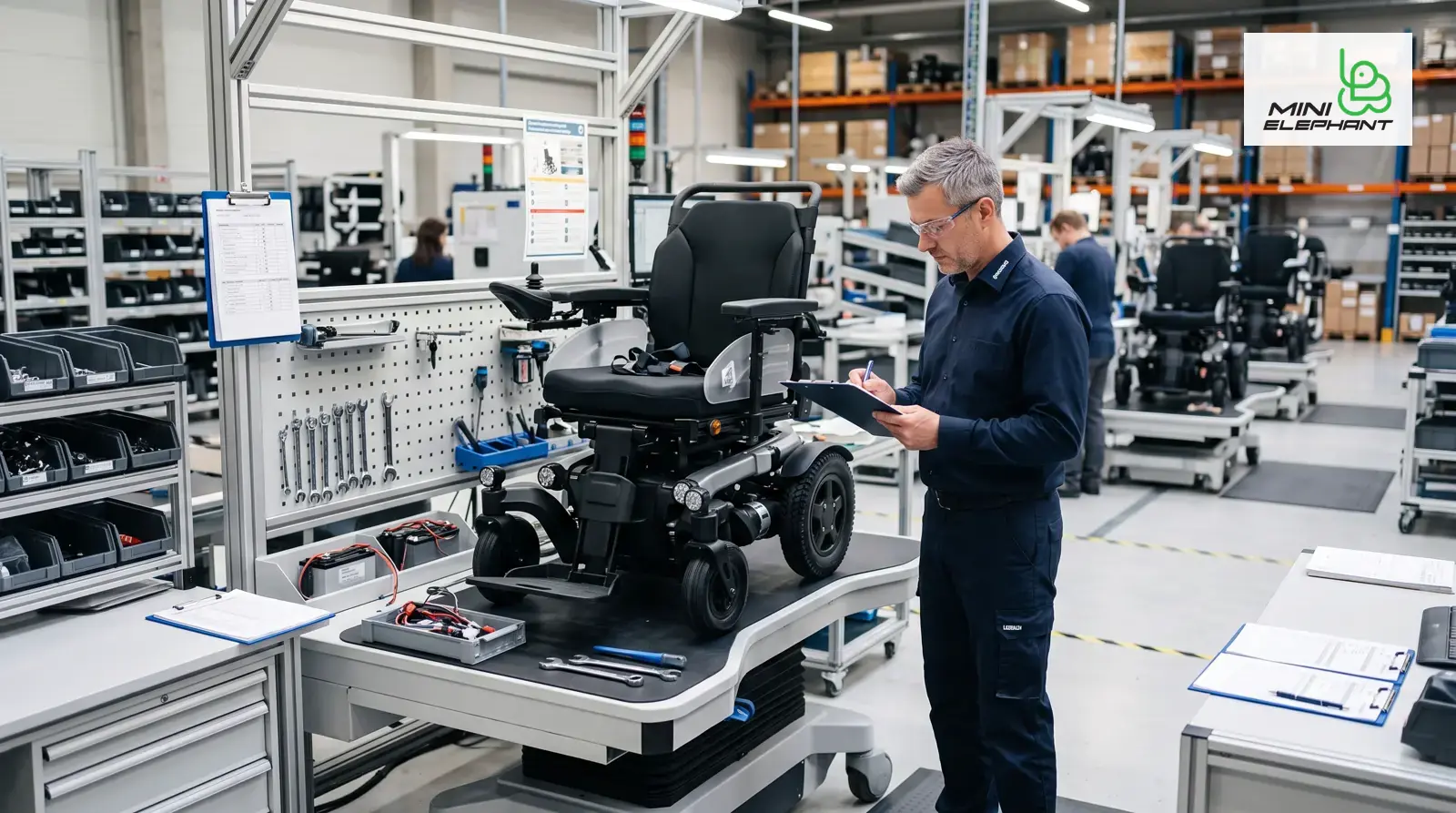
Electric Wheelchair Factory Audit: What B2B Buyers Should Check
A factory audit should verify how a supplier works, not simply how a showroom looks. When an importer evaluates an electric wheelchair manufacturer, the goal is to connect the product sample, production process, quality records, packaging, and export documents into one reliable picture.
This electric wheelchair factory audit checklist is designed for distributors, importers, and OEM/ODM buyers. It focuses on evidence that can be reviewed during a visit, a video audit, or a structured supplier assessment. It does not replace any product-specific regulatory or shipping review required in the buyer's market.
1. Confirm the Supplier and Product Scope
Start by recording the legal company name, factory address, contact person, brand, product series, and the models included in the quotation. Confirm whether the site is a production facility, an office, a trading location, or a combination of these.
The audit scope should identify:
- the exact electric wheelchair models under review;
- the approved sample and its configuration;
- frame, seat, wheel, controller, charger, and battery options;
- the documents the supplier can provide for the shipment;
- the intended sales channel and target market;
- the person responsible for quality and after-sales communication.
Keep a dated copy of the product specification and quotation. An audit is difficult to use if the factory visit covers one configuration while the order later changes to another.
2. Review the Production Flow
Walk through the production flow from incoming parts to assembly, inspection, packing, and finished-goods storage. The route should be understandable and consistent with the products being quoted. Ask how materials are identified before they reach the assembly station and how nonconforming parts are separated.
For an electric wheelchair factory, review the areas related to:
1. frame and structural parts;
2. drive motors, wheels, brakes, and folding mechanisms;
3. seats, cushions, armrests, and footrests;
4. controller, joystick, wiring, and connectors;
5. charger and battery configuration;
6. final function inspection;
7. packaging and shipment preparation.
The purpose is not to judge a factory by the number of machines alone. It is to see whether the supplier has a controlled, repeatable path for the complete product.
3. Check Incoming-Part Identification
Ask how incoming components are checked, labeled, and stored. Parts that look similar may not be interchangeable. Model numbers, connector types, wheel sizes, seat options, and charger specifications should be traceable to the approved configuration.
Useful questions include:
- How are different model options separated?
- How are rejected parts marked and isolated?
- Can the factory trace a component to a supplier batch or incoming record?
- How are revisions communicated to production staff?
- What happens when a requested part is unavailable?
The answers should be supported by labels, records, work instructions, or a clear operating practice rather than only verbal assurances.
4. Inspect Assembly and Process Controls
Observe whether workers use defined tools, fixtures, torque procedures, wiring routes, and inspection points. Check that folding joints, fasteners, wheel axles, brakes, armrests, and footrests are assembled consistently across samples.
For the electrical system, review cable routing, connector engagement, insulation, controller mounting, joystick operation, charger matching, and battery retention. Do not approve a product only because it powers on. A complete check should include folding, braking, steering response, freewheel operation, charging connection, and the functions listed in the approved specification.
If the factory uses work instructions, ask how updates are controlled. A revised product should not depend on one worker remembering a verbal change.
5. Review Final Inspection Records
Request a blank or recent final inspection form that matches the electric wheelchair model being considered. The form should identify the model and provide space for the relevant checks, result, date, and inspector.
A useful record may cover:
|---|---|
Ask how failed units are handled. A credible quality process should show what happens after a defect is found, who approves rework, and how the unit is rechecked before release.
6. Compare the Sample With the Production Unit
Bring the approved sample, specification sheet, photographs, or signed configuration record into the audit. Compare the production unit against that reference rather than evaluating each item from memory.
Pay attention to details that are easy to change between samples:
- seat material and cushion thickness;
- joystick position and cable length;
- tire type and wheel finish;
- armrest and footrest design;
- frame color and surface treatment;
- charger plug and label;
- battery enclosure and connector;
- included accessories and user documentation.
Record any difference as an open point. Do not assume a difference is acceptable until the buyer and supplier agree in writing.
7. Audit Packaging and Traceability
Inspect a fully packed electric wheelchair if possible. Check internal supports, protection around the joystick, wheel restraint, carton strength, accessory placement, carton marks, and pallet stability. The package should protect the product while allowing safe unpacking without cutting near sensitive components.
Confirm how the factory links the unit, carton, serial number, model, quantity, and packing list. For mixed-model orders, clear carton identification reduces receiving errors. For OEM/ODM orders, review the approved artwork and label version before mass packing.
8. Verify Documents and Communication
Ask for the documents relevant to the quoted configuration and target market. Depending on the transaction, this may include specifications, manuals, packing lists, invoices, inspection records, and applicable transport information. Never assume that a document for one model or battery configuration covers another.
Also assess communication during the audit. Can the supplier answer technical questions clearly? Are action items assigned to a named person? Are changes, defects, and shipment decisions recorded? Good communication is an operating capability that matters after the purchase order is signed.
9. Review After-Sales Readiness
Ask how the supplier handles installation questions, spare-parts requests, troubleshooting, warranty discussions, and product feedback. Request a parts identification method and a process for sending photographs, videos, serial numbers, and fault descriptions.
Do not accept unsupported promises about response time, warranty coverage, replacement quantities, or service territory. Instead, record the terms that are actually agreed in the quotation, purchase order, or after-sales document.
10. Write a Risk-Based Audit Result
Separate findings into critical, major, minor, and observation categories. A missing safety-related record or an unexplained product mismatch should receive more attention than a cosmetic improvement. Every corrective action should have an owner, deadline, evidence requirement, and recheck method.
The final report should include:
- audit date and participants;
- factory and product scope;
- evidence reviewed;
- photos linked to findings;
- open questions and risks;
- agreed corrective actions;
- approval status and next review date.
Final B2B Checklist
Before approving an electric wheelchair factory, confirm that you have reviewed the supplier identity, production flow, incoming-part control, assembly process, final inspection records, approved sample, packaging, documents, communication, and after-sales process. The audit should produce evidence and open actions, not only a positive impression.
For MiniRedone model comparisons, sample requests, and export discussions, contact the MiniElephant team with your target model and market requirements.
Interested in MiniElephant Electric Wheelchairs?
Get a customized quotation and product recommendation from our export team. Response within 24 hours.