Electric Wheelchair for Home: Doorways, Tables and Daily Use
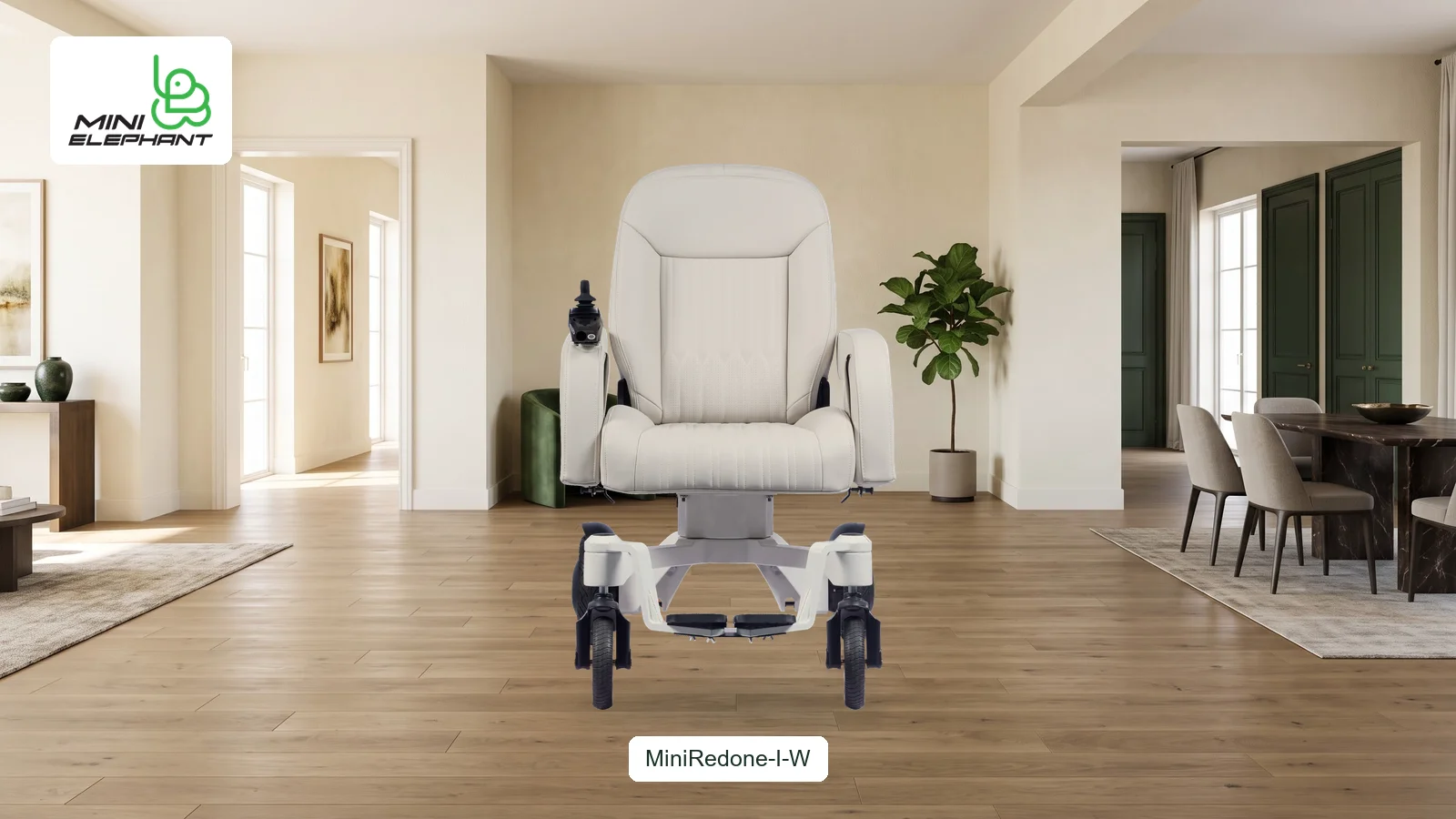
The right electric wheelchair for home must work with both the person and the rooms they use. Before choosing a model, check clear doorway openings, turning space, table clearance, seating preferences and a suitable charging location. A folding feature or an attractive photograph does not establish that a chair will fit your home.
Premium home mobility is about more than appearance. It is the everyday experience of approaching the dining table, moving between rooms and finding a comfortable place to pause. An electric wheelchair should be assessed as part of that routine, not selected solely by its motor rating or advertised range.
This guide gives families and dealers a practical measurement and demonstration checklist. It does not replace an individual seating assessment, a home-access assessment or the instructions for the exact supplied model.
Start with your electric wheelchair routine, not a catalogue filter
Write down the places you use most: the entrance, bedroom, living room and dining area. Include the route between them. A spacious room is not useful if its entrance has a tight corner or a door that cannot open fully.
For an electric wheelchair used at home, identify where you approach furniture, reverse, stop and change direction. Note whether doors must be opened or closed while seated. Also consider where other household members walk and where pets, cables or movable furniture may enter the route.
Choose the electric wheelchair configuration around the person's requirements and these actual tasks. Do not assume a compact-looking frame guarantees comfortable access, and do not compromise necessary seating support merely to match a floor-plan measurement.
Measure clear door openings for an electric wheelchair
Measure the usable opening with the door in its realistic open position. The nominal door size is not the same as the clear space available between the door leaf, frame and other obstructions. Handles, stops and hinges can reduce the route.
Compare that opening with the electric wheelchair's verified overall operating width in the ordered configuration. Include anything projecting beyond the main frame, such as the controller or an approved accessory. Ask the supplier for a dimensioned drawing when the catalogue labels are unclear.
A doorway check is not simply a subtraction exercise. The approach angle, the user's hands and elbows, control access and any changes in direction also matter. There is no single clearance allowance that guarantees safe passage for every person and every layout.
Do not use folded electric wheelchair width as proof of occupied doorway access. Folded measurements describe a storage configuration, not necessarily the chair as driven.
Check electric wheelchair turning space along the complete route
Check corners outside rooms as carefully as the rooms themselves. A narrow hallway followed by a right-angle entrance can be more restrictive than a straight doorway. Furniture legs and open cupboard doors also affect the path.
An electric wheelchair turning-radius claim needs context. Ask how the measurement was obtained and which parts of the chair were included. A catalogue value is not a guarantee that a person can complete every turn in a furnished home.
Where feasible, arrange an electric wheelchair demonstration in the intended environment or a representative measured layout. Use the supplied configuration and follow the operating instructions. Keep the route clear and use supervision appropriate to the situation; a dealer demonstration is not permission to attempt an unsafe manoeuvre.
Record where repeated repositioning is required. A layout may be technically passable while remaining inconvenient for daily use. That distinction matters when comparing premium models.
Will an electric wheelchair fit at the dining table?
Tabletop height alone does not answer the question. Measure the lowest underside obstruction, including aprons, drawers and support rails. Check the space between the legs and the depth available before the chair or foot supports meet an obstruction.
For electric wheelchair table access, compare these measurements with the actual seat-and-cushion configuration, armrest position, controller placement and the person's needs. Do not infer occupied seat height from a photograph or a dimension labelled ambiguously in a specification sheet.
Ask the supplier to demonstrate the intended approach. Adjustable or removable parts should be used only as permitted by the model instructions. Never assume that an armrest can be lowered or removed, or that relocating a controller is an approved user adjustment.
A suitable electric wheelchair dining arrangement should leave the person able to use the controls and leave the table appropriately. An attractive staged image does not establish that result. If the fit is uncertain, have the chair and furniture arrangement assessed before ordering.
Electric wheelchair seating: comfort is configuration-specific
Consider the seat, backrest, armrests, foot supports and controller together. Upholstery appearance and a soft-looking cushion do not prove individual comfort, appropriate support or suitability for prolonged sitting.
For an electric wheelchair comparison, ask which seating options are actually available on the selected model, what is included in the quotation and what changes the external dimensions. Confirm whether a sample represents the configuration being ordered.
The MiniRedone-I and MiniRedone-I-W listings describe a magnesium-alloy frame platform and modular seating options. Those are starting points for a configuration discussion, not a guarantee that every seat style fits every user or every order.
View the MiniRedone-I electric wheelchair and MiniRedone-I-W electric wheelchair, then request confirmation of the relevant operating dimensions and seating details. Where needed, involve a qualified professional in the individual assessment.
Floors, thresholds and electric wheelchair control indoors
Look at the actual surface conditions: loose rugs, slippery patches, cables, uneven transitions and wet areas. Remove avoidable hazards rather than assuming the chair can compensate for them. A published obstacle figure does not establish that every household threshold can be crossed safely.
Confirm the electric wheelchair instructions for surface conditions and any permitted threshold approach. Do not improvise portable ramps, use unsupported slopes or treat powered mobility as suitable for stairs.
Indoor electric wheelchair control should be demonstrated at a suitable permitted setting, following the instructions. Ask how the chair starts, slows and stops and whether an authorised adjustment is needed. Do not assume every controller supports the same settings or that a slower setting eliminates risk.
Bathrooms and wet rooms require particular attention to the environment and the manufacturer's limitations. A home-use description is not a waterproofing claim.
Plan electric wheelchair parking, charging and storage
Choose a location that does not block an escape route or create a trip hazard. Follow the supplied charger and chair instructions, including the specified environment and connection procedure. Keep cables out of circulation paths and use only the approved compatible charging equipment.
Electric wheelchair parking space is different from manoeuvring space. Check that the person can approach and leave the location appropriately, and that assistance can be provided when needed. Ask for the correct parking and power-off procedure rather than assuming it from another model.
If folding electric wheelchair storage is part of the routine, confirm who performs the task and what handling is involved. Folding does not make a substantial chair suitable for everyone's lifting ability. Verify permitted storage orientations and do not rest the chair on unapproved components.
Your electric wheelchair home assessment checklist
Before making a final choice, collect the following information:
- Clear doorway openings with doors positioned as they will be used.
- Hallway corners and the approach space outside each important room.
- Table underside clearance, leg spacing and usable approach depth.
- The exact chair configuration, including cushions, controller and accessories.
- Verified operating dimensions, not just folded dimensions.
- Floor transitions and hazards requiring removal or assessment.
- A suitable parking and charging location under the supplied instructions.
- Any unanswered seating, assistance or home-access questions.
Ask the electric wheelchair dealer to record what was demonstrated and what remains unverified. Keep an illustrative photo separate from evidence of a measured fit. This helps the household, dealer and manufacturer discuss the same configuration.
Frequently asked questions
What doorway width does an electric wheelchair need?
It depends on the verified operating width, projecting components, approach angle and the person's requirements. Measure the clear opening and arrange an appropriate demonstration or assessment; there is no universal doorway figure for all chairs.
Can I use folded dimensions to judge home access?
No. Folded dimensions describe storage. Occupied access requires the operating dimensions of the supplied configuration and a check of the complete route.
Will every electric wheelchair fit under a dining table?
No. Underside rails, table legs, armrests, cushions, foot supports and controller position can all affect the approach. Compare actual measurements and demonstrate the intended arrangement.
Does a premium electric wheelchair guarantee comfortable seating?
No. Materials and finish do not establish individual suitability. Assess the complete seating configuration and seek professional input where appropriate.
Can an electric wheelchair be charged anywhere indoors?
No. Use the approved charger and follow the chair and charger instructions for location, connections and environmental conditions. Do not block routes or leave cables where they create hazards.
Choose a home routine that works in practice
A good electric wheelchair for home combines the person's requirements with verified access, furniture fit and practical daily procedures. Begin with a measured route and a configuration-specific demonstration, then compare models using the same evidence.
Explore the MiniRedone electric wheelchair range or contact MiniElephant with your doorway and table measurements. Jiaxing Small Elephant Medical Technology Co., Ltd can clarify current model specifications and available configurations; individual suitability and home-access decisions require the appropriate assessment.
Image disclosure: actual MiniRedone product photography composited on an illustrative residential background. Furniture and doorways are not measured examples, and the image does not prove accessible clearance or table compatibility.
Interested in MiniElephant Electric Wheelchairs?
Get a customized quotation and product recommendation from our export team. Response within 24 hours.