Electric Wheelchair Frame Materials: Magnesium vs Aluminum vs Steel for B2B Importers
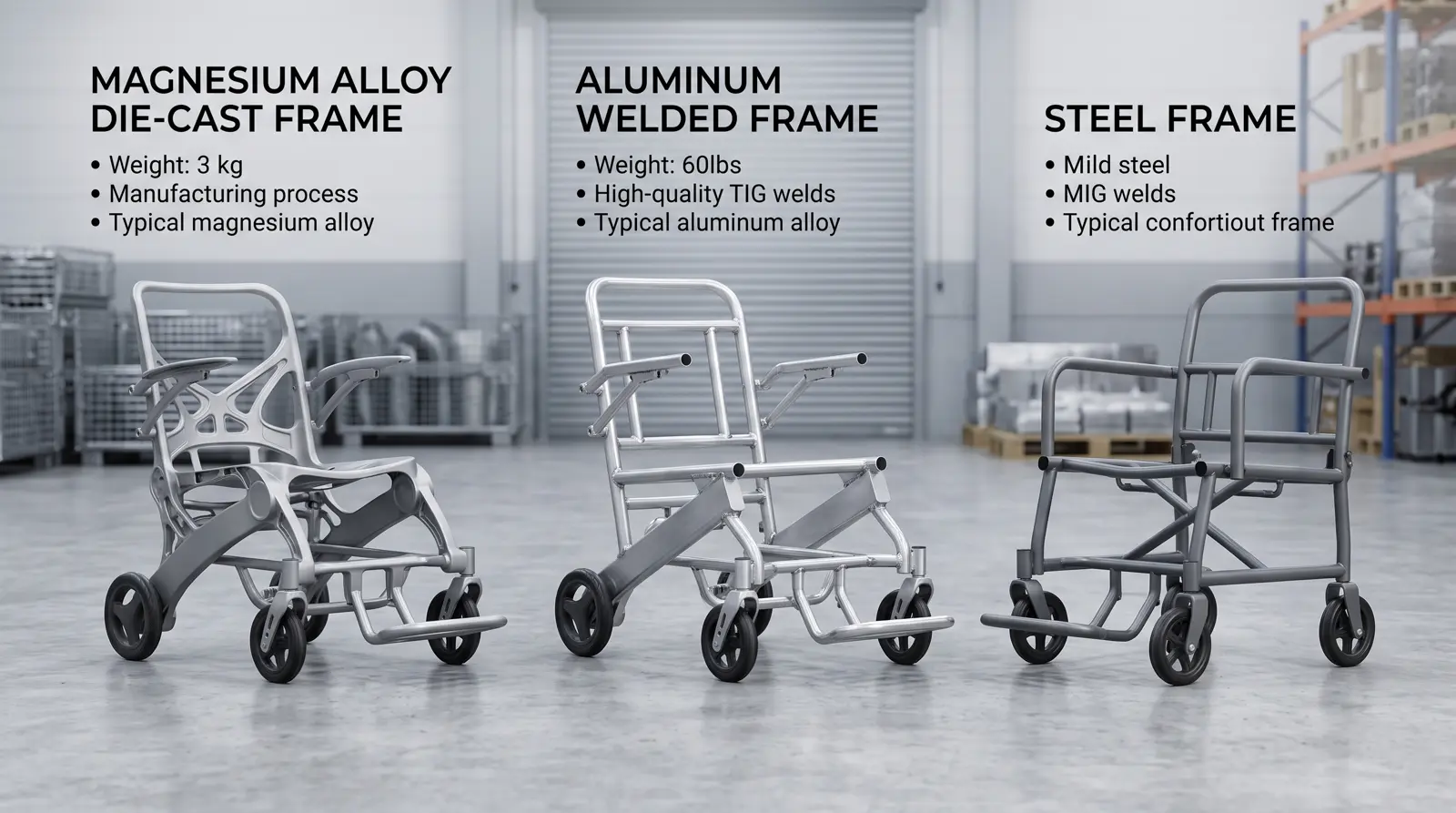
Three Materials, Three Price Points
For B2B importers selecting an electric wheelchair supplier, the frame material is one of the most consequential decisions you will make — it determines the wheelchair's weight, durability, ride comfort, manufacturing quality, and ultimately your landed cost. The three dominant frame materials in the market — steel, aluminum, and magnesium alloy — each offer distinct trade-offs that affect your product positioning and target customer segments.
This guide provides a data-driven comparison of electric wheelchair frame materials, covering the engineering properties, manufacturing processes, cost implications, and market positioning for each option, helping B2B importers make informed sourcing decisions.
Why Frame Material Matters for Your Electric Wheelchair Business
The frame is the structural backbone of any electric wheelchair. Unlike consumer electronics where the casing is cosmetic, the wheelchair frame directly affects:
- Total weight — A lighter electric wheelchair is easier to transport, store, and maneuver, which is a primary purchase driver for end users
- Durability and lifespan — Frame fatigue and cracking are among the most common long-term failure modes in an electric wheelchair
- Ride quality — Different materials transmit road vibration differently, directly affecting user comfort during extended daily use
- Manufacturing consistency — The production method (welding vs die-casting) determines quality uniformity across your electric wheelchair inventory
- Shipping costs — Heavier frames mean fewer units per container and higher per-unit freight costs
Material Properties at a Glance
|----------|------------------------|----------------------|-------------------|
**Key takeaway:** Magnesium alloy offers the best strength-to-weight ratio — 4.3x lighter than steel for equivalent strength — making it the premium choice for lightweight electric wheelchair designs.
Manufacturing Methods Compared
How the frame is made is as important as the material itself:
|--------|---------------|-------------------|-----------------|-----------------|
Why integrated die-casting matters:
- Zero weld joints — eliminates the weakest point on a wheelchair frame where fatigue cracks typically start
- Precision consistency — every unit from the mold is identical, unlike welded frames where quality depends on the welder's skill that day
- Complex geometries — casting allows features impossible with tube construction
- Higher upfront investment — mold tooling costs $100,000-300,000, which is why only serious electric wheelchair manufacturers invest in this technology
Weight Comparison: Real-World Impact
Weight is the most visible difference between frame materials:
|--------|---------------------------|-------------------|-------------------|
**For B2B importers:** Choosing a magnesium alloy electric wheelchair reduces your per-unit freight cost by 40-55% compared to a steel-framed electric wheelchair — a significant competitive advantage in price-sensitive markets.
Cost Comparison: FOB Pricing
|----------------|----------------------------------------------|---------------|
Important: The FOB price is only part of the equation. A steel-framed electric wheelchair may cost less to buy but more to ship. Always calculate total landed cost.
Durability and Lifespan Comparison
|--------|-------------------------|----------------|--------------|
Ride Quality and User Comfort
The material's ability to absorb road vibration — called dampening — directly affects user comfort:
- Magnesium alloy has the highest natural vibration dampening of any structural metal — approximately 10x better than aluminum. Road bumps are absorbed by the frame before reaching the user.
- Steel offers moderate dampening; its mass absorbs some vibration.
- Aluminum has poor natural dampening. Without additional suspension, an aluminum-framed electric wheelchair transmits more vibration to the user.
Decision Framework for B2B Importers
Choose Steel-Framed Electric Wheelchairs If:
- Your target market is highly price-sensitive (budget segment under $2,500 retail)
- Your customers prioritize low upfront cost over long-term durability
- You have local repair capability (steel is easy to weld and repair)
- You are serving markets where extreme ruggedness is required
Trade-offs: Heaviest option, highest per-unit freight cost, rust risk in humid climates.
Choose Aluminum-Framed Electric Wheelchairs If:
- You need a mid-range electric wheelchair with moderate weight savings
- Your budget does not support magnesium alloy pricing
- You serve a market where corrosion resistance matters (coastal regions)
- You want a reasonable balance of cost and portability
Trade-offs: Weld fatigue risk over time, poor vibration dampening.
Choose Magnesium Alloy Electric Wheelchairs If:
- Portability is your primary selling point (42-50 KG range)
- You serve premium or institutional markets (hospitals, care homes, government tenders)
- You want the lowest per-unit shipping cost and highest container density
- Ride comfort and user satisfaction are key to your brand positioning
- You are building a long-term brand and want to minimize warranty claims
Trade-offs: Higher FOB price, requires established certification package.
FAQ: Frame Materials for Electric Wheelchairs
Q: How long does a magnesium alloy electric wheelchair frame last?
A: With proper care, a magnesium alloy die-cast frame lasts 8-12 years — significantly longer than aluminum or steel frames, which typically show weld fatigue or corrosion within 5-8 years.
Q: Is magnesium alloy safe for electric wheelchairs?
A: Yes. Magnesium alloy is widely used in aerospace, automotive, and electronics. Modern magnesium alloys with proper coating offer excellent corrosion resistance. All MiniRedone electric wheelchairs carry full ISO 7176 safety certification.
Q: Can a magnesium alloy electric wheelchair frame be repaired if damaged?
A: Magnesium welding requires specialist equipment. For minor damage, replacement of the affected component is usually more practical. However, integrated die-cast design means frame damage is rare under normal use.
Q: How many electric wheelchairs with magnesium alloy frames fit in a container?
A: A 40HQ container holds approximately 180 folding magnesium alloy electric wheelchairs (MiniRedone at 42-50 KG), compared to only 80-100 steel-framed units — 40-55% lower per-unit freight costs.
Q: Do all magnesium alloy electric wheelchairs use the same manufacturing process?
A: No. Some manufacturers weld magnesium tubes, while premium manufacturers like MiniElephant use integrated die-casting. Die-casting produces a single, weld-free frame with superior consistency.
Q: What is the weight difference between magnesium alloy and steel electric wheelchairs?
A: A magnesium alloy electric wheelchair weighs 42-50 KG, while a comparable steel model weighs 65-85 KG — a 35-40% weight reduction.
The MiniElephant Advantage
Every MiniRedone electric wheelchair uses a magnesium alloy integrated die-cast frame — produced using a 7-tonne precision mold and 1,400-tonne press. This delivers:
- No weld joints — eliminating the most common frame failure point
- 42-50 KG total weight — the lightest electric wheelchair range in its class
- Consistent quality — every frame is identical to the last
- 10x vibration dampening vs aluminum electric wheelchairs
- Full traceability — each frame has a unique serial number
**Explore the MiniRedone electric wheelchair series:** [www.semwheelchair.com/products](https://www.semwheelchair.com/products)
**Request OEM/ODM pricing for magnesium alloy electric wheelchairs:** [www.semwheelchair.com/contact](https://www.semwheelchair.com/contact)
Interested in MiniElephant Electric Wheelchairs?
Get a customized quotation and product recommendation from our export team. Response within 24 hours.