Electric Wheelchair Motor Comparison Guide for Distributors
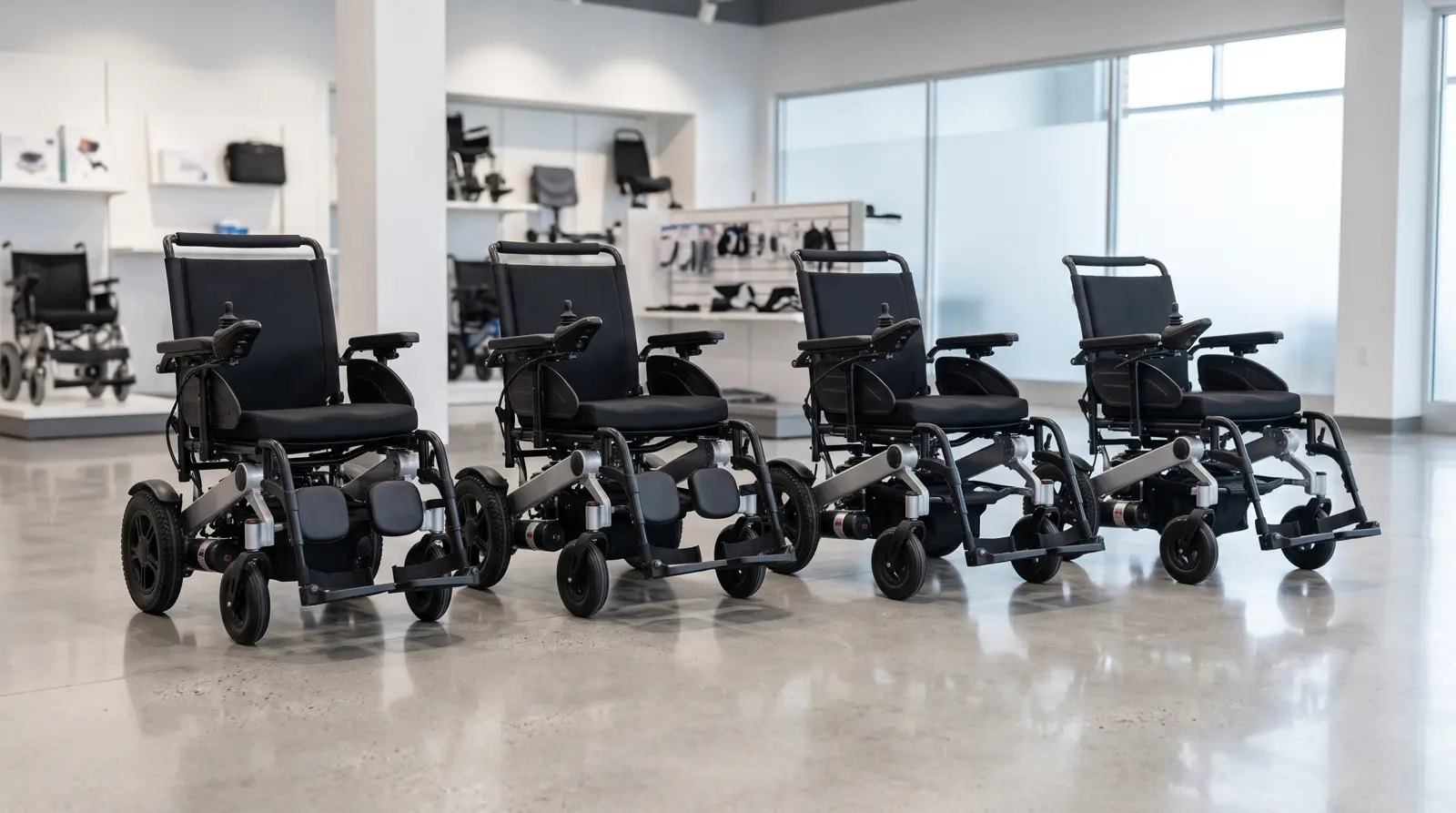
Electric Wheelchair Motor Comparison: What Distributors Should Verify
Motor count is not a complete performance specification. An electric wheelchair's behavior depends on the motor type and rating, gear reduction, drive-wheel position, controller, battery system, total load, tires, terrain, and test conditions. Distributors should compare the complete drive system before placing a wholesale order or publishing performance claims.
This guide gives importers and mobility retailers a structured way to evaluate motor options. Confirm figures with the manufacturer for the exact model and revision, and follow the product manual and applicable market requirements.
Identify the Complete Drive System
Ask the supplier to identify the motor model or part number, rated voltage, continuous and peak output information where available, gearbox, drive-wheel position, controller, battery arrangement, brake system, and freewheel mechanism. Record whether the chair uses one motor, two independent motors, or another approved arrangement.
Motor labels alone do not establish how a chair will perform. The same nominal motor power can produce different results when gear ratios, wheel diameter, controller settings, payload, and battery voltage change. Keep the motor and controller records linked to the model revision.
Compare Single and Dual-Motor Layouts
A single-motor system can offer a simpler parts structure and may suit a compact, cost-sensitive configuration. A dual-motor system can provide independent drive control and a different turning or traction behavior, but it may add components, wiring, calibration, and service requirements.
Neither layout is automatically better for every electric wheelchair. Compare turning space, drive-wheel position, surface conditions, braking behavior, controller compatibility, noise, weight, and local service capability. Request a complete test description rather than translating motor count directly into a range or hill-climbing promise.
Review Torque, Speed, and Load Together
A distributor should request speed and incline information with the conditions under which it was measured. The payload, battery state, tire condition, surface, gradient method, temperature, and direction of travel can materially change the result. Confirm whether a stated incline is a short test value or a continuous operating recommendation.
A heavier seat, larger battery, accessory, or user load increases the work required from the drive system. Ask suppliers to explain the rated load and test configuration, and keep the wording in sales materials consistent with the approved technical record.
Consider Efficiency and Heat Management
Motor efficiency affects battery use, operating temperature, and repeatability. During a sample review, observe whether the supplier can describe thermal protection, duty cycle, controller limits, and the conditions for its published figures. Do not infer efficiency from a motor's appearance or a short unloaded demonstration.
For a fleet or rental program, repeated starts, ramps, thresholds, and stop-and-go use may matter more than a single top-speed test. Define representative routes and record battery state, load, surface, ambient conditions, and any fault or temperature indication.
Check Noise, Vibration, and Ride Interaction
Gearboxes, tires, frame mounts, and surface conditions all contribute to perceived noise and vibration. A motor comparison should include a loaded demonstration on the surfaces customers will use, along with checks for unusual gear noise, backlash, cable movement, and mounting security.
Avoid describing a product as silent, all-terrain, or universally smooth without a documented basis. A controlled test can support a specific observation, but it cannot replace the manufacturer's operating limits or the customer's own route assessment.
Build a Distributor Comparison Table
| --- | --- |
Use this table for each candidate model. A lower purchase price may not represent lower operating cost when controller, motor, gearbox, or programming support is difficult to obtain locally.
Verify Braking and Freewheel Behavior
The motor and brake system should be evaluated together. Follow the manufacturer-approved procedure to check power-on behavior, controlled stopping, electromagnetic brake response, freewheel operation, and fault indications in a safe area. Record the exact model, battery, load, and configuration used for the test.
Do not bypass an interlock, alter wiring, or ask untrained staff to open the motor, controller, or battery system. Electrical, braking, and structural concerns should be isolated and escalated through trained technical personnel.
Plan Parts and After-Sales Support
Before approving a motor configuration, request replacement part numbers, compatible controller information, gearbox details, brake service instructions, diagnostic requirements, and expected lead times. Ask whether motor replacement requires alignment, programming, or a factory-approved procedure.
The service file should connect the chair serial or batch record to the motor, controller, battery, charger, and wheel configuration. This prevents a visually similar motor from being ordered for the wrong revision.
Motor Comparison Checklist
1. Identify the motor, gearbox, controller, battery, and brake system for each model revision.
2. Compare single and dual-motor layouts using the complete chair and intended use case.
3. Request loaded test conditions for speed, incline, range, heat, noise, and stopping behavior.
4. Review tire, wheel, payload, surface, and battery effects before publishing claims.
5. Confirm parts, programming, diagnostic, and technician requirements for local service.
6. Align motor information across quotations, specifications, manuals, listings, and labels.
7. Escalate electrical or braking concerns through appropriately trained personnel.
The B2B Bottom Line
Electric wheelchair motor selection is a drive-system decision, not a motor-count decision. Distributors who compare verified motor and controller data, test conditions, load effects, braking, noise, serviceability, and parts support can build a more accurate product range and reduce after-sales uncertainty.
**Comparing electric wheelchair drive systems for your market?** [Contact the MiniElephant export team](https://www.semwheelchair.com/contact) for model specifications, motor information, and B2B sourcing support.
Interested in MiniElephant Electric Wheelchairs?
Get a customized quotation and product recommendation from our export team. Response within 24 hours.