Electric Wheelchair Recline vs Tilt-in-Space: 2026 B2B Buyer Guide
Why Seating Function Matters for B2B Buyers
The single most important takeaway: an electric wheelchair with recline or tilt-in-space functionality is no longer a niche clinical product — it is a mainstream ordering category for distributors serving elderly care, home care, and rehabilitation markets, and the choice between the two functions directly affects pressure management, caregiver workload, and your reorder rates.
Pressure injuries remain one of the costliest complications in mobility care. Clinical reviews estimate that 7% to 30% of electric wheelchair users will develop a pressure injury at some point, and hospital treatment for a single stage IV wound can exceed USD 100,000. For B2B buyers, this is not a medical abstraction; it is a specification you will be asked about. When procurement officers in care facilities evaluate an electric wheelchair, the seating system is the first thing they inspect after the drive system and battery.
The global electric wheelchair market continues to grow at roughly 7% to 9% per year, and the fastest-growing segment is the multi-function category: electric wheelchair models that offer reclining backrests, elevating leg rests, and tilt-in-space positioning. Distributors who can explain these functions — and who stock electric wheelchair models that genuinely deliver them — win institutional tenders that single-position chairs cannot enter.
Evaluation Criteria: Five Factors That Separate Good Electric Wheelchairs from Bad Ones
Before comparing recline and tilt-in-space, B2B buyers should score every candidate electric wheelchair against five criteria:
1. Seating range and adjustability — What angles does the backrest achieve on the electric wheelchair? Does the leg rest elevate independently? Can the seat tilt without changing the backrest angle?
2. Pressure management — Does the electric wheelchair function redistribute pressure off the ischial tuberosities (the sitting bones), or does it just change posture while increasing shear?
3. Shear force and skin friction — An electric wheelchair function that drags the skin across the cushion can cause more tissue damage than it prevents.
4. Caregiver support — Can a carer reposition a patient in the electric wheelchair without lifting them? Does the control system allow fine adjustments?
5. Weight, width, and transport trade-offs — Multi-function electric wheelchair frames are heavier and wider. Does the added capability justify the added logistics cost for your market?
Recline vs Tilt-in-Space: How the Two Functions Actually Differ
The confusion between recline and tilt-in-space is the most common specification error in B2B electric wheelchair purchasing, and it is worth getting exactly right.
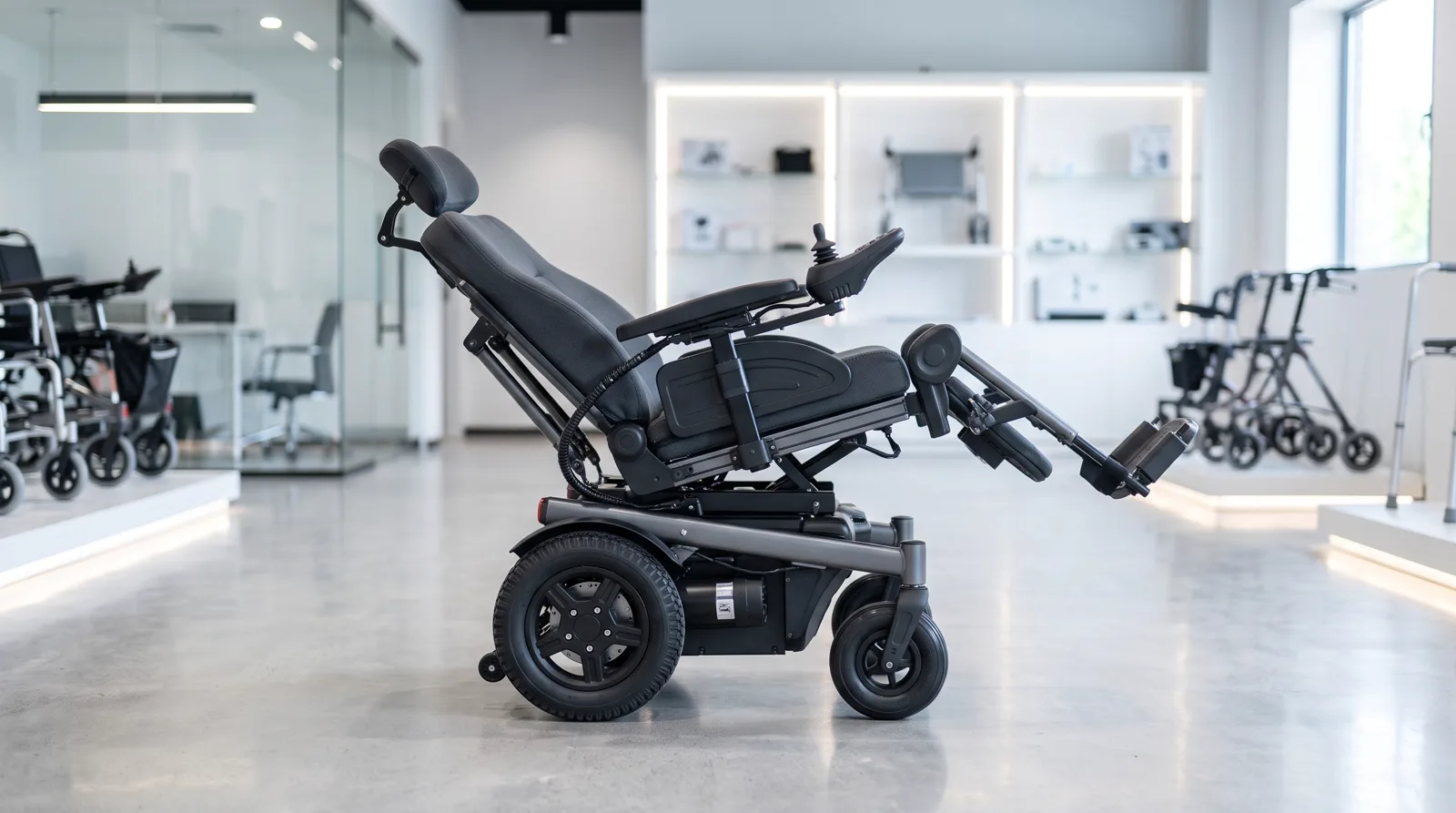
Recline changes the angle between the backrest and the seat. A typical reclining electric wheelchair backrest moves from roughly 90 degrees to 100 to 180 degrees. When the backrest of the electric wheelchair reclines, the user's body rotates around the hip, which shifts weight distribution but also creates shear force as the torso slides against the backrest upholstery. Many reclining electric wheelchair models pair the backrest with an elevating leg rest so the whole body can stretch out, which is useful for pressure relief, rest, and medical procedures at home.
Tilt-in-space keeps the backrest-to-seat angle fixed (usually at 90 to 100 degrees) and tilts the entire seating frame of the electric wheelchair backward, typically 25 to 45 degrees. Because the user's position relative to the seat does not change, tilt-in-space produces very little shear. This makes it the preferred clinical choice for users who cannot reposition themselves, because pressure is redistributed across a larger contact area without dragging the skin.
The practical difference matters for product selection. An electric wheelchair with recline alone is often enough for home users who want to rest or sleep in the chair. A tilt-in-space electric wheelchair is the safer default for nursing homes, rehabilitation centers, and users at high risk of pressure injuries, because it offloads pressure with minimal shear.
Market Comparison Data: What Typical Electric Wheelchair Units Offer
The table below summarizes the specification ranges seen across the mainstream B2B electric wheelchair market in 2025-2026. Treat these as planning numbers, not guarantees — always verify against the manufacturer's datasheet.
|---|---|---|---|---|
A few numbers from the comparison are worth memorizing for buyer conversations. Shear force during recline has been measured in seating studies at levels that can reduce capillary blood flow to the skin faster than simple pressure alone. Tilt angles above 25 degrees begin to meaningfully offload the ischial tuberosities, and many clinical protocols recommend 30 to 35 degrees of tilt for regular pressure relief. These are the figures that institutional buyers expect an electric wheelchair supplier to quote from memory.
Practical Decision Framework for B2B Ordering
Use this four-step framework when deciding which electric wheelchair configuration to stock or specify:
1. Match the function to the end user. If the target user is an elderly person at home who wants to rest and watch television in the chair, an electric wheelchair with a reclining backrest and elevating leg rest is usually sufficient. If the target user is bed-bound or semi-bed-bound, has fragile skin, or lives in a facility, choose an electric wheelchair with tilt-in-space first.
2. Check the control system. In both configurations, the caregiver should be able to operate recline or tilt on the electric wheelchair with one hand through the joystick or a side panel. Lockable positions and slow-speed adjustment prevent sudden movements that frighten elderly users.
3. Weigh the logistics cost. Recline and tilt mechanisms add weight and folded size to an electric wheelchair. Compare your shipping cost per unit against the premium you can charge in your market. In many regions, a multi-function model supports a 15% to 30% price uplift over a standard electric wheelchair, which comfortably covers the extra freight.
4. Request shear and pressure data. Reputable electric wheelchair manufacturers publish pressure-mapping results or third-party test reports for their seating systems. If a supplier cannot show you data, treat the claim with caution.
FAQ: What B2B Buyers Ask About Recline and Tilt
Q: Which is better for pressure injury prevention: recline or tilt-in-space?
A: For pressure offloading with minimal shear, tilt-in-space is the stronger choice. Recline helps with posture change and rest, but the sliding motion creates shear that can increase tissue damage risk in fragile users of any electric wheelchair.
Q: Can I get both functions on one electric wheelchair?
A: Yes. Recline plus tilt combination electric wheelchair models exist across the market, from budget to premium tiers. They are heavier and more expensive, but they cover the widest range of care scenarios, which is why institutional tenders often specify the combination.
Q: Do these functions affect battery life and range?
A: Motorized recline and tilt consume power, typically reducing the real-world range of the electric wheelchair by 5% to 15% when used regularly. For B2B stocking decisions, choose an electric wheelchair with a battery that clears your range requirement with at least 20% headroom.
Q: How much more should we expect to pay for a reclining or tilt model?
A: In wholesale pricing, recline adds roughly 10% to 20% over a standard electric wheelchair, tilt-in-space adds 15% to 30%, and a combined system adds 25% to 45%. Premium European and Japanese brands sit at the top of these ranges; established Chinese electric wheelchair manufacturers such as MiniElephant generally land at the lower end while offering comparable specifications.
Q: What maintenance do these mechanisms need?
A: Linear actuators and gas struts are the moving parts of a reclining electric wheelchair. Expect periodic checks of actuator travel, lubrication of pivot points, and verification that limit switches are calibrated. Budget for a small spares kit of actuators and joystick cables in your first container order.
The B2B Bottom Line
Recline and tilt-in-space are not interchangeable features, and the distinction drives real purchasing behavior in institutional markets. Stock an electric wheelchair with recline for the home-care segment where rest and comfort lead the buying decision, and stock a tilt-in-space electric wheelchair for facility and high-risk segments where pressure management is non-negotiable. Verify angles, shear behavior, and battery headroom on the datasheet before you commit, and you will avoid the returns and support costs that come from selling the wrong seating configuration.
**Need recline and tilt-in-space electric wheelchair options for your catalog?** [Contact the MiniElephant export team](https://www.semwheelchair.com/contact) for specification sheets, pressure-mapping documentation, and wholesale pricing on multi-function models.
Interested in MiniElephant Electric Wheelchairs?
Get a customized quotation and product recommendation from our export team. Response within 24 hours.