Electric Wheelchair Safety Features: What B2B Distributors Should Prioritize in 2026
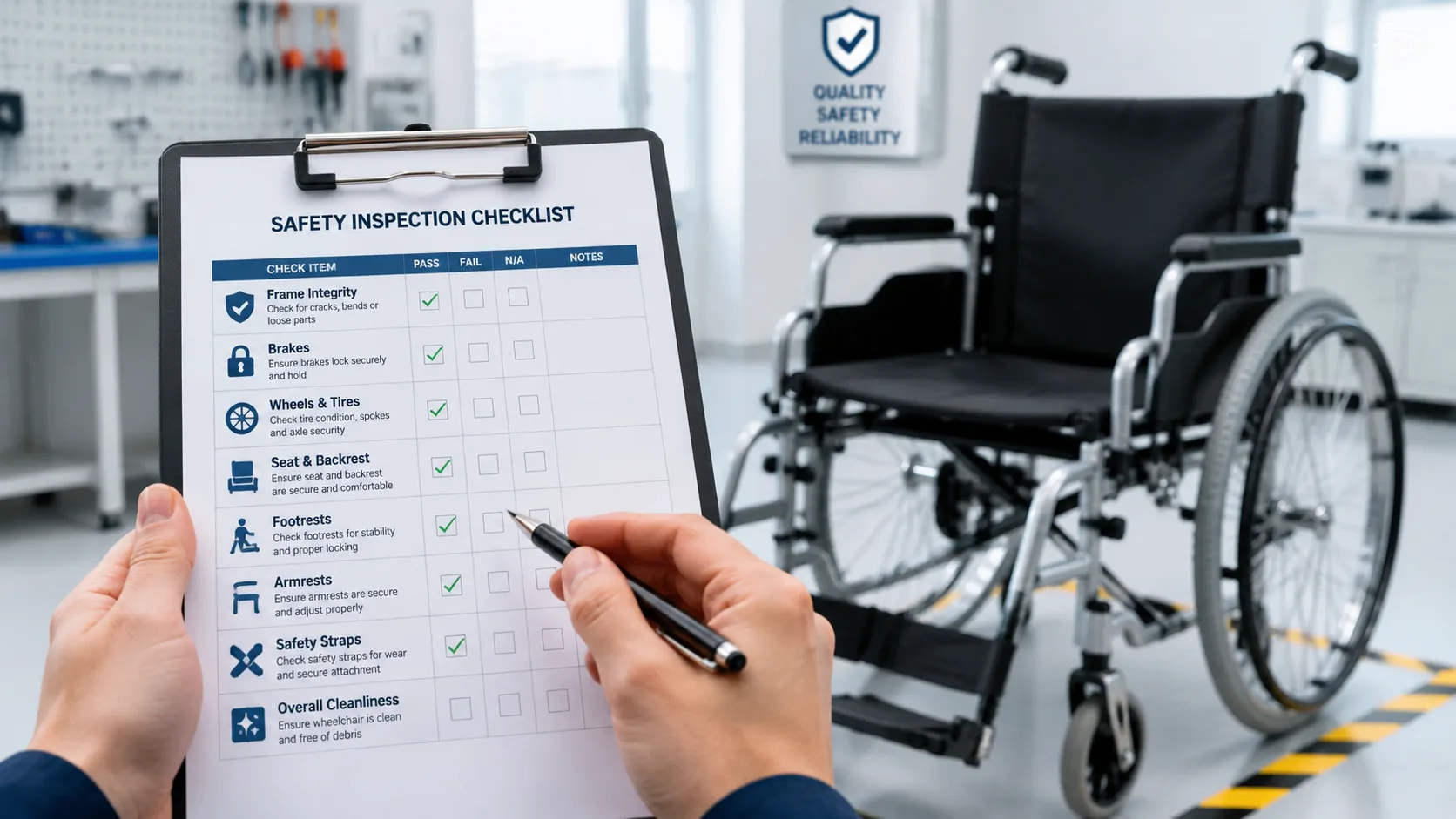
Safety as a Competitive Differentiator
For B2B importers and distributors, wheelchair safety is not just a regulatory checkbox — it is a competitive advantage. Institutional buyers (hospitals, care homes, rehabilitation centers) prioritize safety above almost every other factor. End users and their families make purchase decisions based on trust and peace of mind.
Here is what safety engineering looks like in a modern electric wheelchair, using the MiniRedone series as a benchmark.
1. Anti-Tilt Stability: Tested, Not Just Claimed
The most critical safety feature on any electric wheelchair is stability during turns, on slopes, and over uneven terrain.
MiniRedone wheelchairs feature anti-tilt wheels. Applicable stability test documentation and limits should be confirmed for the selected configuration. What this means in practice:
- Safe turning on inclines — no risk of tipping when the user turns on a ramp or sloped driveway
- Curb negotiation — the anti-tilt mechanism engages automatically when traversing curbs and thresholds
- Rear stability — prevents backward tipping during acceleration on uphill starts
Many budget wheelchairs claim "anti-tilt" but only test on flat ground at low speed. Always ask for the slope angle and test methodology.
2. Dual-Control Braking System
MiniRedone wheelchairs feature a dual-control braking system that can be operated by either hand or foot:
|--------------|-------------|----------------|
The key differentiator: MiniRedone's automatic electromagnetic brake engages instantly when the user releases the joystick, regardless of whether the wheelchair is powered on. This is a critical safety net — if the user loses grip or experiences a medical event, the wheelchair stops immediately.
3. Air Spring Suspension
Suspension is often treated as a comfort feature, but it is equally a safety feature:
- Wheel contact — suspension keeps all wheels in contact with the ground on uneven surfaces, maintaining predictable steering and braking
- User fatigue — a jarring ride causes users to brace or lean unexpectedly, increasing fall risk
- Battery protection — reduces shock loads transmitted to the battery and electronics
MiniRedone's air spring suspension absorbs shock loads across a wide range of surface conditions — from smooth hospital floors to cracked sidewalks.
4. Frame Integrity: Integrated Die-Casting
Safety starts with the frame. A welded frame has inherent weak points: each weld joint is a potential failure site under repeated stress. MiniRedone's magnesium alloy integrated die-cast frame — produced using a 7-tonne precision mold and 1,400-tonne press — has zero weld joints:
- Consistent structural integrity across every unit
- No weld fatigue over the wheelchair's lifetime
- Superior crash and impact resistance
- ISO 7176 structural testing passed without any weld-related failures
5. LiFePO₄ Battery Safety
The battery is the component with the highest safety risk in any electric wheelchair. MiniRedone uses LiFePO₄ (Lithium Iron Phosphate) chemistry with a built-in Battery Management System (BMS):
|---------------|-----------------|
LiFePO₄ chemistry is inherently safer than standard lithium-ion: it will not enter thermal runaway even if punctured, overcharged, or exposed to high heat.
What B2B Buyers Should Ask Suppliers
When evaluating wheelchair safety, ask these questions:
1. "What slope angle were the anti-tilt wheels tested on?" (15° or higher is the benchmark)
2. "Does the electromagnetic brake engage on power loss?" (Not all manufacturers implement this)
3. "What certifications do the brakes carry?" (CE, FDA, ISO 7176)
4. "Is the frame welded or cast?" (Cast = no weld failure points)
5. "What battery chemistry is used? Does it have BMS?" (LiFePO₄ + BMS is the gold standard)
6. "What is the tested load capacity?" (MiniRedone: 150KG / 330 lbs)
The MiniElephant Commitment
Every MiniRedone wheelchair ships with the same safety engineering — from the entry-level MiniRedone-I to the premium MiniRedone-V. Safety is not an optional upgrade or a premium-tier feature.
**Request safety test documentation:** [www.semwheelchair.com/contact](https://www.semwheelchair.com/contact)
Interested in MiniElephant Electric Wheelchairs?
Get a customized quotation and product recommendation from our export team. Response within 24 hours.