Electric Wheelchair Storage: Preparing for Weeks Without Use
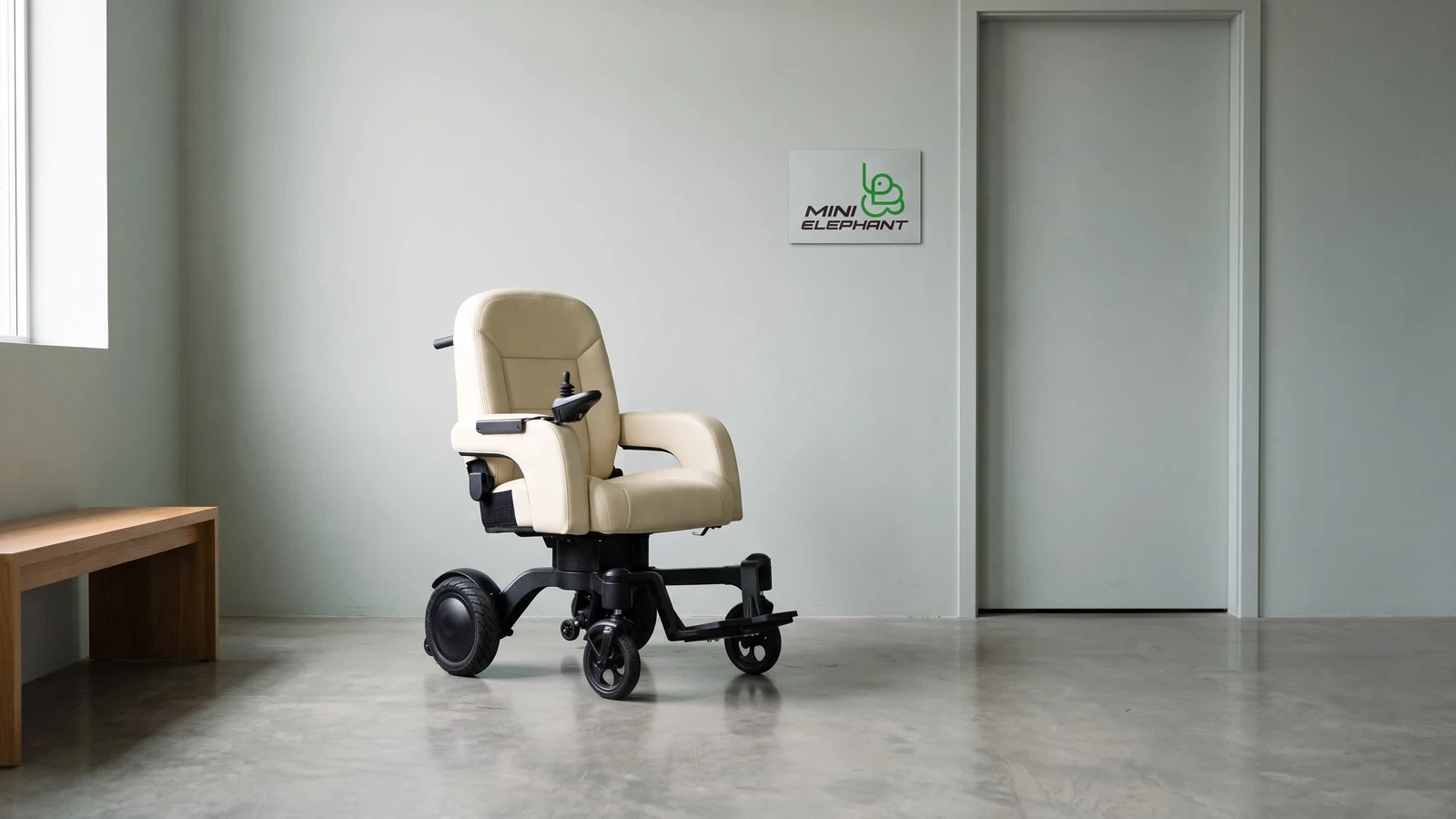
Before storing an electric wheelchair for several weeks, deal with three things in order: the battery state, the place you leave it, and the condition you check before the next ride. For MiniElephant owners, dealers and rental operators, sensible electric wheelchair storage means following the supplied instructions, keeping the chair dry and stable, and not returning it to service on assumptions. Current MiniRedone listings describe an integrated 16Ah LiFePO4 battery, and the exhibition FAQ states the battery is built in rather than user-removable, so the plan has to cover the whole electric wheelchair, not a battery carried to a shelf.
This guide covers planned inactivity: a holiday, a seasonal pause, a rental unit waiting for the next booking, or a dealer demonstration electric wheelchair kept in the back room. It is general storage guidance, not a replacement for the model manual. Where the two differ, the instructions for the exact model apply.
Why electric wheelchair storage deserves its own plan
Leaving an electric wheelchair parked for a weekend needs little thought. Leaving it for a month raises different questions: whether the power system is in a suitable state, whether the room is dry and secure, whether anyone can still reach the electric wheelchair safely, and whether small faults go unnoticed until someone needs the product.
For a distributor, the commercial angle matters too. A stored electric wheelchair handed to a customer without an inspection turns a storage decision into a quality complaint. For an individual owner, an unplanned return to service can mean a flat battery or a sticking brake at the worst possible moment.
Treat electric wheelchair storage as a short procedure with a written record: what was done before parking, where the chair is, and what must be checked before use. A record beats memory when a dealer employee changes or a family caregiver takes over.
Step 1: Follow the manual on battery state and charging
The battery is the part most affected by long inactivity. Lithium cells are not improved by being left in an unknown state for months, and they are not improved by repeated top-ups either. The right approach is the one in the documentation for that electric wheelchair.
Read the instructions for three details before parking the chair:
- the recommended charge state for storage, if the manual specifies one;
- whether the electric wheelchair should be switched off or disconnected, and how;
- any instruction about periodic charging during the storage period.
Do not invent a charge level or a maintenance interval. If the manual does not state a storage state of charge, ask the manufacturer or dealer rather than guessing at a percentage you read online. If the manual gives a periodic top-up instruction, put it in the calendar with the date and the person responsible.
For the current MiniRedone models, the published specifications list a 16Ah LiFePO4 battery and a charging time of about four to six hours. Those figures describe normal charging, not a storage protocol, and they do not state a storage charge level. Because this battery is described as built in rather than removable, storage planning should assume the electric wheelchair stays assembled with its power system in place. That rules out the common advice to carry the battery indoors separately, and it means the storage location itself must suit the product: dry, stable, and not exposed to conditions you would avoid for other electronics.
Step 2: Choose a storage position that still works as a room
An electric wheelchair weighs tens of kilograms. The MiniRedone range is listed between roughly 42 kg and 50 kg depending on model, so the storage position is also a handling decision. A high shelf, a narrow gap behind furniture, or a spot reachable only by lifting is not a realistic long-term location for an electric wheelchair.
Check these points before wheeling the chair into place:
- the floor is level and strong enough for the electric wheelchair on its wheels;
- the chair does not block a doorway, corridor, staircase access or fire exit;
- there is room to walk around it and to reach the controls;
- the charger and cable can be used without a cable crossing a walkway;
- the room stays dry, with no standing water, leaks or damp;
- the electric wheelchair cannot roll, and the parking brake or wheel lock is applied as instructed.
Keep the chair on its wheels in the approved parking state rather than resting it on upholstery, armrests or the controller. Follow the manual for the power-off and parking sequence. If the electric wheelchair must be folded for space, use the documented folding procedure and confirm which storage orientations are permitted before leaning it against a wall.
For dealers and rental teams, separate stored electric wheelchair units from active demonstration stock. A chair parked for weeks should not double as a casual seat or a shelf for boxes, because pressure on the seat and armrests is not part of its storage condition.
Step 3: Control moisture, dust and heat without over-engineering
Electric wheelchair storage is mainly about avoiding harm, not adding treatments. Do not cover the chair with a sealed plastic sheet that traps condensation. Do not store an electric wheelchair beside a heater, in a damp basement corner, or in a vehicle that will sit in strong sun.
If dust is a concern, use a breathable cover that the instructions permit, or a clean sheet that does not press on the controller or joystick. Never store the charger with a wet plug, and never leave a charging cable coiled under the electric wheelchair where it can be stepped on.
Cold and heat both matter, but the acceptable range for an electric wheelchair is a manufacturer statement, not a general rule. If a storage location freezes in winter or heats up in summer, ask before parking the chair there for an extended period.
Step 4: Record what was done and what to check later
Write a short storage record. It saves time when the electric wheelchair comes back into use.
- model and serial or asset reference;
- date the electric wheelchair was parked;
- battery state and charging action taken, exactly as instructed;
- storage location and any cover used;
- person responsible for the periodic check, if one is required;
- unresolved issues noticed at parking, such as a slow tyre or a stiff caster.
For a rental fleet, this record supports the traceability you would expect from service history. When a stored electric wheelchair goes out to a customer, the record should show that the pre-use inspection happened.
Step 5: Inspect before the first ride after storage
Do not hand the electric wheelchair to a user, or ride it yourself, straight out of storage. Bring it back into service in a deliberate order.
1. Look for damage that happened while it was parked: dents, cracked covers, chewed cables, corrosion or water marks.
2. Check tyres and casters for pressure, flat spots and foreign objects, following the manual.
3. Inspect the charger, plug and charging port for damage before connecting anything.
4. Charge as instructed for the model, and stop if the charger or battery behaves unusually.
5. Test the controls, brakes and steering at low speed in a clear area before normal use.
6. Confirm the seat, armrests and footrests are correctly assembled if anything was folded or adjusted.
If the electric wheelchair was stored longer than planned, or the conditions were uncertain, ask the dealer or manufacturer what additional checks apply. A chair that does not power on, charges abnormally or pulls to one side should not be used until the cause is identified.
Common electric wheelchair storage mistakes
- Parking the electric wheelchair with an unknown battery state and no record.
- Leaving the charger connected indefinitely because it is convenient.
- Storing a heavy electric wheelchair where it can only be moved by lifting.
- Blocking a corridor or exit because the chair will only be there for a while.
- Assuming a cover protects the electric wheelchair when it holds moisture against the seat.
- Returning it to service without checking tyres, cables and brakes.
- Treating a dealer's stored demonstration electric wheelchair as ready stock without an inspection.
Frequently asked questions
Can I leave an electric wheelchair unused for a month?
It can be stored, but the battery state, the location and the pre-use inspection should follow the model instructions. Do not simply park the electric wheelchair and forget the charging guidance.
Should I remove the battery for storage?
For the current MiniRedone models, the battery is described as built in rather than user-removable, so plan storage around the assembled electric wheelchair. Removing or disconnecting the power system should only be done if the documentation allows it and explains the procedure.
Is it better to store the chair folded or unfolded?
That depends on space, the documented folding procedure and the storage orientations the manufacturer permits. Folding saves floor space but does not reduce the weight you may need to move.
Can I store an electric wheelchair in a garage or shed?
Only if the space is dry and the conditions are acceptable for the product. Ask the manufacturer if the location freezes, floods or becomes very hot, because acceptable storage conditions are product-specific.
What should a dealer check before renting out a stored unit?
At minimum: visual condition, tyres and casters, charger and port, charging behaviour, controls, brakes and steering at low speed, and confirmation that the seat assembly matches the intended configuration.
Plan the pause, then plan the return
Storing an electric wheelchair well is not complicated, but it is specific. Confirm the battery guidance for your model, choose a position that stays dry, level and reachable, keep a short record, and bring the electric wheelchair back into service with an inspection rather than an assumption. Owners who do this avoid most of the surprises that appear weeks later, and dealers protect both the product and their service reputation.
Browse the MiniRedone electric wheelchair range to confirm the model and battery specification, or contact the export team with your storage conditions and questions. MiniElephant is the brand of Jiaxing Small Elephant Medical Technology Co., Ltd. Email johnson@semwheelchair.com or reach Johnson on WhatsApp at +86 13819098967.
*Editorial note: this article is general storage guidance for owners and B2B partners. Model manuals and manufacturer instructions take priority. The header image is a photorealistic generated scene produced for this article with the product reference photographs; it illustrates a storage setting and is not a photograph of a specific delivered unit or a certified storage environment.*
Interested in MiniElephant Electric Wheelchairs?
Get a customized quotation and product recommendation from our export team. Response within 24 hours.