Electric Wheelchair Trade Show Guide: Questions Buyers Should Ask
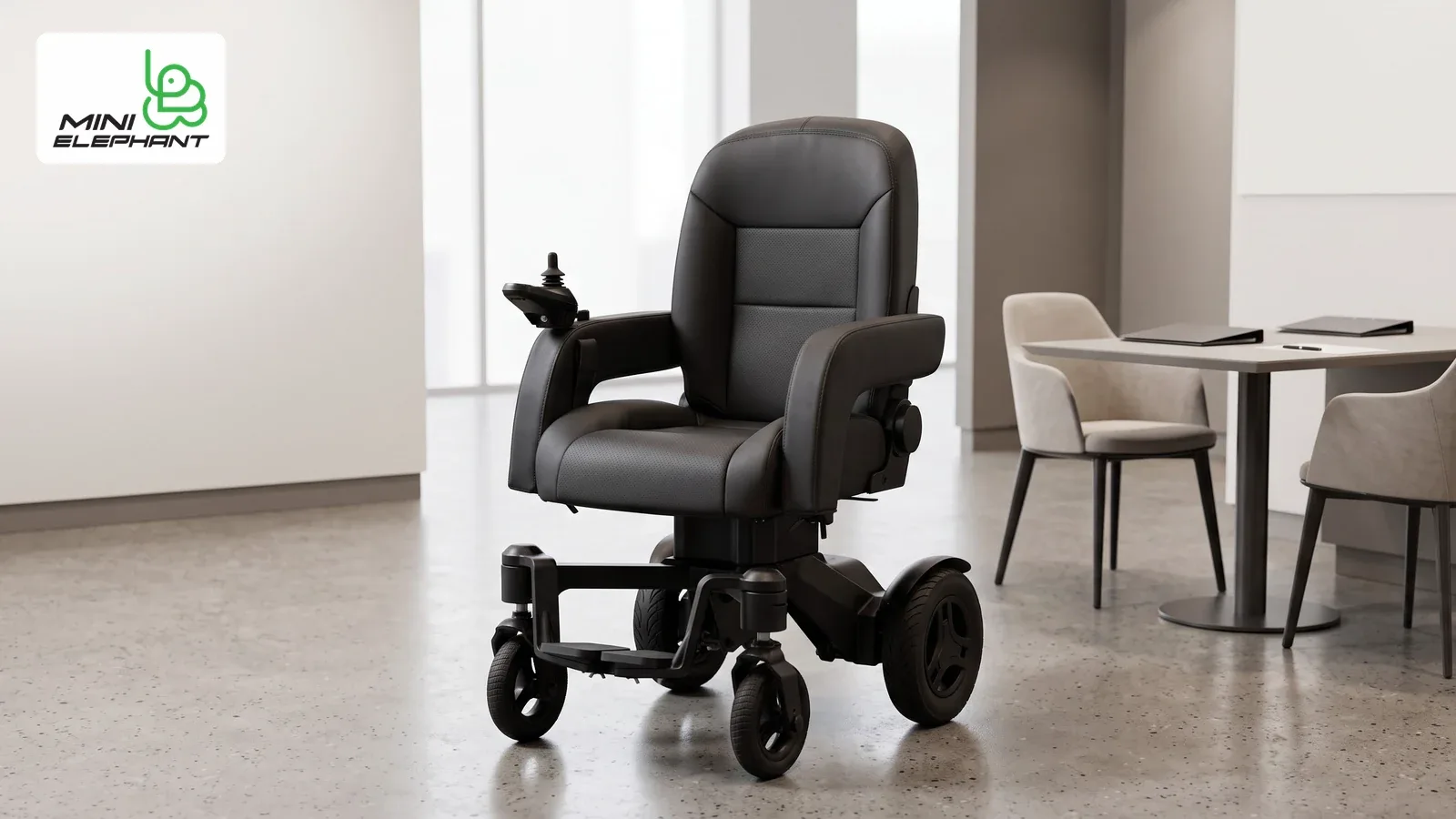
*Illustration: a showroom scene, not a documentary photograph of a trade show.*
The best electric wheelchair trade show meeting ends with a documented configuration, a practical comfort assessment, a model-specific document request, and a clear sample follow-up—not just a price and a brochure. For importers, distributors, and purchasing teams, the goal is to turn a short demonstration into evidence that supports a buying decision.
A polished booth cannot establish long-term comfort, destination-market compliance, or after-sales readiness. This electric wheelchair buying guide organizes the questions that matter before an RFQ, sample order, or supplier evaluation. Use it as a discussion framework rather than a promise that every supplier or model offers the same features.
1. Define the electric wheelchair application before comparing models
Start with the intended user and environment. A chair for frequent indoor use, extended sitting, and vehicle transport may need a different configuration from one intended for varied outdoor surfaces. Tell the supplier which priorities are essential and which are optional.
Ask these electric wheelchair selection questions:
- Who is the intended user, and what seating dimensions are needed?
- Will the chair primarily operate indoors, outdoors, or in mixed environments?
- Is frequent transport required, and what vehicle space is available?
- Which comfort, support, and adjustment features must be included?
- Which destination market and distribution channel will receive the product?
Document the exact model code. An electric wheelchair brochure may describe a family of products, while the displayed unit has optional equipment. Ask the representative to distinguish standard features, paid options, and configurations still awaiting confirmation.
2. Evaluate electric wheelchair comfort beyond a quick demonstration
Comfort deserves its own evaluation—not a sentence beside motor power. Check seat width and depth, backrest height, cushion construction, armrest position, and foot support. Ask how those dimensions change with the selected accessories.
A short electric wheelchair demonstration cannot establish suitability for extended sitting. Where appropriate, arrange a longer sample assessment with an intended user and qualified seating professional. Do not interpret an attractive cushion or reclining backrest as evidence of pressure-injury prevention or a clinically appropriate seating prescription.
Questions for an electric wheelchair comfort assessment include:
- Can you provide a dimensional drawing of the complete seating system?
- Which armrest, footrest, and backrest adjustments are available on this model?
- Are cushion covers removable, and what cleaning instructions apply?
- Does any adjustment change transfer access, overall width, or transport dimensions?
- What must the buyer evaluate during a sample trial?
Compare measurable support and adjustability, not upholstery appearance alone. Keep individual fit decisions separate from procurement specifications.
3. Confirm the electric wheelchair configuration in writing
Ask for a configuration sheet covering the frame, drive system, controller, seating, wheels, brakes, power supply, charger, and accessories. Record the revision or date of the document and link it to the quoted model.
For every electric wheelchair specification, ask whether the number describes the displayed chair, a standard configuration, or a different variant. Clarify how the manufacturer measures product weight, load capacity, speed, range, and folded dimensions.
A useful electric wheelchair comparison record separates claims from evidence:
| --- | --- | --- |
Do not transfer a specification from one electric wheelchair model to another. If evidence is unavailable during the meeting, mark the item as pending rather than treating a verbal answer as verified.
4. Ask how the electric wheelchair handles real operating conditions
A smooth exhibition floor provides limited evidence about daily operation. Ask which surfaces, gradients, obstacles, and weather conditions are permitted in the manual. Discuss braking, turning, control sensitivity, and the effect of seating adjustments on operation.
During an authorized electric wheelchair demonstration, observe low-speed maneuvering, stopping, joystick access, and entry or exit procedures. Any test should follow the supplier's safety instructions and use an appropriate, supervised space.
Ask whether freewheel mode is available, how it is engaged, and which warnings apply. Request instructions for storage, charging, and inspection before use. An electric wheelchair distributor should understand both permitted use and limitations before preparing customer-facing descriptions.
Avoid comparing advertised range numbers without matching conditions. User mass, surface, gradient, speed, accessory use, and power-supply configuration can change results. Ask for the conditions behind the figure, not only the largest number on the display.
5. Verify electric wheelchair documents for the destination market
Request documents tied to the actual manufacturer, exact model, intended purpose, and destination market. A certificate displayed at a booth may have a different scope from the product being quoted.
For an electric wheelchair document review, ask:
- Which company and manufacturing address appear on the records?
- Does the document cover the quoted model and intended configuration?
- What are the issuer, scope, validity period, and verification route?
- Which labels, instructions, and language versions are available?
- What additional importer obligations require local review?
Do not treat a logo on a brochure as proof of market-entry eligibility. Quality-management certificates, test reports, declarations, registrations, listings, and authorizations serve different purposes. In particular, FDA establishment registration and device listing are not equivalent to FDA product approval.
An electric wheelchair importer should review applicable obligations with a qualified local compliance adviser. This guide is commercial purchasing guidance, not legal advice or a destination-market approval guarantee.
6. Plan electric wheelchair shipping and receiving
Separate transport convenience for the end user from commercial shipment requirements. Ask for net weight, gross weight, carton dimensions, packing configuration, and a packing list. Request details about protective materials and handling instructions.
For electric wheelchair shipping, confirm the installed power-supply configuration and ask which transport records apply. Route, carrier, transport mode, and destination requirements can differ. Obtain written confirmation from the logistics provider rather than assuming a product described as travel-friendly will be accepted by every airline or carrier.
Ask how the electric wheelchair arrives: fully assembled, partially assembled, or with components packed separately. Clarify receiving inspection, assembly instructions, charger compatibility, and the process for documenting visible transport damage.
Lead time should be confirmed against configuration, quantity, document preparation, and shipping arrangements. A trade show estimate is not a guaranteed dispatch date.
7. Discuss electric wheelchair OEM/ODM without leaving scope unclear
If private labeling or customization matters, identify the proposed changes individually. Branding, color, upholstery, packaging, controller settings, and structural changes may involve different development work and documentation reviews.
Ask the electric wheelchair supplier to separate existing options from new engineering requests. Confirm sample requirements, approval stages, responsibilities, ownership of supplied artwork, and how changes will be controlled after approval.
An electric wheelchair OEM/ODM quotation should identify the agreed configuration and unresolved items. MOQ, tooling costs, price, payment terms, exclusivity, and production timing require a written commercial agreement; do not infer them from a general statement that customization is available.
8. Test electric wheelchair after-sales readiness before ordering
After-sales capability is easier to discuss before a purchase than after a failure. Request a parts catalog, troubleshooting workflow, and distributor training information. Ask which tasks a trained local technician may perform and which require manufacturer support.
For electric wheelchair service planning, clarify:
- How are serial numbers and configuration revisions traced?
- Which replacement parts are available for the quoted model?
- What information is needed to diagnose a fault remotely?
- How are service cases submitted and documented?
- Which warranty terms, exclusions, freight responsibilities, and response arrangements will be written into the contract?
Do not assume every electric wheelchair component has the same warranty or replacement process. Record the responsibilities of the manufacturer, distributor, logistics provider, and end customer separately.
Electric wheelchair buyer checklist: before leaving the booth
Collect these items or assign a named contact and follow-up date:
1. Exact model code and configuration sheet.
2. Seating dimensions and the confirmed option list.
3. Operating manual and documented use limitations.
4. Model-specific compliance documents for review.
5. Packing dimensions, weights, and shipping questions.
6. Sample evaluation plan and acceptance criteria.
7. Parts catalog and proposed after-sales process.
8. Written quotation with commercial items clearly defined.
After the electric wheelchair trade show, send one structured follow-up email summarizing confirmed points and open questions. Compare suppliers using the same record. A controlled sample evaluation is more useful than trying to remember which demonstration felt most convincing.
Frequently asked questions
What should I ask an electric wheelchair supplier first?
Start with the intended application, exact model, seating dimensions, and standard configuration. Without those details, price comparisons may refer to materially different products.
Is a short electric wheelchair demonstration enough to judge comfort?
No. It can reveal obvious fit and control issues, but extended-use suitability needs a more appropriate sample assessment. Individual seating needs may require advice from a qualified professional.
Can I use one certificate for an entire electric wheelchair range?
Do not assume so. Check the document's scope, listed models, configuration, manufacturer identity, validity, and destination-market relevance.
What should an electric wheelchair sample order specify?
Specify the model, revision, options, dimensional requirements, accompanying documents, packaging, evaluation process, and unresolved items. Confirm acceptance criteria and commercial terms in writing.
How can MiniElephant support electric wheelchair sourcing discussions?
Contact MiniElephant, Jiaxing Small Elephant Medical Technology Co., Ltd, with your intended market, application, quantity, and required configuration. Request current model information, available documents, and a model-specific quotation; availability and terms require written confirmation.
Explore the product range or contact the team. Email: johnson@semwheelchair.com. WhatsApp: +86 13819098967.
Interested in MiniElephant Electric Wheelchairs?
Get a customized quotation and product recommendation from our export team. Response within 24 hours.