Electric Wheelchair Upholstery: Comfort, Cleaning and Daily Care
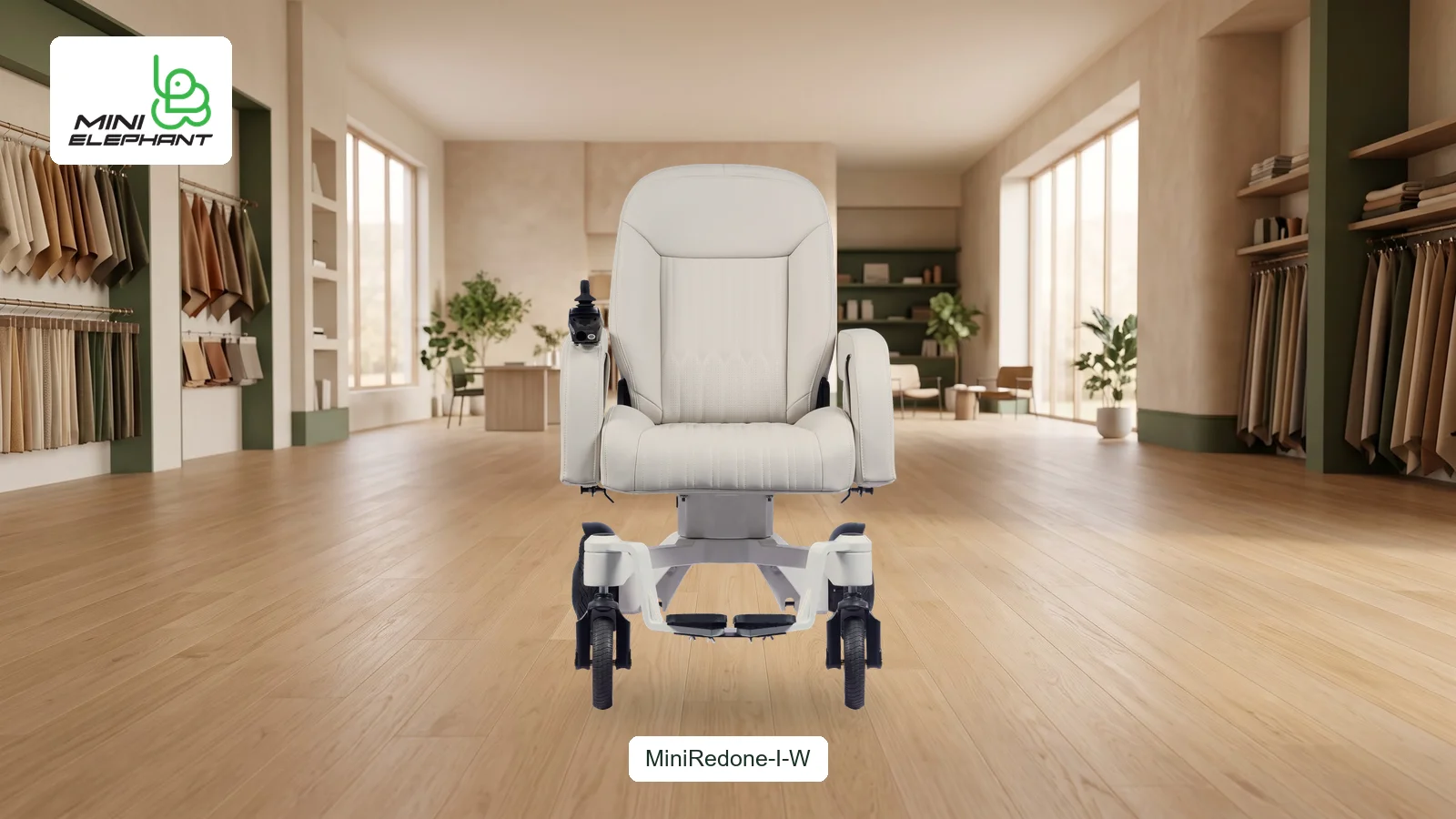
Choose electric wheelchair upholstery by its documented material, real seating feel and approved care instructions—not by a leather-like appearance or a claim that it wipes clean. For users, families and dealers, a premium seat should be evaluated as a complete configuration: cover, cushion, backrest, attachment method and replacement support. Attractive photography cannot establish breathability, waterproofing, disinfectant compatibility or pressure management.
This guide explains how to compare electric wheelchair upholstery, what to ask before ordering, and how to plan everyday care without damaging the seating or nearby electrical components. Product-specific instructions take priority over general advice. Individual seating needs should be assessed with an appropriately qualified professional where necessary.
What does electric wheelchair upholstery actually include?
Upholstery usually describes the outer covering and finished surfaces of the seat or backrest. The cushion underneath is a separate part of the seating system. A removable-looking cover may not be intended for user removal, and a stitched seam does not reveal what lies beneath it.
When comparing an electric wheelchair, ask the supplier to identify the cover, cushion and complete seat assembly separately. Confirm which components can be serviced or replaced, and who is authorized to do that work. Do not assume that a modular seat system makes every cover washable or interchangeable.
For a MiniElephant example, the current MiniRedone-I-W product page lists a modular seat system. That listing does not establish a particular upholstery composition, washing method or availability of replacement covers. Request those details for the actual configuration being quoted.
Compare material evidence, not showroom labels
An electric wheelchair described as having a luxury seat still needs a material specification. Terms such as premium, soft-touch or leather-style describe an impression; they do not identify composition or a tested performance level.
For electric wheelchair purchases, obtain a clear answer about the delivered material rather than selecting a fabric family from an unverified photograph. Different finishes within the same family may have different care restrictions. An unfamiliar specification is a reason to ask for documentation, not to guess a cleaning method.
Comfort involves more than the upholstery surface
An electric wheelchair seat that feels soft for a moment may not suit a person's usual sitting routine. Cushion shape, seat dimensions, backrest support, clothing, room temperature and the person's needs all influence the experience. A premium appearance cannot replace a suitable seating assessment.
During an appropriate electric wheelchair demonstration, consider these practical questions:
- Does the surface feel comfortable with the clothing normally worn?
- Are seams, edges or fasteners noticeable in everyday contact areas?
- Does the selected backrest and cushion configuration match the agreed sample?
- Can the person reach the controller without an awkward position?
- Are cleaning and replacement requirements manageable for the intended household or service team?
Do not turn a short demonstration into a universal comfort guarantee. Stop and seek suitable advice if discomfort or skin concerns arise. This article does not prescribe a sitting duration, a clinical cushion or a pressure-relief routine.
An electric wheelchair cushion also needs its own evaluation. Cover softness alone does not prove pressure redistribution, therapeutic benefit or long-term individual suitability. Keep those claims separate from everyday observations about texture and ease of care.
A cautious daily cleaning workflow
Before cleaning an electric wheelchair, read the manufacturer's instructions for the supplied seating, controls and electrical system. Confirm the permitted product, application method and drying process. If documentation is missing, request it before experimenting with chemicals or taking the seat apart.
1. Prepare the chair safely
Park the electric wheelchair in a suitable stable location and switch it off as directed by the manual. Follow its instructions regarding charging and electrical connections. Keep liquids away from the joystick, connectors, charger and other electrical components. Do not spray the chair directly, hose it down or treat a smooth seat as proof that the whole product tolerates water.
2. Use only the approved surface method
Where the seating instructions permit wiping, use the specified cloth and cleaning solution with the stated application method. Do not assume that alcohol, bleach, household disinfectant, polish or a strong detergent is suitable. An inconspicuous-area check, if recommended, does not replace written chemical compatibility guidance.
For electric wheelchair covers, avoid an improvised soaking routine. A clean-looking outer surface can conceal moisture in seams, foam or attachments. Remove a cushion or cover only if the supplied instructions explicitly permit it and explain correct reassembly.
3. Follow the stated drying and return-to-use process
Allow the seating to dry as instructed and check that any permitted removable components are correctly secured before use. Do not speed drying with a heater, hair dryer or prolonged direct sunlight unless expressly allowed. If liquid has entered an electrical area, stop using the product and obtain the manufacturer's service guidance.
Keep electric wheelchair cleaning equipment and instructions together so that a second caregiver or dealer employee does not substitute an incompatible product. A short written care card is often more useful than a vague instruction to keep the chair clean.
Cleaning is not the same as disinfection
For an electric wheelchair used by more than one person, a household wiping routine is not automatically an adequate infection-control process. Cleaning removes soil; disinfection requires a suitable product and procedure for the relevant setting and surface.
Dealers and fleet operators should obtain electric wheelchair seating compatibility instructions and follow applicable local infection-control requirements. If disinfection is required, confirm the permitted agent, dilution, contact conditions, removal requirements and drying method with the relevant documentation. Do not invent a universal recipe.
Claims such as antibacterial, medical-grade, flame-resistant or waterproof need supporting evidence that identifies the actual material and applicable scope. A certificate for an unrelated fabric or a general company document does not establish those properties for the delivered seat.
Inspect wear before it becomes a replacement problem
An electric wheelchair care routine should include observation, not just wiping. Look for open seams, tears, loose attachments, persistent moisture, exposed filling or a change in the seat's condition. Follow the manual and request service advice if deterioration could affect safe use.
For electric wheelchair replacement planning, record the model, supplied seating configuration and relevant part identification. Do not order a generic cushion or cover solely because its photograph looks similar. Confirm dimensions, attachment compatibility and intended use, including whether the original assembly must be replaced as a unit.
Do not promise a replacement interval based on appearance alone. Usage, environment, cleaning and the particular component all matter. The supplier should explain what evidence is needed to identify a suitable replacement and whether the item is available for that configuration.
A buyer's upholstery approval checklist
Before approving an electric wheelchair sample or placing a repeat order, document:
- The exact model, seat configuration, color and material description.
- Clear photographs of the seat, backrest, seams and attachments.
- The approved cleaning instructions and prohibited products.
- Whether any components are removable, and by whom.
- Replacement part identification and any unresolved availability questions.
- Which performance claims are supported by configuration-specific evidence.
- How a proposed material or supplier change will be approved before production.
For electric wheelchair distribution orders, keep the approved sample and care documentation linked to the purchase specification. Check the sample before ordering, the configuration before shipment, and the instructions again at receiving. Record material changes rather than assuming a similar color means an identical seat.
Frequently asked questions
Is leather-like electric wheelchair upholstery easier to maintain?
It may offer a smooth wiping surface, but maintenance depends on the actual material and approved cleaning process. Leather-like appearance does not establish genuine leather, waterproofing or chemical resistance. Ask for the supplied cover specification.
Can I machine-wash an electric wheelchair seat cover?
Only when the specific cover instructions explicitly permit removal and machine washing, with the relevant settings and drying process. A zipper or detachable-looking edge alone is not permission. Some assemblies require service support or replacement rather than washing.
Can I use disinfectant wipes on an electric wheelchair?
Do not assume compatibility. Check both the seating instructions and the wipe's intended use. The required procedure must match the actual surface and setting; do not let chemicals or moisture enter electrical parts.
Does a softer electric wheelchair seat mean better comfort?
Not necessarily. The complete seating configuration and the person's needs matter. Softness is an observation, not proof of pressure management or clinical benefit. Obtain an appropriate individual assessment when needed.
What should I ask MiniElephant before ordering?
Start with the chosen model and intended use. Request the exact seating specification, material information, care instructions and replacement arrangements for that configuration. Browse the MiniElephant electric wheelchair range, review MiniRedone-I-W, or contact the team with your questions. Jiaxing Small Elephant Medical Technology Co., Ltd can be reached at johnson@semwheelchair.com.
*Editorial note: This is general buyer and care guidance, not a model-specific maintenance manual or clinical recommendation. The illustration uses an unchanged MiniRedone-I-W product photograph on a generated interior background; it does not demonstrate fabric composition, cleaning performance or medical benefit.*
Interested in MiniElephant Electric Wheelchairs?
Get a customized quotation and product recommendation from our export team. Response within 24 hours.