Electric Wheelchair Packaging: Carton vs Crate Comparison
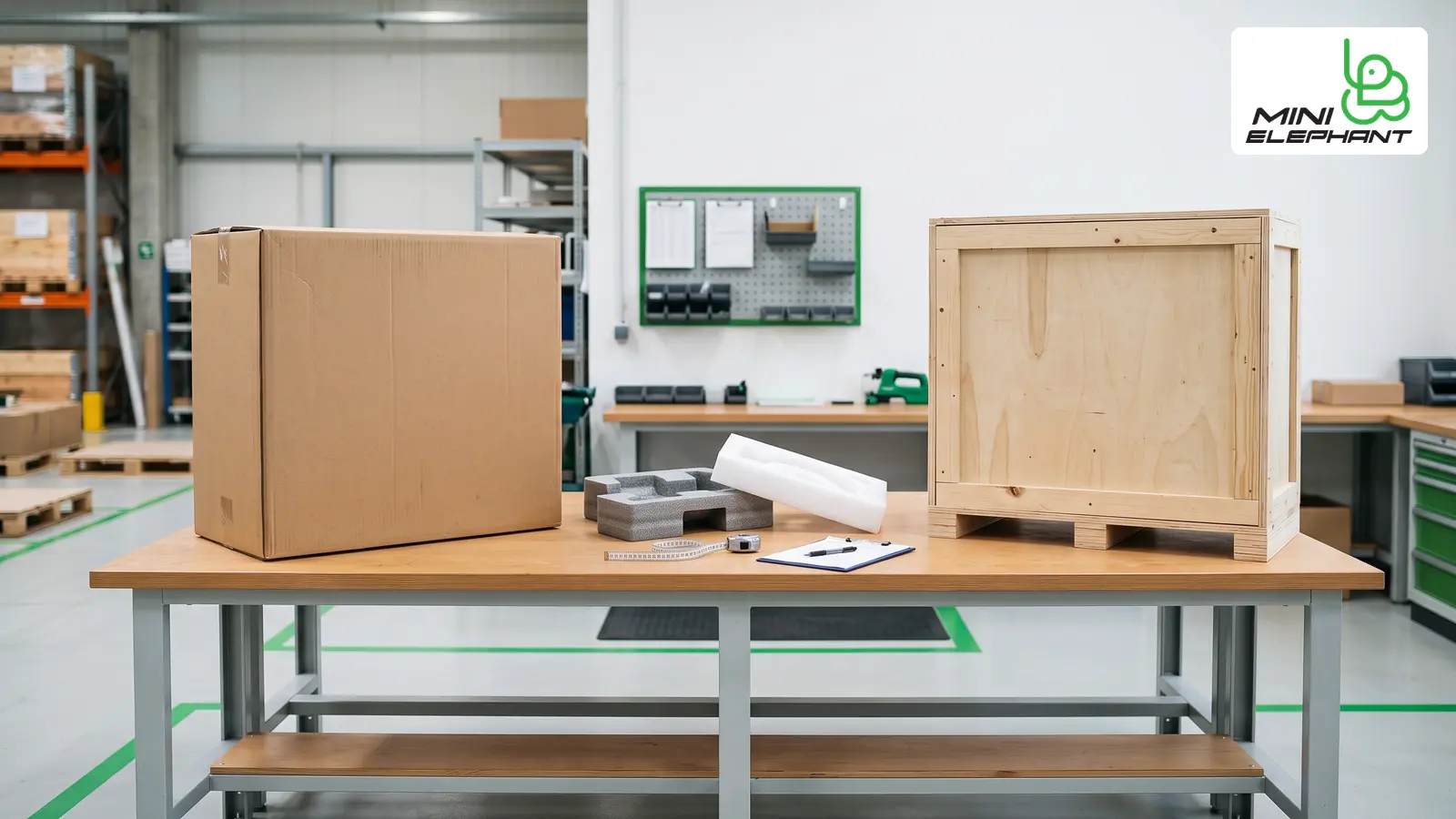
For an electric wheelchair shipment, a validated carton can be the better choice for controlled distribution, while a crate may suit exposed handling or a high-value sample. Neither format is automatically safer. Compare the complete packed unit, route, volume, gross mass, internal restraint, and test evidence before choosing. This review gives importers and distributors a measurable purchasing framework rather than ranking manufacturers or promising a universal damage rate.
Background: What Does Packaging Evidence Actually Show?
Electric wheelchair packaging must protect a mobility product through transfers, storage, unloading, and delivery. An intact outer box is not proof that the controller, accessories, or frame stayed protected. Conversely, a heavy crate does not compensate for poorly positioned restraints inside it.
The International Safe Transit Association distinguishes 1-Series screening tests from 3-Series general simulation tests. Its procedure descriptions include a 68 kg boundary for 1A versus 1B, and separate parcel, less-than-truckload, and unitized-load approaches. These are procedure-selection references, not an electric wheelchair safety certification or a universal shipping limit. The laboratory must select the appropriate current procedure for the actual shipment.
This electric wheelchair comparison uses calculated examples, not measured supplier results. No market-wide damage percentages, packaging prices, or MiniElephant transit-test claims are implied. Read the ISTA procedure descriptions and agree a route-specific plan with the packaging laboratory and logistics provider.
Five Electric Wheelchair Packaging Evaluation Criteria
Use the same five criteria when comparing an electric wheelchair carton proposal with a crate proposal:
|---|---|---|
Keep an electric wheelchair sample configuration fixed during the review. Record model, options, accessories, battery shipping configuration, and packaging revision. A report for another carton or an omitted accessory is not automatically evidence for the unit being ordered.
Electric Wheelchair Carton vs Crate: Detailed Review
Corrugated carton: space efficiency with design dependencies
A corrugated carton can support repeatable packing, clear labeling, and straightforward dealer unpacking. An electric wheelchair carton needs specified board construction, closures, cushioning, restraint, and orientation. Single-wall or double-wall descriptions alone cannot establish compression performance or protection: board grade, geometry, moisture exposure, and the packed system matter.
Ask the supplier how the electric wheelchair is immobilized without concentrating force on fragile components. Request photographs before closure, accessory separation, and the exact packing sequence. A carton supported by an engineered pallet is a different system from the same carton handled as an individual parcel.
Review conclusion: favour a carton when its complete design has suitable evidence for the intended route, not simply because it looks compact. Confirm any stacking instruction in writing; do not turn a brochure image into an approved stacking height.
Wooden crate: handling protection with added volume
A crate can provide a rigid outer enclosure and defined lifting interfaces. For an electric wheelchair sample passing through several handling stages, those features may be useful. However, construction quality, attachment points, restraint, and access must still be reviewed. The enclosure does not prove that shocks reaching the product are acceptable.
Electric wheelchair buyers should ask which timber or engineered-wood materials are used and whether destination-specific packaging obligations apply. The freight forwarder and importer should confirm the applicable requirements; do not assume every wooden enclosure has identical treatment or marking obligations.
A crate may also increase occupied space, gross mass, disposal effort, and unpacking time. Obtain actual measurements and a handling demonstration. Do not state that crate freight is always more expensive: transport mode, tariffs, minimum charges, and pallet configuration can change the result.
Side-by-side electric wheelchair packaging comparison
|---|---|---|
Electric Wheelchair Packaging Numbers: A Worked Example
Suppose two hypothetical packages contain the same electric wheelchair configuration. Proposal A is an 80 × 65 × 45 cm carton with a 38 kg gross mass. Proposal B is a 90 × 75 × 55 cm crate with a 48 kg gross mass. These are teaching inputs, not MiniElephant dimensions, quotations, or product specifications.
|---|---|---|
Volume is length × width × height in metres. In this example, B occupies 58.65% more external volume and adds 26.32% gross mass compared with A. The batch difference is 2.745 m³ and 200 kg. These differences do not predict container capacity: pallet dimensions, clearances, stacking restrictions, and loading geometry must be added.
For an electric wheelchair purchase, send both measured proposals to the same forwarder under the same route, shipment size, and commercial conditions. Compare freight quotations, packaging cost, receiving labour, and evidence quality separately. A lower dimensional figure is not a reason to accept weak protection.
Practical Electric Wheelchair Packaging Decision Framework
1. Describe the route. List warehouse transfers, transport modes, mechanical handling, and final delivery. Tell the supplier whether the electric wheelchair moves individually or in a unitized load.
2. Freeze both proposals. Record outer dimensions, mass, materials, restraints, packing revision, labels, and included accessories. Obtain comparable samples.
3. Request matching evidence. Ask a qualified laboratory to recommend the relevant test approach. Record the exact procedure and configuration rather than asking for an undefined “shipping certificate.”
4. Evaluate receipt. Demonstrate unpacking and document enclosure condition, accessory completeness, and product checks under the supplier's instructions. Agree acceptance criteria contractually, not through this article.
5. Control changes. A substituted carton, cushion, crate material, or packing orientation needs documented review. Preserve photographs and revision records for each electric wheelchair order.
MiniElephant, the brand of Jiaxing Small Elephant Medical Technology Co., Ltd, is one manufacturer buyers can include in an electric wheelchair RFQ alongside other candidates. Ask Johnson at johnson@semwheelchair.com for the packaging details of the quoted configuration. This review does not assert comparative superiority, test completion, or guaranteed destination approval.
Continue with the electric wheelchair packaging specification guide, RFQ template, and pre-shipment inspection checklist. The importer and local advisers remain responsible for applicable market-entry obligations.
FAQ: Electric Wheelchair Packaging Comparison
Is a crate always better for an electric wheelchair?
No. Compare the entire packing design and route-specific evidence. A rigid outer enclosure with poor internal restraint may still leave vulnerable components exposed.
Does double-wall board guarantee electric wheelchair protection?
No. Board construction is only one input. Review the specified materials, closures, cushioning, geometry, loading instructions, and the report for the exact packed configuration.
Can electric wheelchair buyers use a 68 kg threshold as a shipping rule?
No. The threshold cited here distinguishes particular ISTA screening procedures. Carrier acceptance and the appropriate test programme require separate confirmation for the actual shipment.
How should an electric wheelchair importer compare freight cost?
Provide measured dimensions and gross mass to the same forwarder for the same route and batch. Include pallet space, handling requirements, and any relevant additional charges; do not estimate price from volume alone.
What if electric wheelchair packaging changes after approval?
Request written change control, updated packing records, and a review of whether existing evidence still applies. Agree any additional testing and commercial remedies in the purchase contract.
Interested in MiniElephant Electric Wheelchairs?
Get a customized quotation and product recommendation from our export team. Response within 24 hours.