Electric Wheelchair Pre-Shipment Inspection: B2B Quality Checklist
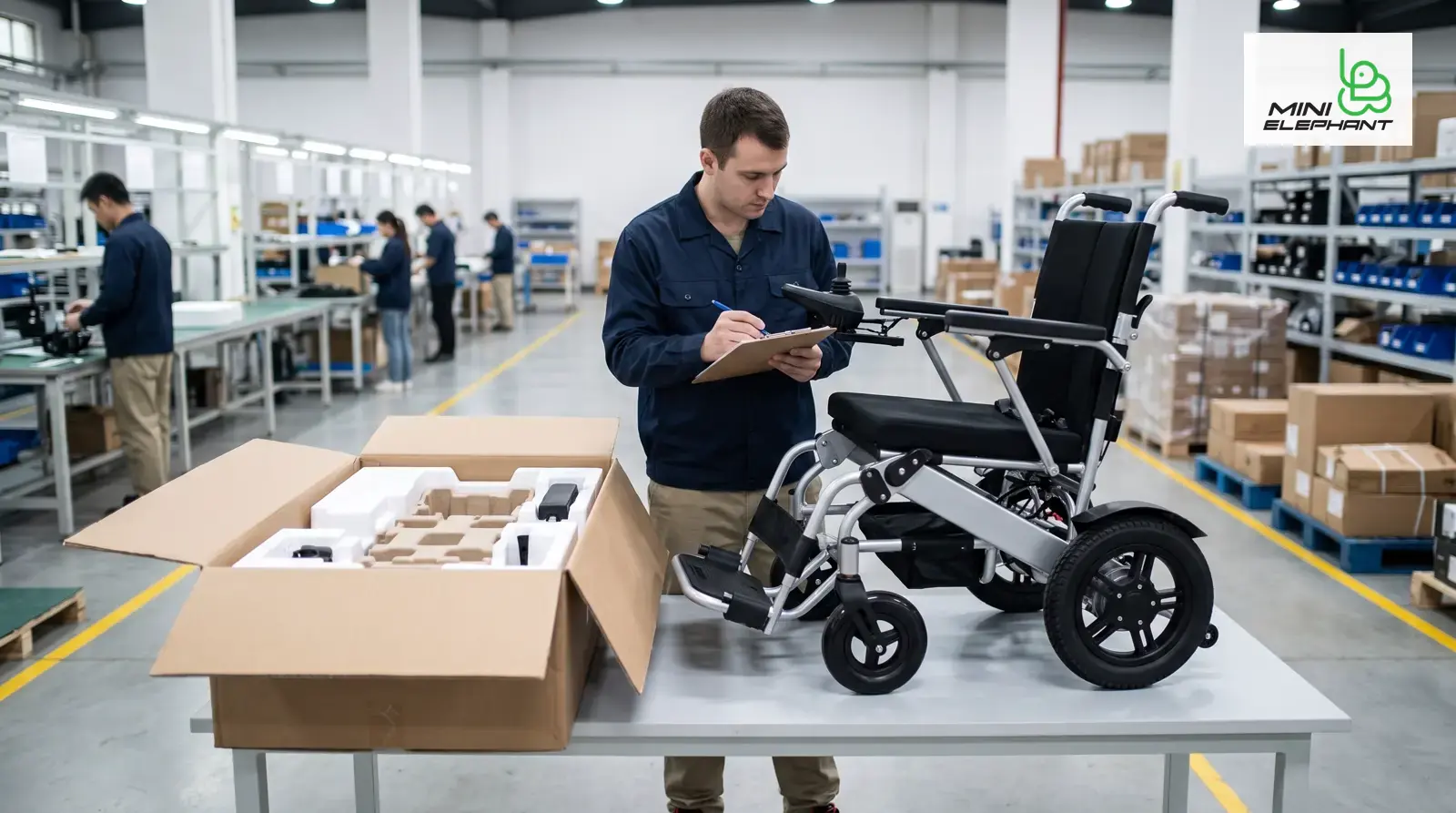
Electric Wheelchair Pre-Shipment Inspection: A Practical B2B Checklist
A factory sample can look perfect while a production shipment contains missing accessories, loose hardware, incorrect labels, or a controller revision that was never approved. Pre-shipment inspection gives the importer a structured opportunity to compare finished goods with the purchase order before the cargo leaves the factory.
Inspection does not replace product certification or a full quality-management system. It creates evidence that the order was checked against agreed requirements, and it makes recurring defects easier to identify and correct.
Start With the Approved Reference
Before inspecting production units, assemble the documents that define acceptance:
- purchase order and commercial specification;
- approved sample photographs or sample-identification record;
- packing list and accessory list;
- approved artwork, labels, and manuals;
- battery and charger specifications;
- agreed inspection level and defect definitions;
- packaging and carton requirements.
Use the same model name and revision throughout the file. If the purchase order says one battery model and the carton label shows another, stop and reconcile the discrepancy before approving shipment.
Product Identity and Visual Checks
The first inspection layer confirms that the correct product is being packed. Check model, color, upholstery, frame finish, serial-number format, logo placement, and included options. Compare production units with the approved reference from the same viewing angles.
Inspect visible surfaces for scratches, dents, exposed sharp edges, uneven coating, loose stitching, damaged upholstery, and incomplete fasteners. Record the location and severity of every defect with a photograph and unit number rather than relying on a general note such as “appearance acceptable.”
Frame, Folding, and Mechanical Functions
The frame should open, fold, and lock without unusual force. Check that folding joints have no excessive play, locking pins engage completely, and the chair remains stable when unfolded. Inspect armrests, footrests, handles, casters, drive wheels, and any removable battery enclosure.
A basic mechanical checklist includes:
|---|---|
Test the complete configuration, including the accessories that will be shipped to customers.
Electrical and Driving Tests
Power on each sampled unit according to the approved test procedure. Confirm display or indicator operation, battery connection, charger response, horn, lights if fitted, forward and reverse travel, left and right turning, speed control, stopping, and electromagnetic brake engagement.
The chair should not move unexpectedly when powered on with the joystick deflected. Check that releasing the joystick produces a controlled stop and that the chair holds when parked on the approved test surface. For models intended for outdoor use, document the surface, load condition, and any incline test rather than recording an unsupported claim.
Ask the factory to record controller fault codes and confirm that the charger is the correct model for the battery pack. A functioning chair paired with the wrong charger is still a shipment defect.
Battery, Charger, and Documentation Checks
Verify battery chemistry, voltage, capacity, model number, connector, label, and physical condition. Match the battery to the specification sheet, carton, invoice, and packing list. Check terminal protection and ensure the battery cannot move inside its package.
For lithium-battery orders, include the applicable transport documentation in the shipping file and confirm that the exact battery model is covered. The charger should show the correct output, input plug, polarity, and model identification. Manuals and warning labels should match the delivered configuration and target market language.
Packaging and Accessory Completeness
Packaging must protect the chair during normal handling, not merely make the carton look full. Check foam, corner protection, wheel restraint, battery placement, moisture protection, and whether the chair can be removed without damaging controls or upholstery.
Count every accessory against the packing list: charger, cushion, footrests, armrests, tools, keys, manuals, spare fuses, and any agreed optional parts. Missing low-cost accessories create disproportionate customer-service work after delivery.
Sampling, Defects, and Inspection Records
For a larger order, inspect a representative sample based on an agreed sampling plan. Define critical, major, and minor defects before the inspection begins. Safety-related electrical or braking failures should receive stricter treatment than a small cosmetic imperfection.
Each record should include the date, order number, model revision, unit or carton numbers, test conditions, photographs, defect classification, corrective action, and final disposition. Keep the report with the purchase-order file so later warranty patterns can be compared with the original shipment.
B2B tip: use the inspection report as a production-improvement tool. If the same loose fastener appears in three shipments, the solution is a process change, not another final repair.
Common Reasons to Hold Shipment
Consider placing a shipment on hold when:
- the model or controller revision differs from the approved sample;
- safety functions fail or cannot be demonstrated;
- battery and charger specifications do not match;
- serial numbers or labels are missing or inconsistent;
- accessories are incomplete across multiple cartons;
- packaging cannot protect the chair during ordinary transport;
- corrective actions are promised but not documented.
A hold does not have to become a dispute. Share the defect list, agree on rework or replacement, and arrange a focused re-inspection before release.
Decision Framework for B2B Importers
1. Freeze the approved configuration before production starts.
2. Inspect identity, mechanics, electrical functions, and packaging as separate sections.
3. Test battery and charger matching on the actual production configuration.
4. Define defect categories and release criteria in advance.
5. Photograph and number every non-conforming unit for traceability.
6. Use recurring defects to improve the factory process and protect repeat orders.
FAQ
When should an electric wheelchair be inspected before shipment?
A pre-shipment inspection is normally performed after most production is complete and the goods are packed or ready to pack. The timing should leave enough room for rework and a follow-up check before the shipment is released.
Does inspection replace certification?
No. Inspection checks whether the supplied goods match the order and pass agreed functional checks. It does not replace required certification, testing, regulatory review, or the manufacturer's quality responsibilities.
What is the most important test?
Safety-critical functions deserve priority: controlled movement, stopping, electromagnetic brake engagement, charger and battery compatibility, and the absence of unexpected startup. The exact test should match the model and market requirements.
The B2B Bottom Line
A documented pre-shipment inspection protects more than one container. It creates a repeatable quality standard for the product line, gives distributors evidence when handling claims, and helps the manufacturer correct process defects before they become warranty costs.
**Need a pre-shipment checklist for your electric wheelchair order?** [Contact the MiniElephant export team](https://www.semwheelchair.com/contact) for configuration confirmation, inspection points, and B2B quality-support documentation.
Interested in MiniElephant Electric Wheelchairs?
Get a customized quotation and product recommendation from our export team. Response within 24 hours.