Electric Wheelchair Fault Codes: Dealer Diagnostics Guide
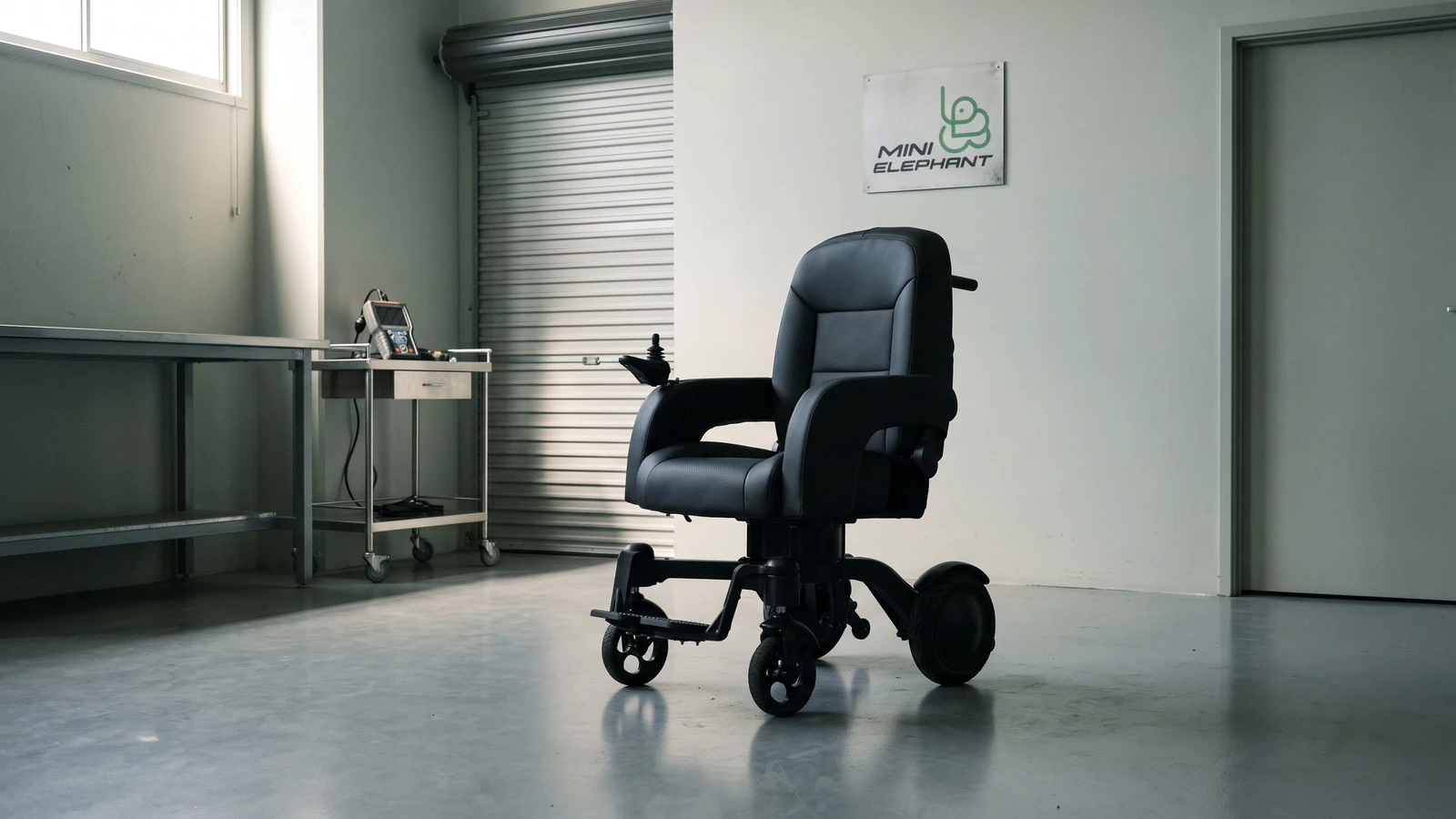
Before a dealer raises an electric wheelchair service ticket, capture five facts: the controller label and revision, the exact code or blink pattern, the battery charge level at the moment of the failure, the symptom under real load, and the serial number. A fault code tells you what the controller detected. It does not tell you which part failed, and it does not transfer between controllers. This guide sets out a dealer-side workflow for folding electric wheelchairs, the evidence that gets a warranty claim approved the first time, and the point at which a case should go back to the factory instead of staying in the workshop.
Why electric wheelchair fault codes are easy to misread
A controller reports what its own sensors see. Two electric wheelchairs with the same frame and the same motors can still carry different controller revisions, and the same stored code can mean different things across those revisions.
Three habits cause most misdiagnosis in the workshop.
- Reading the code as a failed part. A code names the circuit the controller was watching, not the component that broke. A motor code can be a chafed harness at the folding joint, not a motor.
- Using the wrong code sheet. A generic table borrowed from another brand sends the dealer of an electric wheelchair straight to the wrong module. Use the sheet that matches the label on the controller fitted to that unit.
- Skipping the conditions around the failure. Heat, moisture, low charge and a dragging brake all generate symptoms on an electric wheelchair that look electrical. A code captured after ten minutes of uphill work is not the same event as a code captured at a cold start.
MiniElephant supplies controller documentation with the chair and provides online troubleshooting support to distributors, so a dealer never has to guess which table applies.
Record the evidence before you touch anything
Every electric wheelchair case should open with a record, not a repair. The table below is the minimum a workshop needs before the first test.
Photograph the label, film the code and write the conditions on that electric wheelchair while they are still true. Ten minutes of recording replaces an hour of guessing.
Safety boundaries that apply to every diagnosis
These are not optional steps. They protect the technician and they protect the evidence.
1. Test unoccupied and off the floor. Raise the drive wheels of the electric wheelchair on a stand before running any output test. Never test with a user seated.
2. Never open the built-in battery. The 16Ah LiFePO₄ battery fitted to MiniRedone models is built in and not user-removable. Battery service is arranged through the supplier, not in the workshop.
3. Never fit an unmatched charger. Charger output must match the specification of the electric wheelchair being charged. A borrowed charger can create the fault it was meant to diagnose.
4. Never bypass a fuse to prove a point. A fuse that keeps blowing is information, not an obstacle.
5. Do not push an electric wheelchair with the brake engaged. Confirm the drive state before moving the unit manually.
The six fault groups that cover most dealer calls
Most electric wheelchair service calls land in one of six groups. Work through the group before opening a claim.
A quick note on the last row: charging time on these electric wheelchairs is specified at 4 to 6 hours. A charger that has been running for two hours has not failed. Compare against the specified window before replacing anything.
An eight-step dealer workflow
1. Interview the user. Get the when, the where and the load for the electric wheelchair. The story usually ranks the six groups above.
2. Record the evidence. Label, code, charge level, serial, conditions.
3. Charge and retest. Put the electric wheelchair on a matched charger and repeat the fault. Many reported faults do not survive a full charge.
4. Inspect the electric wheelchair before measuring. Look for a crushed harness at the fold joint, corrosion at the port, and water ingress at the connectors. Visible damage explains more codes than meters do.
5. Test one output at a time. Raise the wheels, run forward and reverse, and confirm each side responds independently.
6. Compare sides. On a dual-motor electric wheelchair, a healthy side is the best reference the workshop has.
7. Reproduce under load. Diagnose the electric wheelchair working exactly as it does for the user: same slope, same surface, same duration.
8. Write the finding against the code. One sentence per code, describing what was tested and what the result was. This becomes the warranty record.
Reading the code sheet that ships with the chair
A code sheet for an electric wheelchair is a lookup, not a diagnosis. Read it in three steps: code to module, module to test, test to decision. If the code maps to a module and the module tests good, the fault is upstream in the harness, the connector or the supply. That single rule resolves a large share of electric wheelchair service cases without a new part.
Keep a per-unit electric wheelchair log from the day of delivery. Units with a written history are diagnosed in minutes; units without one are diagnosed by trial.
Warranty evidence that gets approved the first time
MiniElephant publishes a 5-year warranty for the complete electric wheelchair and a 3-year warranty for key components such as the controller, the battery and the motors. These are different coverage periods, not a five-year guarantee for every part. Confirm the applicable model, exclusions and claim procedure in the written warranty policy and the order terms.
Beyond the policy, a claim moves fast when it carries four things: the serial number, a clear photograph of the controller label, a filmed code or a verified display reading, and a description of the tests already completed. Claims that arrive as "the electric wheelchair does not work" come back as questions. Claims that arrive with evidence come back as parts.
Parts supply and technical support run in parallel. Distributors can order spare parts separately and confirm compatibility with the exact model before shipping.
Spare parts that turn a diagnosis into a same-week repair
Stock decisions for electric wheelchair fleets belong to the distributor, but the pattern is consistent: one spare controller and one matched charger per fleet turn most electric wheelchair service visits into same-week repairs instead of month-long returns.
When to send the case back to the factory
Escalate when a code repeats after the mapped module has been replaced, when the fault points at the built-in battery, when the magnesium frame or a casting is involved, or when any finding touches braking safety. Those are the boundaries where workshop diagnosis stops adding value. Agree the escalation contact and the response window in the dealer agreement so the decision is not made under time pressure on the day of the failure.
A useful working rule for electric wheelchair distributors: the workshop owns connectors, harnesses, chargers and setup; the factory owns batteries, frames, castings and controllers under claim. Teams that respect the line keep their fleets running and their claims clean.
Turn the workflow into a habit
A single-page electric wheelchair dealer log fixes most of this. Six fields, filled in at intake: serial, controller label, code or blink pattern, charge level, load condition, and the test result that closed the case. After twenty electric wheelchair cases, the log tells you which model is costing you the most workshop hours, and which spare part would have paid for itself three times over.
Diagnostics on a folding electric wheelchair is not a talent. It is a record, a sequence and a boundary. Record the evidence, follow the sequence, respect the boundary, and the code sheet does the rest.
Frequently asked questions
Do all electric wheelchairs use the same fault codes?
No. Codes belong to the controller family and its revision, not to the wheelchair category. Always match the code sheet to the label on the controller fitted to that unit.
Can a dealer repair or replace the battery?
No. The battery in these electric wheelchairs is built in and not user-removable. Battery service and replacement are arranged through the supplier so the sealed assembly and its documentation stay intact.
The display shows no code, but the chair will not move. What next?
Treat it as a supply case. Verify the charger, the port, the fuse and the joystick connector before anything else. A powered-down controller cannot report a code, so absence of a code is information about the supply, not proof that the electronics are healthy.
How long should a full charge take?
The specification for these electric wheelchairs is 4 to 6 hours. Real time varies with the state of charge, the charger supplied and the ambient temperature. Compare against the specified window before suspecting the battery.
Is joystick drift always a controller failure?
Not always. Boot damage, moisture at the module and a calibration error all produce drift. Calibrate the electric wheelchair first, then test in dry conditions, then replace if the drift returns.
What should a warranty claim include?
Serial number, controller label photograph, the code or a filmed blink pattern, the conditions of the failure, and the tests already completed. Add the part requested and the quantity. Complete claims are answered with parts; incomplete claims are answered with questions.
Choosing a platform you can service
Every MiniRedone model is a folding electric wheelchair built on a one-piece magnesium alloy die-cast frame with dual 350W brushless hub motors, a 16Ah LiFePO₄ battery and a 150 kg maximum load. The controller can be fitted on the left or the right, and the seat and base separate for service access. For distributors, the practical question is not only what the electric wheelchair does on a showroom floor, but how quickly a technician can return it to service. Browse the MiniRedone series or read the braking system checklist and the spare parts stocking guide that pair with this workflow, then request a wholesale quotation with the models and markets you serve.
Interested in MiniElephant Electric Wheelchairs?
Get a customized quotation and product recommendation from our export team. Response within 24 hours.