Electric Wheelchair HS Code: Classification Guide for Importers
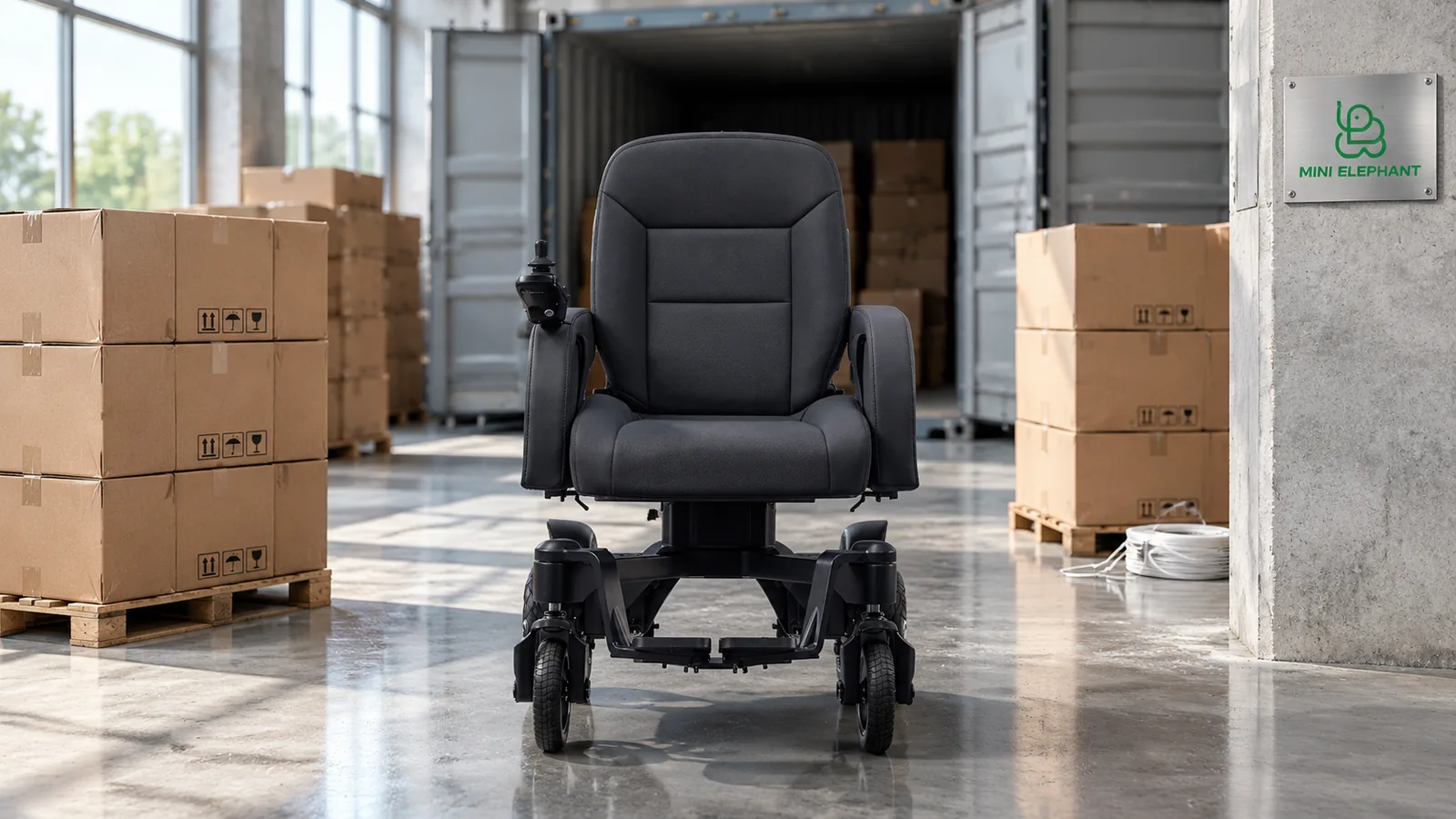
A complete electric wheelchair is classified under HS heading 8713, and in almost every importing market the correct six-digit subheading is 8713.90. Heading 8713 covers carriages for disabled persons, whether or not motorised or otherwise mechanically propelled. The 8713.10 subheading is reserved for carriages that are not mechanically propelled, which is why an electric wheelchair does not belong there. Everything else in the heading, including every battery-powered electric wheelchair in this range, falls into 8713.90. Getting this right is not paperwork for its own sake: the code sets your duty rate, your import licence requirements, your eligibility for reduced VAT or medical-device relief, and whether your shipment is inspected as a medical mobility product or as a motor vehicle.
Why the code decides your landed cost
Two importers can buy the same electric wheelchair from the same factory at the same FOB price and pay materially different landed costs, because the HS classification drives three separate charges. First, the customs duty rate is attached to the subheading, not to the product name on the invoice. Second, value-added tax or sales tax treatment often follows the classification and, in some markets, a separate medical-device relief scheme. Third, the classification decides which regulatory documents border officers request, and a request you cannot answer becomes demurrage.
The heading that governs electric wheelchairs
The six-digit level for an electric wheelchair is the international baseline maintained by the World Customs Organization. Most countries then extend it: the United States uses HTS 8713.90.00, the European Union uses CN 8713 90 00, and China uses 8713.90.00.00. When a freight forwarder or a broker quotes you a code with eight or ten digits, the first six should still read 8713.90. If they do not, stop and ask why before the electric wheelchair container is booked.
8713.90 versus 8703: the misclassification that triggers audits
The most expensive mistake in this category is treating an electric wheelchair as a motor vehicle under heading 8703, which covers motor cars and other vehicles principally designed for the transport of persons. The reasoning sounds plausible to someone who has never handled a mobility product: it has a motor, it has wheels, it carries a person. It is still wrong, and the consequences run the wrong way for the importer.
A 8703 entry pulls the electric wheelchair into automotive conformity routes, invites questions about vehicle type approval, and in several markets attracts a higher duty than 8713.90. It also destroys the traceability of your product history: once a model has entered under the wrong chapter, correcting later shipments means amending entries and, in the worst case, paying duty retrospectively with penalties. Correcting a single misclassified electric wheelchair shipment can cost more than the margin on the entire order.
The opposite error is inflating the claim. Some importers push an electric wheelchair into a general medical-instrument heading to chase a zero rate or a tax exemption they have not verified. That is a classification dispute waiting to happen, and it fails the same way: the goods are reclassified, duty is assessed on the correct code, and the difference plus interest lands on the importer of record.
When one shipment needs several codes
A container of electric wheelchairs is rarely a single-tariff shipment. The complete units carry 8713.90, but the commercial invoice usually bundles other lines that belong somewhere else. Classify each line separately; do not let a forwarder roll everything under the electric wheelchair code for convenience.
The battery line matters most. A loose lithium battery pack is dangerous goods for transport purposes, and it is a battery for tariff purposes, so it needs its own entry, its own documentation, and its own compliance file. Treating a spare battery as part of an electric wheelchair on the invoice creates an unresolved question at the border and can hold the whole consignment. The same discipline applies when a dealer orders a mixed spare-parts container: group the lines by code family before the commercial invoice is finalised.
What border officers actually ask for
Customs rarely challenges the electric wheelchair classification first. It checks whether the documents support it, which is why the import compliance document checklist belongs in the same folder as the entry. For each shipment, prepare the following as one package and keep the digital copies with the entry file.
- Commercial invoice showing the HS code on every line, with the model designation matching the specification sheet
- Packing list with carton dimensions, gross and net weight, and the number of units per carton
- Bill of lading or airway bill consistent with the invoice consignee
- Certificate of origin, especially where a preferential rate is claimed
- Product specification sheet describing the electric wheelchair as a mobility device, with motor rating, battery chemistry and intended user
- Battery transport documents: a UN 38.3 test summary and a safety data sheet where the battery ships as a separate line, as set out in our lithium battery shipping guide
- Destination-market conformity evidence, such as a CE declaration of conformity for the European Union or a facility registration and device listing reference for the United States
For an electric wheelchair, the specification sheet is the document that wins or loses the classification argument. If it describes an electric wheelchair with a maximum speed, a seat, a joystick controller and an intended user with limited mobility, it supports 8713.90. If it reads like a marketing brochure about a personal transporter, you have handed the officer a reason to look at 8703. Keep the wording factual and consistent across every document in the file.
Working out the landed cost
Once the electric wheelchair code is settled, build the landed cost from the tariff outward. The table lists the components in the order they hit the entry, so you can see where a classification error expands.
Do not assume the electric wheelchair duty rate from a competitor's spreadsheet or from the rate you paid two years ago. Rates change, preferential agreements change, and a rate that applied to a manual chair under 8713.10 does not automatically apply to a motorised electric wheelchair under 8713.90. Ask your broker to confirm the current rate in the destination tariff schedule in writing, and keep that confirmation with the quotation you send to your own customers. When you quote delivery terms, separate the DAP and DPU obligations clearly so that duty and import clearance do not silently land on the wrong party.
Getting a binding ruling before your first shipment
Every major customs administration offers a written advance ruling, and for a new electric wheelchair model it is the cheapest insurance in the file. For an electric wheelchair line, a ruling converts an opinion into a decision you can cite. The sequence that works:
1. Confirm the exact product configuration, because a ruling is issued for a described article, not for a product family
2. Assemble the specification sheet, photographs, battery details and intended-use statement
3. Submit the ruling request to the destination customs authority, naming heading 8713.90 and explaining why 8713.10 and 8703 do not apply
4. Hold the first shipment until the ruling is issued, or accept the risk in writing
5. Store the ruling number on the commercial invoice reference for every subsequent shipment of that model
This matters most when your electric wheelchair line includes variants that sit close to a boundary: a very compact folding model, a model with a specification sheet written for outdoor use, or a unit supplied with a separate battery case. Those are the configurations where a broker's informal opinion and a customs officer's reading can diverge.
Five classification errors that cost importers money
The same five mistakes recur across first-time electric wheelchair importers, and each one has a cheap preventive step.
A missing electric wheelchair HS code on the commercial invoice is the most common. The forwarder guesses, the guess propagates to the entry, and nobody owns the number. Print the code on every invoice line.
A single electric wheelchair code for a mixed shipment is the second. The battery and the spare parts need their own lines, and the transport documents follow the code, not the carton.
Relying on the manufacturer's electric wheelchair export code without checking the destination extension is the third. The Chinese export code and the destination import code start with the same six digits but diverge after that, and the destination code is the one that sets the duty.
Copying an electric wheelchair code from an unrelated mobility product is the fourth. A mobility scooter, a power chair and an electric wheelchair can share a heading in one market and split across headings in another. Verify per product, per market.
Ignoring the electric wheelchair medical-device relief conditions is the fifth. Some markets offer reduced VAT on electric wheelchairs for personal use but require a prescription, a registration number or an end-user declaration. Claiming the relief without the evidence converts a benefit into a penalty.
FAQ
Is 8713.90 the same in every country?
The first six digits are, because they come from the international nomenclature. Beyond six digits each country adds its own extension, so the national code differs. Quote the six-digit code for international communication and the full national code for the customs entry.
Which code applies to a manual wheelchair?
8713.10. The distinction inside heading 8713 is between carriages that are not mechanically propelled and everything else. A manual wheelchair is not propelled by a motor, so it takes 8713.10, while a motorised electric wheelchair takes 8713.90.
Do spare parts ship under the wheelchair code?
No. Parts and accessories designed for carriages for disabled persons are classified in 8714.20. Wheels, controllers, motors and frames supplied as spares belong there, which is why spare-parts orders should never be invoiced under the complete-unit code.
How do I classify the battery?
A lithium-ion battery pack is classified as a battery under 8507.60, not as a chair part, and it is also regulated as dangerous goods for transport. If the pack is built into the electric wheelchair and cannot be removed by the user, it travels with the unit, but the invoice still needs to describe the battery clearly.
What if my broker insists on 8703?
Ask for the reasoning in writing and escalate to a binding ruling before the shipment clears. Heading 8703 covers motor vehicles for the transport of persons; a mobility device for disabled users is covered by 8713. A broker who cannot support the 8703 position in writing should not be allowed to file it.
Does the code affect VAT and tax relief?
Yes, and that is often worth more than the duty. In markets that apply reduced VAT or a medical-device exemption to electric wheelchairs, eligibility is tested against the classification and the supporting documents, so a wrong code can disqualify you from relief you were entitled to.
What to send your supplier before booking
The electric wheelchair classification file is a supplier deliverable as much as an importer deliverable, and it costs nothing to request at quotation stage. Ask for the six-digit electric wheelchair code the factory uses on its export declaration, the national code your broker proposes for the destination, a specification sheet that describes the electric wheelchair as a mobility device, and the battery documentation for every model in the order. Compare the three electric wheelchair codes side by side. If they disagree, resolve it before you pay a deposit, not after the container is on the water.
MiniElephant supplies MiniRedone electric wheelchairs from a factory in Zhejiang, China, and ships to importers and dealers across multiple markets. If you are building a classification file for a new model, our team can provide the specification sheet, battery chemistry details and folding dimensions your broker needs to confirm 8713.90 in your market. Send the destination country and the models you are considering through the contact page and we will return the document set with the quotation.
Interested in MiniElephant Electric Wheelchairs?
Get a customized quotation and product recommendation from our export team. Response within 24 hours.