Electric Wheelchair Sample Evaluation Checklist for Importers
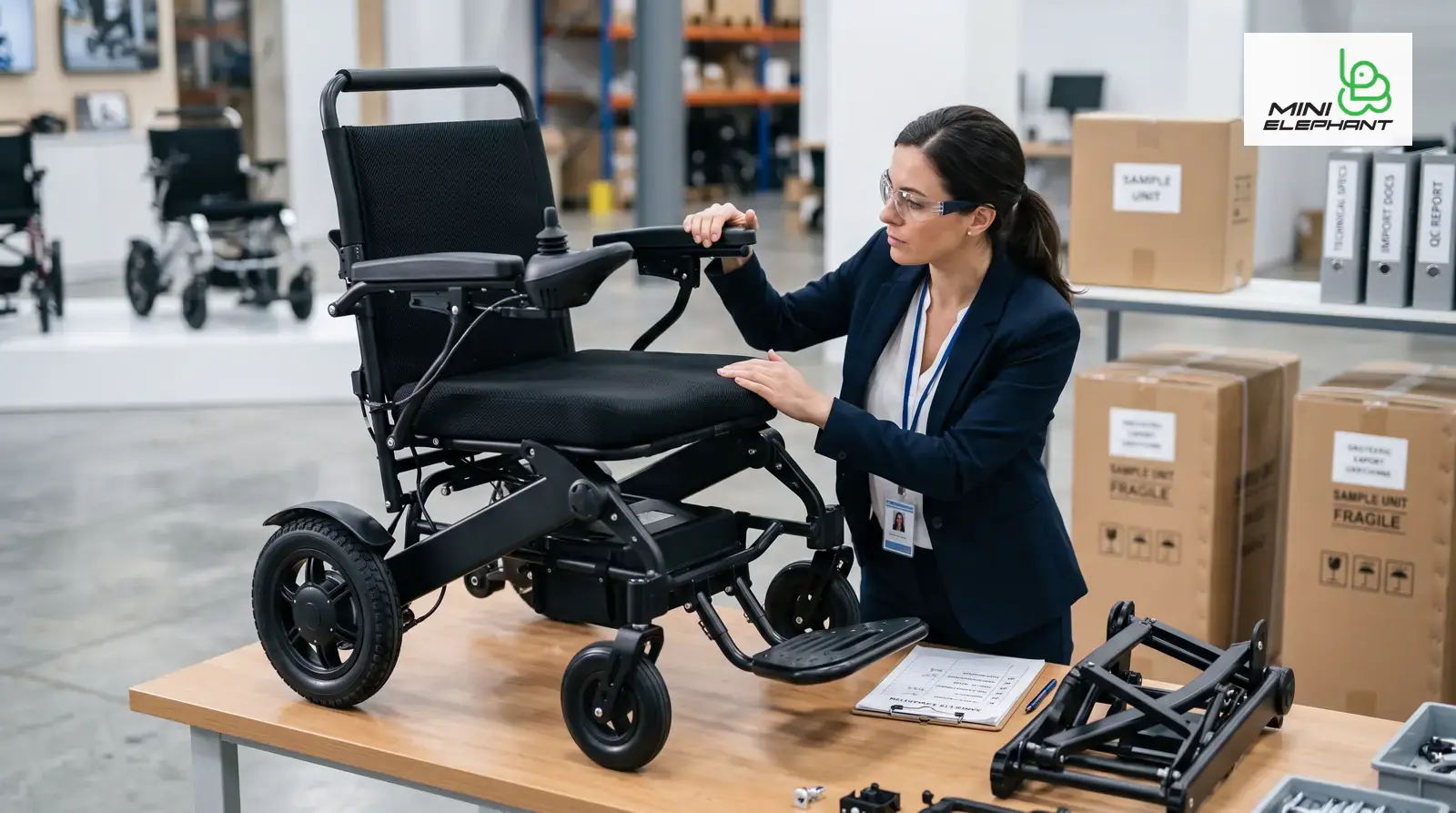
Electric Wheelchair Sample Evaluation: What Importers Should Check
An approved sample is the reference point between a quotation and a production order. An electric wheelchair importer should evaluate the complete delivered configuration—not only a product photograph or a short demonstration. The sample review should connect the chair, accessories, packaging, specification sheet, and documentation to one clear approval record.
This electric wheelchair sample evaluation checklist helps distributors, importers, and OEM/ODM buyers organize that review before confirming production. It does not replace product-specific regulatory, clinical, transport, or market requirements.
1. Confirm the Exact Sample Identity
Start with the model name, product version, sample date, configuration record, and quotation reference. Photograph the chair from several angles and record the seat option, frame finish, wheel type, joystick position, charger, battery arrangement, and accessories.
The sample should be compared against the specification sheet and quotation line by line. If an option is not visible, record it rather than assuming it is included.
2. Review Seating and Comfort Details
Check the seat width and depth, cushion feel, back support, armrest position, footrest adjustment, transfer space, upholstery finish, and adjustment points. Comfort is a product conversation, but it should not be presented as a clinical assessment or an unsupported outcome claim.
Record which seat, cushion, backrest, armrest, and footrest configuration is being approved. These parts can differ between models and production options.
3. Check Folding and Mechanical Functions
Use the approved operating method to fold and unfold the electric wheelchair. Review locking points, hinges, frame contact areas, wheel movement, caster alignment, armrests, footrests, brakes, and freewheel mode.
A practical mechanical review asks:
- Does the chair sit squarely on a level surface?
- Does folding and unfolding follow the documented sequence?
- Are latches, pins, and locking points engaged correctly?
- Are wheels, tires, footrests, and seating parts secure?
- Can the product be handled and stored as described in the approved documents?
4. Review Controls and Charging Information
Check the joystick position, switches, cable routing, connectors, display, charger connection, and supplied charger model. Confirm that the controller and charger match the exact sample configuration.
Do not infer performance figures from a brief demonstration. If range, speed, load, slope, charging, or battery questions matter to the order, request the current approved specification and clarify the operating conditions for the exact configuration.
5. Verify Accessories and Documentation
Count every included accessory and compare it with the sample list. Depending on the configuration, this can include charger, cable, keys, tools, manuals, cushions, footrests, armrests, and approved optional parts.
Review whether the manual, labels, warnings, and specification sheet match the product. For an export order, the buyer should also confirm required target-market and transport documentation with the relevant parties rather than relying on a generic sample document.
|---|---|
6. Inspect Packaging Before Mass Production
If possible, inspect one fully packed sample. Look at surface protection, internal supports, joystick protection, wheel restraint, accessory placement, carton marks, and removal sequence. The product should be protected without requiring unsafe unpacking near cables, upholstery, or controls.
A production order should reference the approved packing configuration, especially when models, seats, batteries, chargers, or accessories differ.
7. Record Open Points and Approvals
Use a dated sample evaluation record with photographs. Separate approved items from open questions, changes requested, and evidence still needed. Every correction should have an owner, requested completion date, and recheck method.
Do not turn a verbal discussion into an assumed approval. Update the quotation, specification, artwork, packaging record, or purchase order when the agreed sample differs from the original document.
B2B Takeaway
A thorough electric wheelchair sample evaluation reduces configuration mistakes before production begins. Importers should review the exact model, seating, folding structure, controls, accessories, packaging, documents, and open actions together. A clear sample record gives both buyer and supplier a reliable reference for the production order.
For MiniRedone model information, sample review support, and B2B quotation discussions, contact the MiniElephant export team with your target model and market requirements.
Interested in MiniElephant Electric Wheelchairs?
Get a customized quotation and product recommendation from our export team. Response within 24 hours.