Electric Wheelchair Speed Profiles: Indoor vs Outdoor Review
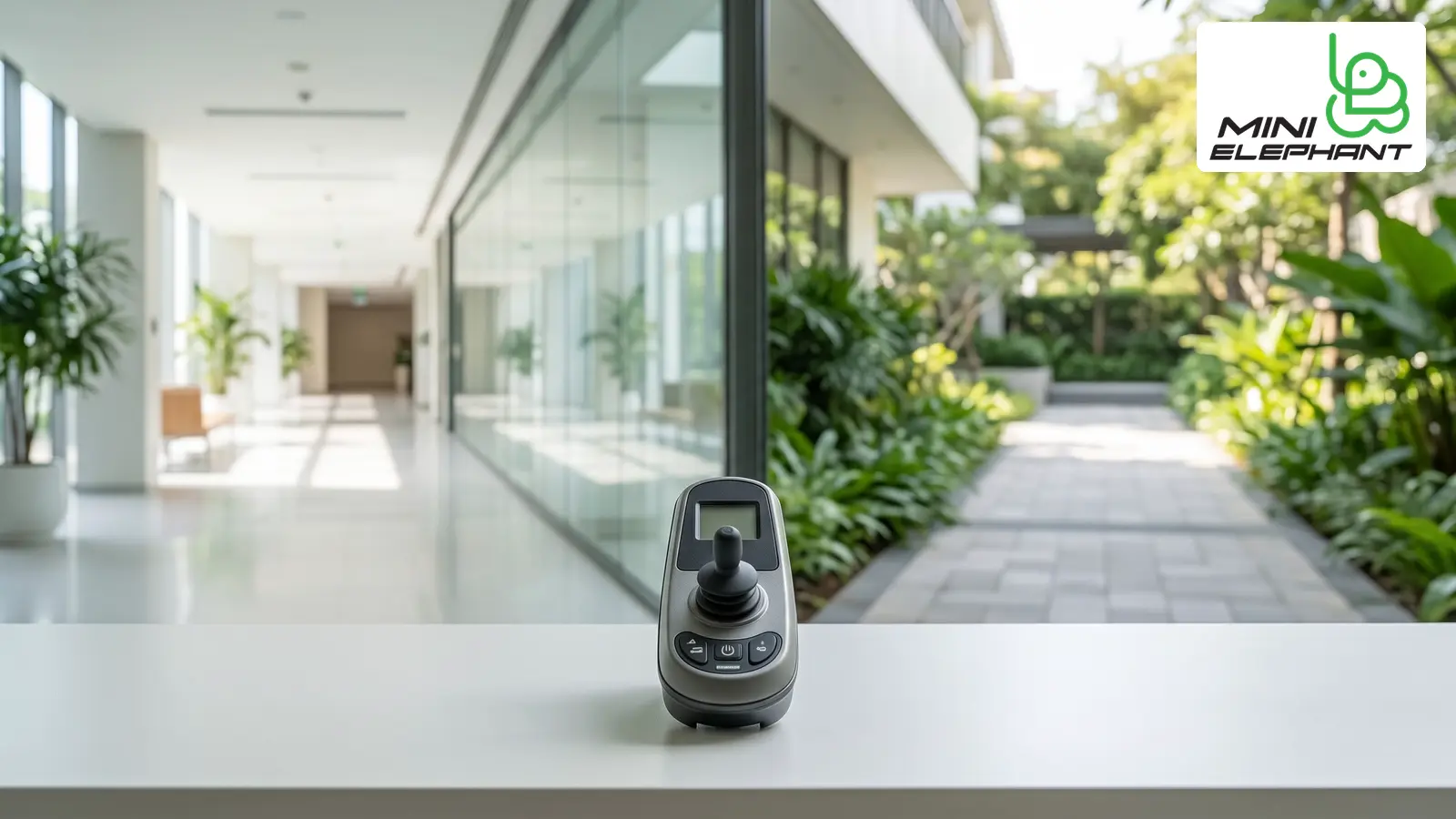
For an electric wheelchair buyer, an indoor speed profile should prioritize controlled starts, predictable low-speed steering, and stopping behavior; an outdoor profile may allow faster travel only where the user, route, and manufacturer instructions support it. Maximum speed alone is not a meaningful quality ranking. This comparison gives importers and distributors a repeatable way to review settings without presenting invented product test results.
Background: why compare electric wheelchair speed profiles?
The World Health Organization's 2023 Wheelchair provision guidelines emphasize individual assessment, fitting, training, and follow-up across wheelchair types. The publication contains 91 pages, but it does not prescribe one universal driving speed for every user. That distinction matters when procurement teams compare an electric wheelchair for a care facility with one intended for mixed indoor and outdoor use.
Controller labels such as “level 1” or “outdoor mode” are not standardized performance measurements. One supplier may use a mode to limit maximum speed; another may also change acceleration, turning response, or deceleration. Request the actual parameter definitions. The figures below are illustrative calculations, not MiniElephant specifications, industry averages, or certified safety limits.
Which five electric wheelchair criteria should buyers evaluate?
1. Maximum speed and low-speed controllability. Record forward and reverse limits separately. Assess whether the electric wheelchair can maintain a controlled crawl without abrupt movement.
2. Acceleration response. Ask whether start-up ramping changes between profiles and whether settings are intended for authorized technicians only. A lower top speed does not automatically produce gentler starts.
3. Turning response. Compare joystick sensitivity and cornering behavior using the same approved configuration. Turning performance cannot be inferred from straight-line speed.
4. Deceleration and stopping evidence. Request documented conditions, including load, surface, slope, controller settings, and measurement method. Do not confuse an illustrative stopping calculation with validated brake performance.
5. User suitability and configuration control. Check who may adjust settings, how changes are recorded, and how the electric wheelchair user receives training. Never ask dealers to override manufacturer limits.
Indoor vs outdoor electric wheelchair profiles: comparison table
|---|---|---|
Neither electric wheelchair profile is inherently better. An indoor setting is not a guarantee against collisions, and an outdoor setting is not evidence of rain protection, slope capability, or rough-terrain suitability. Those are separate model-specific questions.
What do speed differences mean in measurable terms?
Consider an electric wheelchair comparison using hypothetical caps of 3 km/h and 6 km/h. Converting speed to metres per second gives approximately 0.83 m/s and 1.67 m/s. Over an uninterrupted 100-metre level route, idealized travel times are 120 seconds and 60 seconds. The higher setting doubles speed and halves moving time, but it does not halve total journey time when doors, turns, people, and stops intervene.
For an assumed one-second interval before braking begins, distance travelled is approximately 0.83 metres versus 1.67 metres. This interval is an arithmetic example—not a clinical reaction-time recommendation. An electric wheelchair assessment must consider the individual user's control method, perception, and training rather than substitute a generic reaction assumption.
|---|---|---|
At the same combined mass, kinetic energy varies with the square of speed. Doubling speed produces four times the kinetic energy: a 300% increase, not a 100% increase. This physical relationship explains why an electric wheelchair review should examine speed and stopping evidence together. It does not establish a real collision severity, brake rating, or safe distance for any commercial model.
A simplified constant-deceleration example illustrates the limitation. Assuming 0.8 m/s², ideal braking distance from 3 km/h is about 0.43 metres and from 6 km/h about 1.74 metres, using distance = speed squared divided by twice deceleration. Adding the hypothetical one-second interval gives about 1.27 metres and 3.40 metres. Actual electric wheelchair braking can differ substantially with controller logic, traction, load, gradients, and mechanical condition. Do not use these numbers as acceptance limits or user instructions.
How should distributors compare electric wheelchair samples?
Use a controlled demonstration agreed with the manufacturer and conducted by trained personnel. Keep bystanders outside the test area and follow the product instructions. Review electric wheelchair settings on a dry, level, unobstructed route before considering any additional manufacturer-approved environment. Never deliberately provoke a collision or test unsupported gradients.
Keep the model revision, tyre condition, battery state, load, route length, and controller profile consistent. Record the electric wheelchair configuration before each run. For an illustrative measurement plan, conduct three comparable runs per approved setting and list every result; three runs help reveal variation but do not constitute certification or a statistically comprehensive validation program.
For example, three fictional 10-metre runs taking 12.0, 12.4, and 11.8 seconds produce an average time of approximately 12.07 seconds. Distance divided by that mean time yields about 0.83 m/s, or 2.98 km/h. This is a worksheet example only. A short course includes start-up effects, so buyers should distinguish average course speed from sustained maximum speed.
An electric wheelchair supplier should explain its own test method and limitations. If two reports use different loads or surfaces, mark the comparison as incomplete rather than silently ranking the faster sample first. Store the original measurements alongside any calculated summary.
A practical electric wheelchair procurement decision framework
Start with the application, not the fastest brochure number. For a busy indoor facility, prioritize demonstrable low-speed control and the assessed user's ability to manage the device. For mixed routes, evaluate profile switching and approved route conditions. An electric wheelchair with multiple levels is useful only when those levels have understandable, appropriate behavior.
Request these items in the RFQ:
- Model-specific forward and reverse limits for every offered profile.
- Whether each electric wheelchair setting changes only the cap or also acceleration and turning.
- Authorized adjustment, reset, and configuration-record procedures.
- Documented stopping-test conditions and relevant product instructions.
- User-training responsibilities and the process for reporting unsuitable behavior.
Use the electric wheelchair RFQ template and sample evaluation checklist to organize the evidence. MiniElephant, operated by Jiaxing Small Elephant Medical Technology Co., Ltd, is one supplier option to include alongside others. Ask each supplier for the same configuration-specific information; do not assume equivalent settings across brands.
For MiniElephant electric wheelchair enquiries, contact Johnson at johnson@semwheelchair.com or use the contact page. Request current model documentation rather than infer speed specifications from this editorial comparison. This article is procurement guidance, not an individual clinical prescription or a destination-market approval guarantee.
FAQ: electric wheelchair speed profile reviews
Is the fastest electric wheelchair always the best purchase?
No. Maximum speed is one parameter. User suitability, controlled starts, steering, stopping evidence, and the intended environment matter. Compare documented capabilities against the actual application rather than award a universal speed-based ranking.
Does an indoor electric wheelchair profile only reduce top speed?
Not necessarily. Depending on the controller, a profile may also affect acceleration, turning response, or deceleration. Request the manufacturer's parameter definitions and authorized configuration process before making assumptions.
Can an outdoor electric wheelchair profile make a chair suitable for slopes?
No. Speed selection does not change the manufacturer's approved slope, surface, weather, or obstacle limits. Outdoor capability requires separate model-specific evidence and appropriate user assessment.
Should a distributor reprogram an electric wheelchair for a customer?
Only through the manufacturer's authorized process and with appropriate assessment and training. Do not bypass safety-related limits or undocumented controller settings. Record approved changes and preserve the configuration history.
Are the numerical electric wheelchair examples verified product results?
No. They are explicitly hypothetical arithmetic comparisons. Request actual supplier measurements under stated conditions before making purchasing claims, setting acceptance criteria, or giving user instructions.
*Banner: AI-generated editorial illustration of indoor and outdoor environments, not a product photograph or performance test.*
Interested in MiniElephant Electric Wheelchairs?
Get a customized quotation and product recommendation from our export team. Response within 24 hours.