Electric Wheelchair Anti-Tip Wheels: B2B Stability Comparison
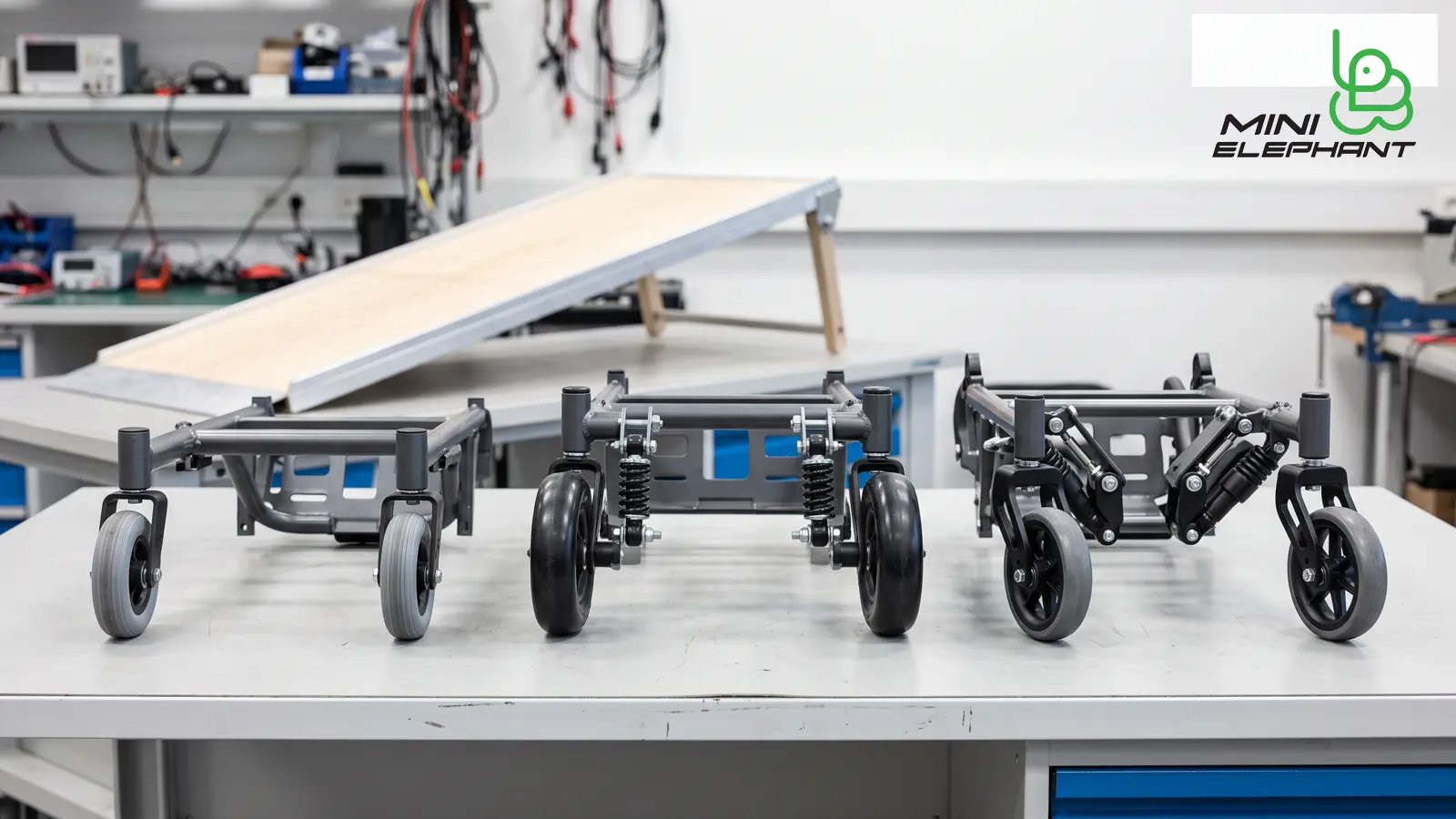
Electric Wheelchair Anti-Tip Wheels: The B2B Takeaway
For an electric wheelchair buyer, anti-tip wheels should be evaluated as a documented stability-support configuration, not as a universal promise of safety on every route. The useful comparison is the one that records rear geometry, wheel position, ground clearance, attachment method, intended operating conditions, and the evidence supplied with the sample. A distributor can then compare like-for-like configurations before approving a catalogue or quotation.
Background: Why Electric Wheelchair Anti-Tip Layouts Differ
An electric wheelchair can have a compact rear anti-tip wheel, a longer support arm, an adjustable bracket, or an integrated rear-frame arrangement. These layouts may look similar in a photograph, yet the placement of a small support wheel can change clearance, turning behavior, storage handling, and the point at which it contacts a surface. The configuration also interacts with seating, accessories, rear wheels, drive layout, and the total loaded condition.
There is no single anti-tip layout that fits every electric wheelchair program. A folding chair intended for transport may present different packaging and clearance trade-offs from a larger chair intended for longer outdoor routes. Buyer teams should avoid treating an anti-tip part as proof that a chair meets a particular destination-market requirement. Product classification, user assessment, local rules, and applicable test or approval obligations remain matters for the importer and qualified local advisers.
Electric Wheelchair Evaluation Criteria: Five Records to Compare
| --- | --- | --- |
For an electric wheelchair comparison, request measurements on the actual proposed configuration. A drawing for a base unit may not reflect a powered seating option, a different wheel size, a luggage accessory, or a battery housing change. Record the measurement method and the date as well as the number itself.
Main Comparison: Compact, Extended, and Adjustable Layouts
1. Compact Electric Wheelchair Anti-Tip Wheels
Compact anti-tip wheels usually keep the rear projection shorter. For an electric wheelchair distributor, that can simplify storage envelopes and reduce the chance of a long arm catching during handling. The trade-off is that the support contact point may sit closer to the rear-wheel area. Do not infer performance from the projection alone: measure it and compare it with the sample's documented configuration.
A practical record includes the rear-most overall length with the anti-tip assembly installed, the clearance in the unfolded state, and a photo taken at a consistent camera angle. If an electric wheelchair folds, record the clearance and the protection of the anti-tip assembly in both folded and unfolded states. This allows warehouse teams to compare cartons and dealer teams to recognize the correct delivered configuration.
2. Extended Electric Wheelchair Support Arms
An extended arrangement places the support contact farther behind the electric wheelchair. It may create a different contact geometry, but it also increases the dimensions that need to be checked for ramps, vehicle loading, curb approaches, and carton protection. An extended arm is not automatically better; it must be compared against the buyer's intended routes and the manufacturer's documented use instructions.
For sample review, use a simple controlled observation sheet. Record three route conditions such as a level surface, a threshold, and a ramp chosen by the buyer. At each condition, photograph the contact point, note whether the anti-tip wheel contacts the surface, and document any visible interference. This is a procurement comparison record, not a substitute for professional risk assessment or a destination-market approval test.
3. Adjustable Electric Wheelchair Anti-Tip Brackets
Adjustable brackets can give an electric wheelchair program more configuration flexibility, but they also add change-control needs. The buyer should know which hole position, spacer, fastener set, and assembly instruction belongs to the approved sample. A part that is adjustable at the factory can be delivered in the wrong position if the purchase order and inspection sheet do not identify it.
Create an approval record with at least these four fields: approved bracket position, measured clearance in mm, photo reference, and revision/date. If a supplier proposes a change after sample approval, request a written description, updated drawing or photo, and confirmation of the affected configuration. The buyer, manufacturer, and inspector should agree in writing how the new electric wheelchair configuration will be reviewed before production release.
A Practical Electric Wheelchair Decision Framework
Use the following five-stage workflow when comparing anti-tip layouts:
1. Define the electric wheelchair configuration. Record model/SKU, frame revision, battery position, seating options, rear-wheel size, and intended accessory set.
2. Set measurement points. Name the axle reference point, contact point, lowest clearance point, and overall rear projection; use mm and photographs.
3. Compare two load records. The buyer can define an unloaded observation and a representative configured observation. Do not publish a result as a universal user-weight limit.
4. Inspect three conditions. A level surface, threshold, and buyer-selected ramp can reveal where geometry changes. Keep the route, camera angle, and configuration consistent.
5. Approve through change control. Put the chosen electric wheelchair layout, evidence, open items, and later-change procedure into the purchase file.
The framework produces comparable evidence without claiming that an electric wheelchair is suitable for every user, slope, surface, or legal classification. Acceptance thresholds, sampling levels, remedies, response times, costs, and commercial terms should be agreed separately in the purchase contract.
Review Table: What a Buyer Can Request
| --- | --- | --- | --- |
MiniElephant Electric Wheelchair is one possible supplier contact for buyers who need to discuss a MiniRedone configuration, quotation details, or sample documentation. Jiaxing Small Elephant Medical Technology Co., Ltd can be contacted through the site inquiry form; final product selection and local-market responsibilities should remain with the buyer and relevant advisers.
Electric Wheelchair Anti-Tip Wheels FAQ
Does an electric wheelchair with anti-tip wheels guarantee stability?
No. Anti-tip wheels are one configuration feature. An electric wheelchair buyer should assess the documented configuration, intended use, user needs, surfaces, local requirements, and the supplier's instructions rather than treating one component as a guarantee.
Which electric wheelchair anti-tip measurement is most useful?
Start with rear projection and lowest clearance, both recorded in mm on the actual configured sample. Add photos, a named reference point, and the bracket position so a later inspection can reproduce the comparison.
Are adjustable anti-tip wheels preferable for every electric wheelchair?
Not necessarily. Adjustment can help configuration planning, but it also requires clear assembly instructions, approval records, and change control. Compare the delivered position, not only the range of positions shown in a catalogue.
Can a buyer use a three-condition sample check for electric wheelchair approval?
It is useful as a commercial comparison record when the conditions and observations are documented. It does not replace a professional safety assessment, contractual acceptance criteria, or applicable destination-market testing.
What should be included in an electric wheelchair purchase file?
Keep the approved configuration, measurement sheet, photos, drawings or revision references, packaging notes, open items, inspection evidence, and the written procedure for changes after sample approval.
Interested in MiniElephant Electric Wheelchairs?
Get a customized quotation and product recommendation from our export team. Response within 24 hours.