Electric Wheelchair Cushion Comparison: Foam, Gel, or Air?
Electric Wheelchair Cushion Comparison: The Quick Answer
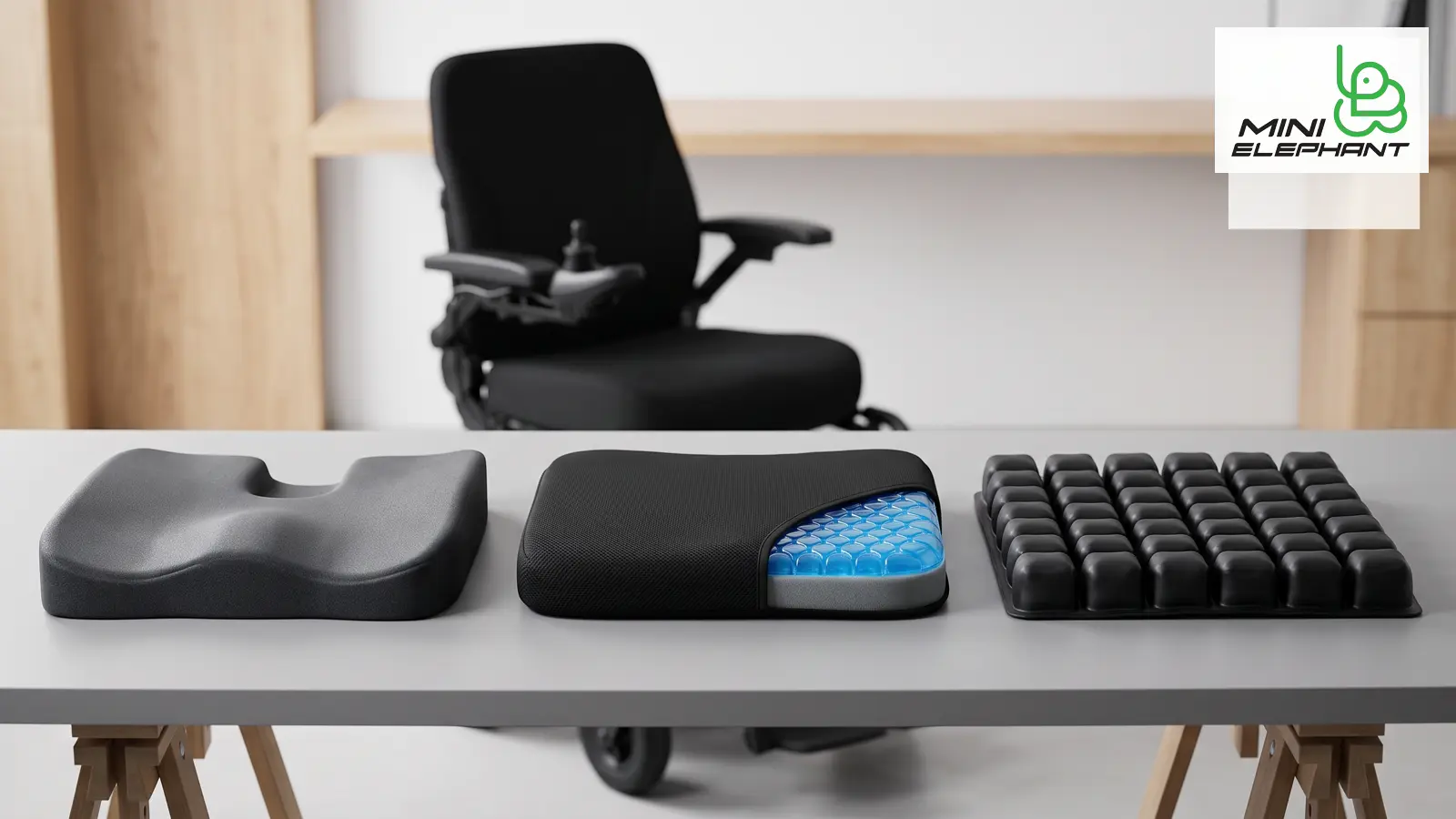
For a broad electric wheelchair product line, contoured foam is usually the simplest baseline, gel can add a stable feel and localized pressure distribution, and air-cell designs offer the greatest adjustability but need the most user training and maintenance control. The correct choice depends on the intended user, transfer routine, climate, cover, seat dimensions, and the dealer's ability to support fitting and replacement parts.
An electric wheelchair cushion is not a generic accessory. It changes seat height, reach to the joystick, footrest geometry, lateral support, transport weight, and the interface between the user and the seating system. For distributors, care providers, and private-label buyers, the procurement decision should be based on a documented configuration and sample evaluation rather than a material name alone.
Background: Why Electric Wheelchair Cushion Materials Need a Side-by-Side Review
Foam, gel, and air cushions solve different seating problems. A foam electric wheelchair cushion uses shaped or layered resilient material; a gel design adds a fluid or gel insert to a foam base; an air-cell design uses connected or separate chambers whose inflation can be adjusted. Hybrid designs also exist, so a supplier description such as “gel cushion” is not enough to predict performance.
The practical data starts with the approved sample. Record cushion width, depth, unloaded height, user-facing height after loading, total weight, cover type, and the clearance around armrests and back posts. A 20 mm change in compressed height can alter knee position, footplate adjustment, and the user's reach to an electric wheelchair controller. That is why a seating comparison should measure the complete chair, not a loose cushion on a bench.
This article is commercial buying guidance, not clinical or legal advice. Individual seating assessment, local clinical practice, and destination-market responsibilities remain with qualified professionals, the importer, and applicable advisers.
Evaluation Criteria for an Electric Wheelchair Cushion
Before comparing quotations, score every electric wheelchair cushion against five observable factors:
1. Fit and geometry. Confirm finished width, depth, height, contour profile, cover seams, and compatibility with the selected seat pan and backrest.
2. Pressure-management design. Review the material structure, immersion behavior, stability, heat and moisture pathway, and whether the stated use matches the intended user assessment.
3. Transfers and daily use. Test whether the surface supports stable repositioning, lateral transfers, sling use, and safe access to an electric wheelchair joystick and armrests.
4. Cleaning and durability. Check cover removal, cleaning instructions, fluid-resistance claims, zipper protection, seam quality, and the documented replacement method.
5. Service economics. Compare unit weight, spare covers, valves or pumps where relevant, replacement lead-time commitments only when contractually verified, and dealer training needs.
Main Comparison: Foam vs Gel vs Air for Electric Wheelchair Buyers
| --- | --- | --- | --- |
Foam: The Repeatable Baseline
A contoured foam electric wheelchair cushion is often the easiest option to standardize. Its shape can support positioning targets without valves, pumps, or fluid inserts. For a dealer network, this simplifies carton packing, staff explanation, spare-cover planning, and replacement handling.
However, “foam” covers a wide range of densities, layer constructions, and contour depths. Ask the supplier to identify the foam type, layer thickness, indentation-load-deflection test method if available, cover construction, and how the finished dimension is measured. Do not compare only the advertised height. A 75 mm cushion with a deep pelvic well behaves differently from a flat 75 mm pad.
For an electric wheelchair sample review, use at least three checks: measure loaded seat height at the same user load or test mass, confirm the user can reach controls without shoulder strain, and inspect whether the front edge creates pressure behind the knees. If a standard cushion is intended for several seat widths, test each listed size rather than assuming a scaled cover preserves the same contour.
Gel: A Structured Middle Ground
A gel or gel-foam electric wheelchair cushion generally combines a foam base with a gel layer, gel pads, or a gel-like insert. Buyers often consider it when they want a more stable-feeling surface or a different pressure-distribution design while retaining a familiar cushion format.
The key question is construction. Is the gel continuous or segmented? Is it enclosed in a liner? Can it migrate? Does the design include a foam well beneath the insert? Request cross-section drawings, material descriptions, and cleaning limits for the exact production revision. A product photograph cannot show whether the insert shifts during a transfer or whether the outer cover protects it from abrasion.
Weight is a useful comparison point. Weigh the finished electric wheelchair cushion with its standard cover, then weigh the complete seat assembly. Extra kilograms may be insignificant for one user but relevant for folding transport, caregiver handling, and carton gross weight. Also test the surface after a 20- to 30-minute seated evaluation under the applicable professional assessment process; record temperature feel, cover movement, and whether the cushion returns to its intended shape.
Air-Cell: High Adjustability With Higher Process Requirements
An air-cell electric wheelchair cushion uses air chambers and a valve system to adjust inflation. This can make the interface more adaptable, but it also introduces variables that a procurement sheet must control: initial inflation setting, hand-check method, valve orientation, repair kit, replacement parts, and user instructions.
Do not treat an air cushion as a fit-and-forget option. The buyer should ask who sets initial inflation, how the user or caregiver checks it, what happens if a valve leaks, and whether the cover can be reinstalled without changing the chamber layout. A dealer that lacks training and follow-up capacity may find that a simpler electric wheelchair cushion delivers more consistent day-to-day use.
For comparison samples, perform three repeatable checks: set the cushion according to the supplied instructions, transfer on and off the chair several times, then re-check inflation and cover alignment. Inspect the valve area, base anti-slip surface, and any repair patch instructions. If a powered or tilt seating system is involved, test the electric wheelchair in every relevant seating position because a stable surface at upright posture may feel different after tilt or recline.
Data Points to Put in the Electric Wheelchair Quotation
| --- | --- | --- |
Treat measurements as sample-specific evidence. Do not convert them into a universal clinical claim, warranty promise, or destination-market approval. Acceptance thresholds, response times, remedies, costs, and warranty terms should be agreed in the purchase contract.
Practical Decision Framework for Buyers
Use this four-step framework before approving an electric wheelchair cushion for volume purchase:
1. Define the user and chair configuration. Freeze the seat width, depth, backrest, armrest height, footrest setting, joystick position, and any tilt or recline options. One cushion cannot be reviewed independently from the electric wheelchair configuration.
2. Request comparable samples. Obtain foam, gel, and air options in the same nominal size where possible. Keep supplier drawings, material descriptions, and revision identifiers with the sample record.
3. Run an observable evaluation. Measure height, weight, controller reach, transfer access, cover movement, and cleaning steps. Repeat after several transfers and after the stated cleaning method where practical.
4. Set service responsibility. Identify who supplies covers, valves, pumps, and instructions; who trains dealers; and how changes after sample approval are controlled in writing.
MiniElephant is one option for B2B buyers evaluating electric wheelchair seating configurations. Compare its drawings, samples, documents, and commercial terms with those of other qualified suppliers; the best electric wheelchair cushion is the one that fits the approved configuration and the buyer's service capability.
FAQ: Electric Wheelchair Cushion Comparison
Which electric wheelchair cushion is best for a standard dealer range?
A contoured foam option is often the simplest baseline because it is easier to specify and service. The final choice should still follow the intended user assessment, approved seat dimensions, and local support plan.
Is a gel electric wheelchair cushion always heavier than foam?
Not always. Construction, cover, insert size, and cushion dimensions determine the finished mass. Require the actual weight of the production sample instead of relying on the material name.
Do air cushions need more after-sales support?
Usually they need a clearer process for inflation, valve checks, cover fitting, and replacement parts. A buyer should confirm that dealers or caregivers can follow the supplied instructions before adding an air electric wheelchair cushion to the range.
What should an importer test before placing an electric wheelchair order?
Test the complete chair with the intended cushion: seat geometry, transfer access, joystick reach, cover movement, cleaning steps, packaging, and spare-part identification. Keep photos and measurement records with the approved sample.
Can a cushion change the fit of an electric wheelchair?
Yes. Height, contour, and cover friction can affect posture, footrest adjustment, armrest clearance, and control access. Any cushion change should be reviewed on the full electric wheelchair configuration before production.
Interested in MiniElephant Electric Wheelchairs?
Get a customized quotation and product recommendation from our export team. Response within 24 hours.