Folding Electric Wheelchair Transport Comparison for B2B Buyers
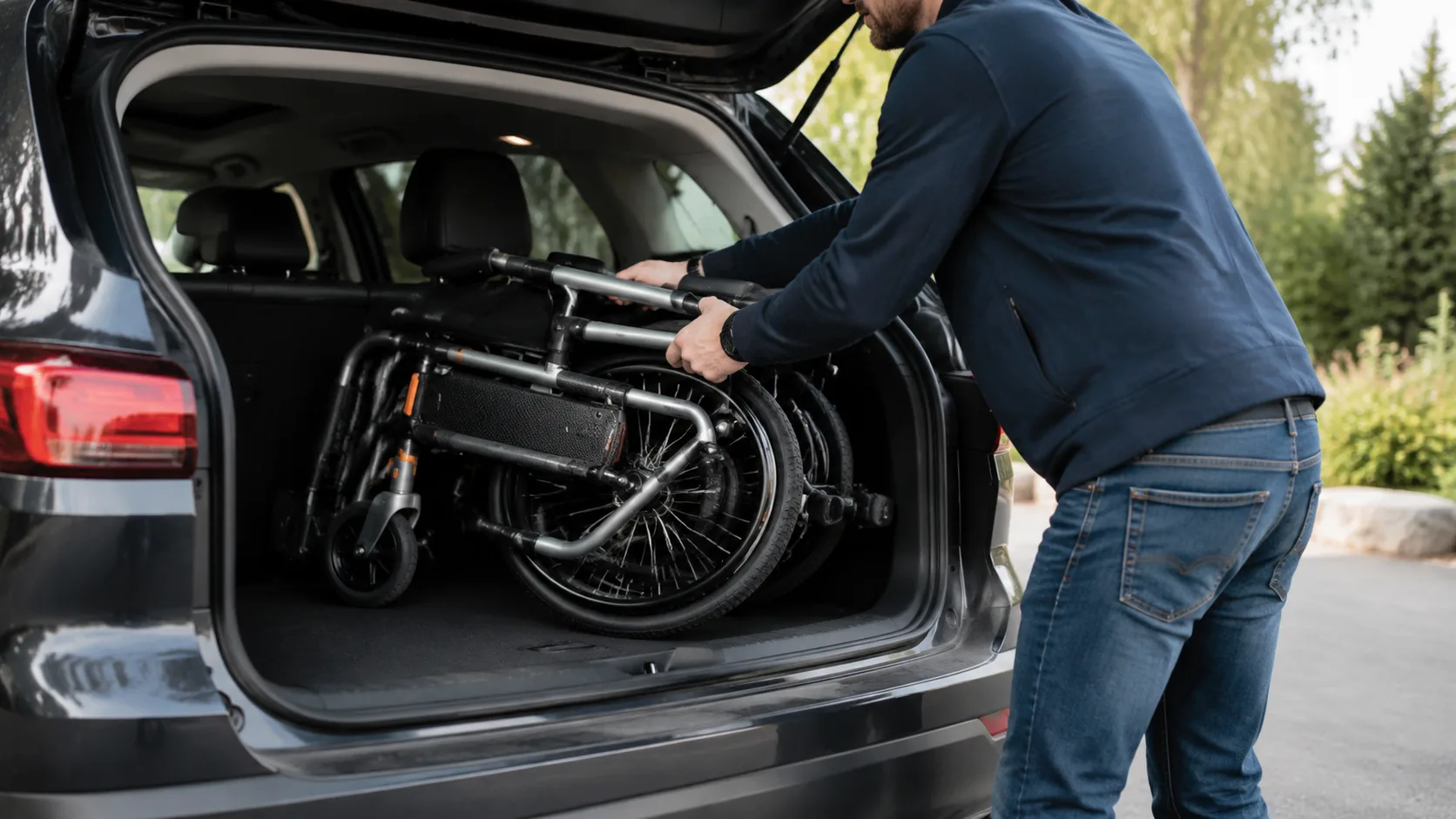
Folding Electric Wheelchair Transport Comparison: What B2B Buyers Should Review
“Foldable” does not mean every electric wheelchair is equally easy to lift, store, load, or transport. A useful comparison considers the complete configuration: folded dimensions, total and removable-component weight, battery arrangement, handling points, wheel position, accessory storage, and the vehicle or logistics route being planned.
This guide gives distributors, mobility retailers, rental operators, and importers a structured way to compare folding electric wheelchairs for transport-focused programs. Confirm product-specific limits and procedures with the current manufacturer manual and applicable vehicle, carrier, and destination requirements.
Compare the Folded Product, Not Only the Open Chair
Request folded length, width, height, net weight, gross packed weight, and the method used to measure each figure. Record whether armrests, footrests, cushions, headrests, joystick mounts, batteries, or other accessories remain attached during folding. An accessory that is included in the sale can change the practical storage footprint.
Ask the supplier to demonstrate folding and unfolding with the intended configuration. Observe latch engagement, cable routing, protection of the joystick and display, clearance around wheels, and whether loose components must be packed separately. The approved handling sequence should match the manual and dealer training material.
Separate Lifting Tasks From Driving Weight
A model's total weight does not always describe the heaviest item a person will handle. If a battery, cushion, footrest, or other component is removed for loading, document the weight of each part and the removal procedure. Also identify the designated lifting points and whether the frame remains stable when folded.
Do not imply that a chair is suitable for every person to lift or every vehicle to carry. A buyer should assess the intended handlers, vehicle loading height, available ramp or lift, storage space, and local requirements using the actual product configuration.
Review Battery and Charger Handling
The battery and charger should be treated as part of the transport comparison. Record battery type, location, removal method, retention system, weight, label, approved charger, and product-specific storage or transport instructions. For air or other regulated transport, confirm requirements with the carrier and relevant responsible parties for the exact battery configuration and route.
Never substitute an unapproved charger or mix batteries between chair revisions because connectors look similar. Dealers should keep the approved charger and battery identification linked to the chair in receiving, demonstration, and service records.
Evaluate Vehicle and Storage Fit
A portable electric wheelchair should be compared against the route it will actually take: doorway, lift, vehicle opening, cargo floor, storage area, and customer unloading point. Measure usable openings rather than relying on an exterior vehicle dimension. Check whether the folded chair can be positioned without stressing controls, cables, seating, or wheels.
| --- | --- |
Use a sample chair to check the intended vehicle and storage location before committing to a wholesale configuration. A product that fits an empty cargo area may not fit with ramps, luggage, retail stock, or required protection materials in place.
Check Packaging and Receiving Effects
For import orders, compare not only customer transport but also the carton and warehouse process. Request packed dimensions, gross weight, pallet layout, internal protection, carton marks, and unloading method for the exact model. Folding hardware, joystick mounts, footrests, and removable batteries need protection that matches the packed condition.
At receiving, inspect the carton before opening, record any transit damage, and confirm that the chair, charger, accessories, manual, and labels match the order. Keep damaged or uncertain units apart from saleable stock until they are reviewed under the dealer's process.
Transport Comparison Checklist
1. Measure folded dimensions and all protrusions with the sold configuration installed.
2. Record the complete and component-level handling weights.
3. Demonstrate the approved folding, loading, and unfolding sequence.
4. Compare battery, charger, and accessory handling for each model revision.
5. Test actual vehicle openings, cargo space, and storage locations with a sample.
6. Review packed dimensions, protection, and receiving checks for import logistics.
7. Use configuration-specific manuals and escalation procedures for battery, electrical, or structural concerns.
The B2B Bottom Line
A folding electric wheelchair should be compared as a complete transport system, not by a single “portable” label. Buyers who validate folded size, handling weight, battery management, vehicle fit, packaging, and documentation can select models that are easier to support across sales, delivery, and after-sales operations.
**Comparing folding electric wheelchair options for your distribution program?** [Contact the MiniElephant export team](https://www.semwheelchair.com/contact) for model specifications, packed dimensions, and B2B sourcing support.
Interested in MiniElephant Electric Wheelchairs?
Get a customized quotation and product recommendation from our export team. Response within 24 hours.