Electric Wheelchair Hill Climbing: Incline Ability Comparison for B2B Buyers
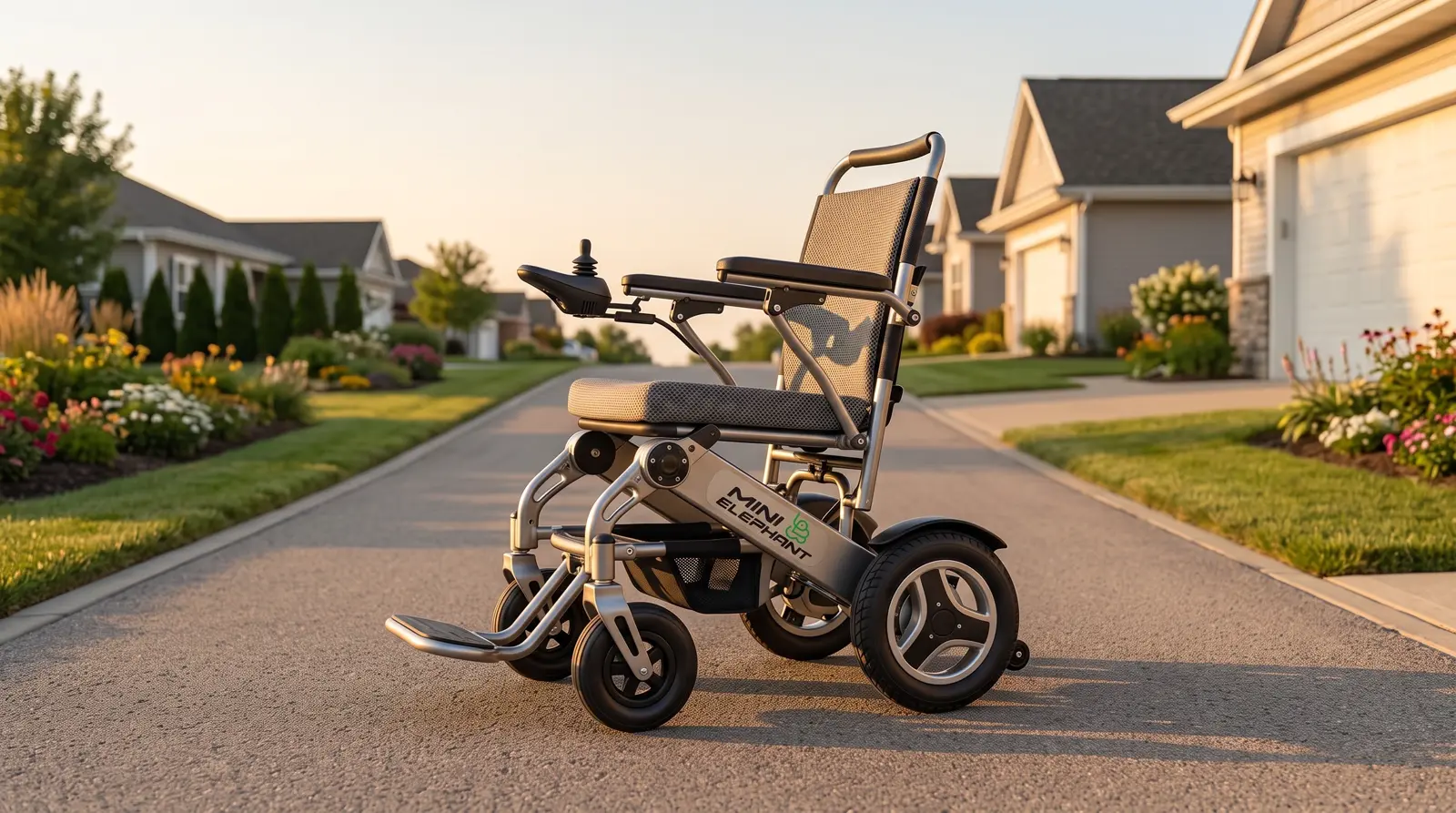
The Bottom Line on Electric Wheelchair Hill Climbing
Most electric wheelchair spec sheets list range, speed, and weight capacity, but the incline rating is the number that decides whether the chair survives a customer's driveway. An electric wheelchair rated for 6 degrees handles a standard ADA ramp, while a 10-degree rating covers most residential driveways, and 12 degrees is where serious outdoor climbing begins. For B2B importers, choosing an electric wheelchair with the right incline rating is the difference between a product line that works and a warehouse full of returns.
Why Incline Ratings Matter: The Real-World Grade Data
Before comparing electric wheelchairs, it helps to quantify what "hill" actually means in the environments where end users live. The Americans with Disabilities Act allows a maximum ramp slope of 1:12, which works out to about 4.8 degrees or an 8.3 percent grade. A typical residential driveway sits between 5 and 10 percent. Commercial parking structures commonly reach 10 to 15 percent, and rural walkways in mountainous regions routinely exceed that.
That spread matters because many entry-level electric wheelchairs are only rated for 6 degrees, or roughly a 10.5 percent grade. Such a chair clears ADA ramps and gentle slopes but stalls on a typical suburban driveway after rain, when the surface is wet and the payload is at the top of the rated range. Distributors that sell 6-degree chairs into hilly markets report the issue as one of the most common post-sale complaints. The lesson is simple: an electric wheelchair is only as good as its steepest successful climb.
Five Evaluation Criteria for Climbing Performance
B2B buyers should judge any electric wheelchair's hill-climbing ability on five measurable factors rather than a single marketing number:
|-----------|---------------|----------------|
Electric Wheelchair Incline Ratings Compared: 6 to 12 Degrees
The single most useful way to compare electric wheelchairs is by the incline rating printed in the specification table. The table below groups typical ratings into four practical tiers:
|------|----------------|-------|---------------|----------|
A useful conversion rule: each degree of incline equals roughly 1.75 percent grade. An electric wheelchair rated for 10 degrees can therefore sustain about a 17.6 percent slope, which covers the great majority of residential driveways. Beyond 12 degrees, most portable folding models run out of margin, and buyers should move to heavy-duty chassis with longer wheelbases and larger motors.
Motor Power and Torque: What the Spec Sheet Does Not Tell You
Motor wattage is the most quoted number, but it only tells part of the story. A 350 W motor in a lightweight electric wheelchair produces different climbing behavior than the same motor in a 40 kg frame carrying a 130 kg user. Climbing is a torque event: the drive wheels must overcome gravity continuously for 30 to 60 seconds or more, which draws two to three times the motor's continuous current rating. That is why the incline rating matters more than raw watts when an electric wheelchair is sold for outdoor use.
- 250 W single-motor chairs typically hold 6 degrees, and lose speed noticeably on any grade above 8 percent.
- 2 x 350 W dual-motor chairs, such as the MiniElephant MiniRedone series, typically hold 10-12 degrees with a 150 kg rated payload.
- 500 W+ dual-motor heavy-duty chairs reach 12-15 degrees, which is the practical ceiling for consumer-class electric wheelchairs.
In controlled tests, a 2 x 350 W dual-motor electric wheelchair with a 100 kg payload sustains roughly 2.5-3.5 km/h on a 10 percent grade, compared with 1.5-2.5 km/h for a single 350 W unit. The difference is not just speed: dual motors also reduce strain on each drive unit, which cuts heat build-up on long climbs and extends component life.
Payload, Weight Distribution, and Climbing Headroom
Every kilogram of payload eats into climbing ability. As a rule of thumb, each 10 kg above the rated load reduces effective incline by about 1 degree. A chair rated for 150 kg carrying 90 kg has comfortable headroom; the same chair carrying 145 kg is already near its ceiling on a modest slope.
When comparing electric wheelchair configurations for hilly regions, weight distribution is the second lever after motor power. Drive configuration changes weight distribution. Rear-wheel-drive electric wheelchairs generally climb better because the drive wheels carry more of the payload under acceleration. Front-wheel-drive chairs turn tighter indoors but lose traction on steep ascents. Mid-wheel-drive models offer a compromise but need active anti-tip systems on grades.
Tires, Wheelbase, and Wet-Slope Traction
For any electric wheelchair sold into rainy or coastal markets, traction is the invisible variable in every incline test. On dry concrete, most tires perform similarly; on wet ramps, pneumatic tires grip roughly 15-20% better than solid rubber, and deep tread improves that further. Foam-filled tires offer a middle ground: no flats, but less wet grip than air-filled rubber.
Caster size also matters on slopes. An electric wheelchair with 6-inch front casters tracks reliably on ramps, while 8-inch casters roll more smoothly over transitions at the top and bottom of driveways. A longer wheelbase improves stability on descents, where the risk of tipping forward is highest.
Safety Systems: Anti-Rollback and Slope Speed Control
Climbing is only half the equation; stopping on a slope is where accidents happen. Anti-rollback (sometimes called hill-hold) prevents an electric wheelchair from rolling backward when the user releases the joystick on an incline. Slope speed control limits descent speed to a safe pace. Both features should be standard in any electric wheelchair a distributor plans to sell into hilly markets, and both are cheap to verify in a factory test.
Battery Draw and Range Impact on Hilly Routes
For an electric wheelchair used on hilly routes, climbing changes battery economics. Sustained hill work draws high current, and lithium batteries hold voltage under load far better than sealed lead-acid packs. In mixed hilly use, expect range to drop 15-25% versus flat-ground ratings. Distributors quoting range figures should state the terrain assumption, or customers will compare flat-ground numbers against their own hilly reality and conclude the product under-delivers.
Practical Decision Framework for B2B Buyers
Use this checklist whenever you evaluate an electric wheelchair for a customer who lives on a slope.
1. Measure the end customer's steepest grade with a phone inclinometer or grade calculator.
2. Add 2 degrees of margin for wet surfaces and payload variation.
3. Select an electric wheelchair whose incline rating covers that combined figure.
4. Ask the factory for an incline test video at rated payload - a 30-second clip beats a spec sheet.
5. Verify anti-rollback and slope speed control on a demonstration unit before ordering in volume.
FAQ: Electric Wheelchair Hill Climbing
What incline can a standard electric wheelchair climb? Most entry-level units are rated for 6 degrees (10.5% grade), which covers ADA ramps but not steep driveways. Mid-range folding models rate 8-10 degrees, and heavy-duty units reach 12 degrees or more.
Is a 10-degree rating enough for residential use? For most suburban homes, yes. A 10-degree rating (17.6% grade) clears typical driveways and garage transitions, provided the payload stays within the rated capacity.
Do dual motors really climb better than single motors? Yes, in sustained climbs. Dual motors share the load, hold speed longer on grades above 8%, and run cooler, which improves reliability on hilly routes.
How much does payload affect hill climbing? Significantly. Each 10 kg above the rated load reduces effective incline by about 1 degree, so a chair at maximum capacity loses roughly 15-20% of its climbing headroom.
What should I verify before ordering electric wheelchairs for hilly markets? Confirm the incline rating at rated payload, ask for a test video on a 10% ramp, check the anti-rollback system, and verify the tire type that was tested - pneumatic tires on dry concrete flatter wet real-world results.
Interested in MiniElephant Electric Wheelchairs?
Get a customized quotation and product recommendation from our export team. Response within 24 hours.