Electric Wheelchair Range Testing: A B2B Buyer Guide
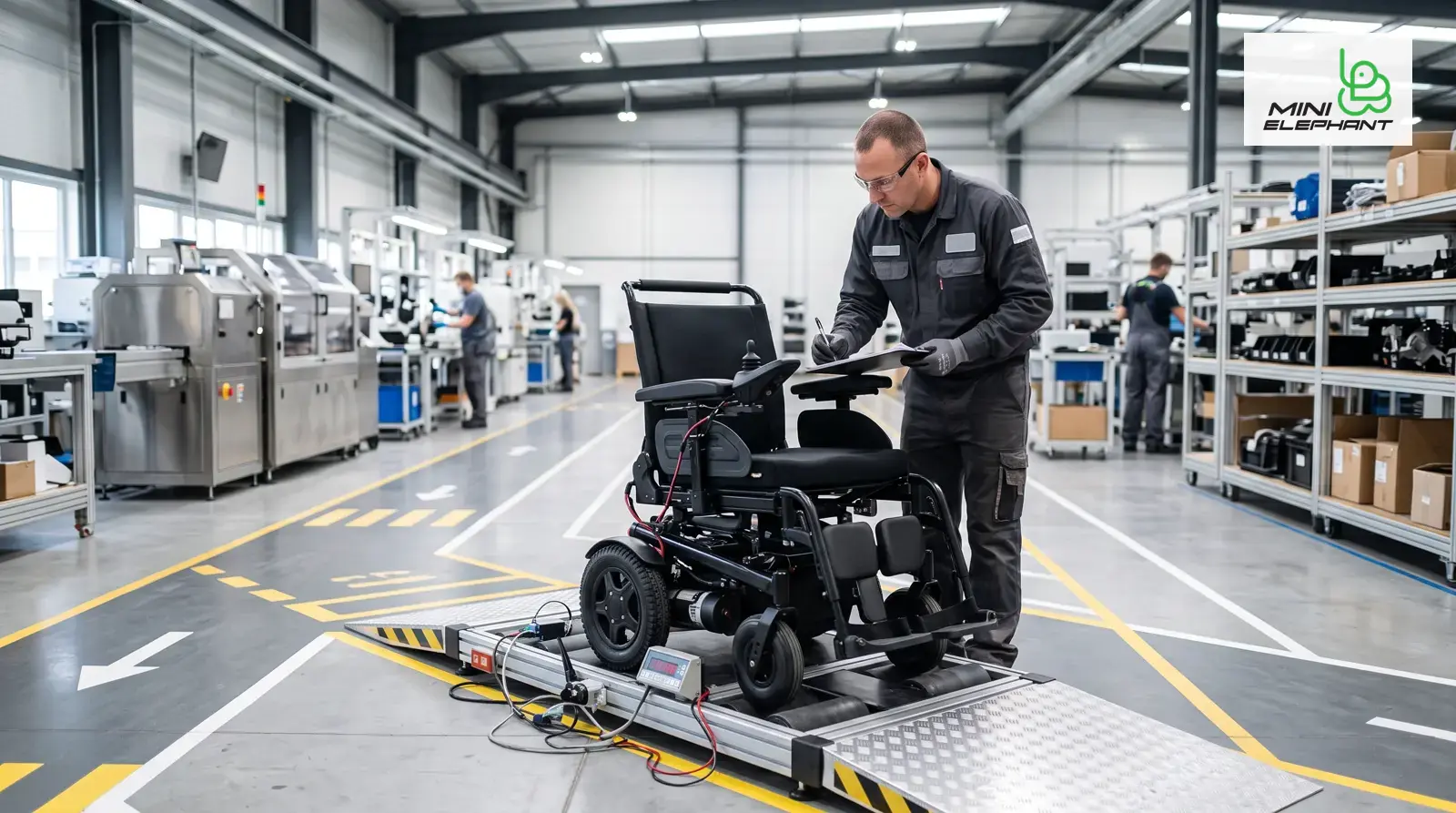
Electric Wheelchair Range Testing: Why B2B Buyers Need the Test Conditions
A range number without test conditions is not a useful comparison. The distance an electric wheelchair travels depends on battery chemistry and age, user weight, tire pressure, terrain, temperature, stops, speed, and the condition of the complete drive system. Importers and distributors should evaluate range as a tested performance window rather than a single promise.
A clear range method helps buyers compare suppliers fairly, set better customer expectations, and identify whether a complaint is caused by the product, the route, or the way the battery is being used.
Ask What the Published Figure Means
Before comparing models, request the conditions behind the advertised range. The supplier should identify battery voltage and capacity, battery type, user load, speed, surface, slope, ambient temperature, tire condition, and whether the test used continuous driving or repeated stops. Confirm the test endpoint too: a low indicator, defined cutoff voltage, and laboratory result are not interchangeable.
Request for each configuration:
- battery model, chemistry, voltage, and amp-hour or watt-hour rating;
- maximum user load and tire pressure used during the test;
- test speed, route surface, incline, stops, and temperature;
- test endpoint, distance completed, and number of repetitions.
Battery Capacity Is Only One Input
A larger battery can increase potential range, but it also adds weight. Controller settings, motor efficiency, tire resistance, brake adjustment, and frame weight affect energy use. Two chairs with similar battery ratings may deliver different results on the same route.
Battery age and storage history matter as well. For lithium batteries, match the battery, charger, and controller as a complete system. Do not fit an unapproved battery without checking compatibility, mounting, protection, documentation, and transport requirements.
Build a Repeatable Comparison Test
A buyer does not need a laboratory to create a useful screening test, but the method should be repeatable. Use the same chair configuration, route, load, tire condition, starting charge, and stop procedure for every model.
Record the model and serial number, battery identity, test load, route and surface, weather, speed setting, distance, ending battery state, warnings, faults, recharge time, and post-test observations. Repeat the route when possible: one result is an observation, while several consistent results provide a stronger comparison.
Consider the Customer's Real Route
A travel customer may drive short distances with frequent stops, while a care-home or outdoor user may travel over ramps and uneven pavement. Ask where the chair will be used before selecting a battery package. Consider indoor or outdoor use, ramps, rough surfaces, luggage, daily distance, and access to daytime charging.
A smaller, lighter chair with moderate range may be better for a customer who prioritizes transport. A fleet or daily outdoor user may value predictable reserve capacity and a local replacement-battery pathway more than the lowest shipping weight.
Explain Reserve Capacity Clearly
Customers should not plan every trip around the last possible kilometer. Hills, cold weather, heavy loads, low tire pressure, and battery aging can reduce available distance. Communicate a practical operating range with a sensible reserve instead of presenting a maximum test result as a guarantee.
Keep the model revision, battery information, delivery date, route type, charging history, and repairs in service records. A sudden range change can point to a charger, connection, tire, brake, or electrical issue that needs diagnosis. Never ask an untrained user to open a battery pack or bypass a safety device.
B2B Decision Framework
1. Request the full test conditions behind every published range figure.
2. Compare complete configurations, including battery, tires, motors, controller, and load.
3. Use a repeatable route test when screening samples or competing suppliers.
4. Match battery capacity to the customer's route and transport needs.
5. Communicate practical range with reserve, not only the maximum test result.
6. Record battery and service data so future complaints can be diagnosed.
The B2B Bottom Line
Electric wheelchair range is a use-case measurement, not a number separate from battery, load, terrain, temperature, and driving pattern. Buyers who verify test conditions and build a repeatable comparison method can choose suitable configurations and give customers a more honest ownership expectation.
**Comparing electric wheelchair range for a new product line?** [Contact the MiniElephant export team](https://www.semwheelchair.com/contact) for battery specifications, configuration comparisons, and B2B sourcing support.
Interested in MiniElephant Electric Wheelchairs?
Get a customized quotation and product recommendation from our export team. Response within 24 hours.