Electric Wheelchair Rental Fleet Procurement Guide
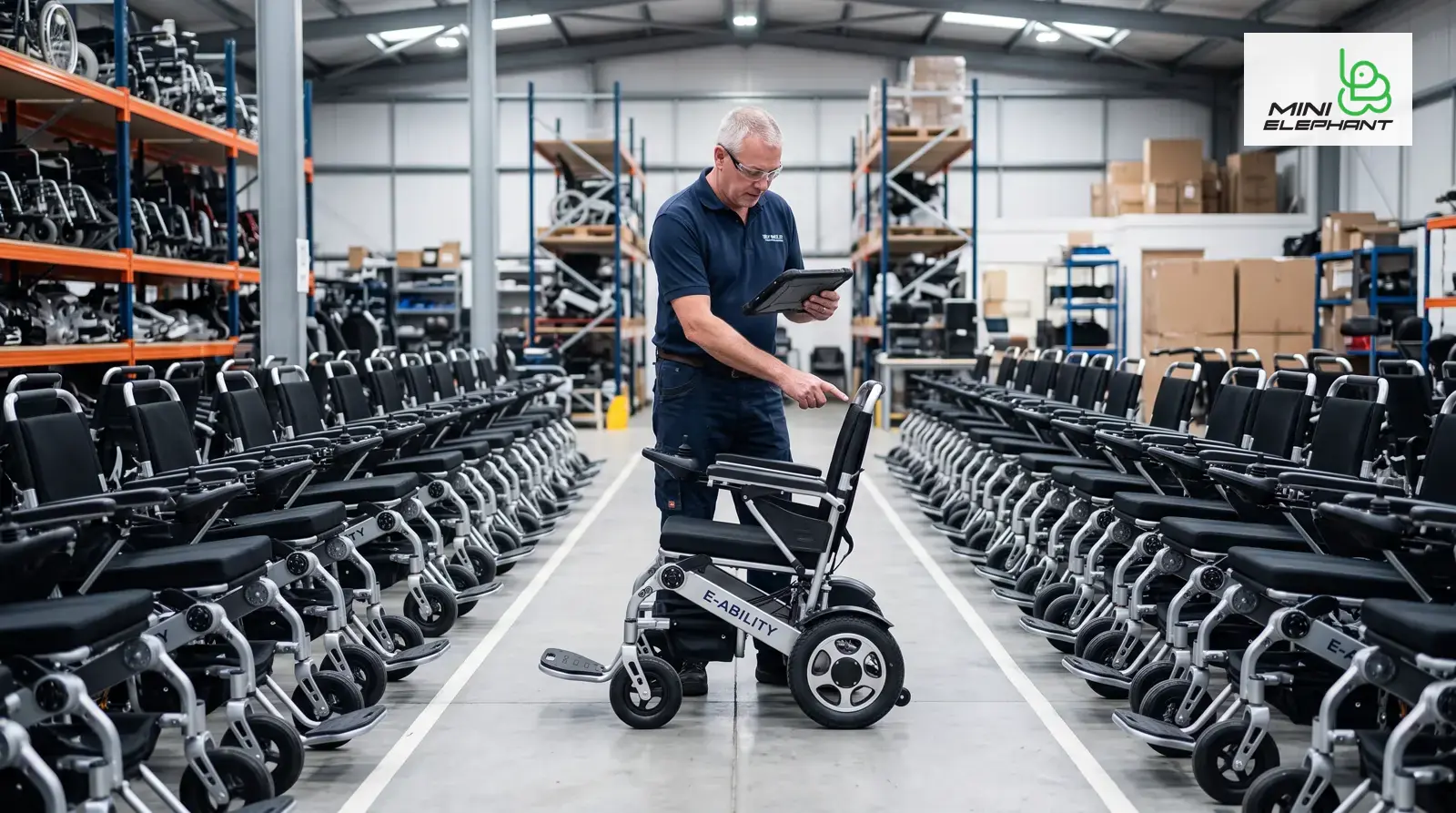
Electric Wheelchair Rental Fleet Procurement: Buy for Uptime, Not Only Unit Price
A rental wheelchair has a different job from a privately owned chair. It may be handled by many users, folded into different vehicles, stored between bookings, cleaned repeatedly, and returned with incomplete information about how it was used. For rental operators, the best electric wheelchair is the one that can be checked quickly, supported locally, and returned to service with predictable cost.
Fleet procurement should therefore evaluate the complete operating cycle: purchase, delivery, handover, return inspection, cleaning, charging, repair, and eventual replacement.
Choose a Standardized Fleet Configuration
Standardization makes every stage easier. Where possible, use the same model, controller family, charger, battery arrangement, tire type, and accessory package across a fleet. Staff learn one operating procedure, spare parts are easier to stock, and customers receive more consistent guidance.
A fleet specification should record:
- seat dimensions and load rating;
- folded or transport dimensions;
- total weight and heaviest liftable component;
- battery chemistry, voltage, capacity, and removal method;
- charger model and plug type;
- controller and joystick configuration;
- included cushion, footrests, keys, and accessories;
- serial-number and labeling format.
If several configurations are necessary, assign a clear fleet code to each one. Do not rely on a photograph or informal model nickname when ordering replacement parts.
Prioritize Robust Handling Features
Rental chairs experience more loading and unloading than many privately owned products. Review frame joints, folding locks, handles, wheel protection, joystick mounting, upholstery, armrests, and footrests for repeated handling. A removable battery can make transport easier, but the release mechanism must be clear and durable for staff and customers.
Ask the supplier to explain the intended handling sequence. The chair should have safe lifting points and should not require staff to pull on the joystick, cable, footrest, or upholstery. Packaging for the first shipment should also protect the controls and provide an unpacking reference for the warehouse.
Build a Fast Return Inspection
A rental operation needs a repeatable return checklist. Staff should be able to identify safety issues before the next booking without performing an unnecessary technical teardown. Record the unit serial number, return date, battery indicator, charger condition, visible damage, tire condition, folding action, brake behavior, and accessory count.
A practical inspection can include:
1. visual check for frame damage, sharp edges, and loose parts;
2. confirmation that the chair folds, unfolds, and locks correctly;
3. power-on, joystick, forward, reverse, turn, and controlled-stop checks;
4. charger and battery connection check;
5. freewheel and electromagnetic-brake check according to the manual;
6. cleaning, charging, and accessory reset;
7. photo records for new damage or missing items.
Any braking, electrical, structural, or battery concern should remove the unit from service until a trained person assesses it. A fast turnaround is never more important than a safe release.
Plan Battery Charging and Storage
Battery management has a direct effect on fleet availability. Define where chairs are charged, who checks chargers, how batteries are labeled, and how storage temperature and ventilation are managed. Follow the battery and charger instructions for the exact configuration rather than using a generic fleet rule.
Track charging behavior and recurring range complaints. A chair returned with a low battery may need a simple charging reminder, while repeated short range may indicate battery aging, tire resistance, route conditions, or a fault that requires diagnosis. Keep spare chargers clearly matched to the correct battery system.
For lithium-battery fleets, confirm the applicable storage, transport, and shipping requirements before moving units between branches or sending a replacement battery. Keep the model identification and relevant documents with the fleet records.
Create a Spare-Parts and Repair Plan
The fleet should carry the parts most likely to cause downtime. Depending on the model, these may include chargers, joystick modules, controllers, wheels, tires, armrests, footrests, fasteners, fuses, and battery connectors. Confirm compatibility between revisions before purchasing a large quantity.
Agree on diagnosis and escalation with the manufacturer. A useful support request includes the serial number, model revision, symptom, fault indicator, photographs, short video when safe, and maintenance history. This gives the supplier enough information to recommend a part without repeated guesswork.
Measure Fleet-Level Total Cost
Compare suppliers using more than purchase price. Include freight, packaging, accessories, training, spare parts, battery replacement, cleaning time, technician labor, downtime, warranty handling, and expected resale or disposal cost. A slightly heavier chair may cost more to transport but survive rental handling better; a lighter chair may be easier to load but need more frequent repairs.
Track cost per booking or cost per active rental day. Also record availability rate, average repair time, damage frequency, missing accessories, and customer complaints. These measures show whether a configuration is truly economical.
Improve the Customer Handover
Every rental should include a short, consistent handover. Demonstrate power-on behavior, joystick direction, speed adjustment, braking, charging, folding, freewheel use, battery removal if applicable, and safe route limitations. Give the customer written instructions and an emergency contact method.
Do not promise terrain, range, or transport performance beyond the tested configuration. Clear guidance reduces misuse, protects the customer, and gives the operator better information when a unit is returned.
Rental Fleet Procurement Checklist
1. Standardize models and components wherever the customer use case allows.
2. Check handling points, folding locks, controls, and accessories for repeated use.
3. Create a documented return inspection with a clear safety hold process.
4. Manage charging, battery identity, storage, and transport for the exact battery type.
5. Stock compatible high-impact spare parts and define technical escalation.
6. Measure uptime and cost per rental day, not only purchase price.
7. Use the same handover guidance for every customer and booking.
The B2B Bottom Line
An electric wheelchair rental fleet succeeds when every unit is easy to identify, inspect, clean, charge, repair, and explain. Procurement teams that standardize the configuration and measure uptime can reduce avoidable downtime while giving customers a safer and more consistent mobility experience.
**Planning an electric wheelchair rental fleet?** [Contact the MiniElephant export team](https://www.semwheelchair.com/contact) for model selection, spare-parts planning, and B2B fleet configuration support.
Interested in MiniElephant Electric Wheelchairs?
Get a customized quotation and product recommendation from our export team. Response within 24 hours.