Electric Wheelchair Weight Capacity Comparison: Standard vs Bariatric
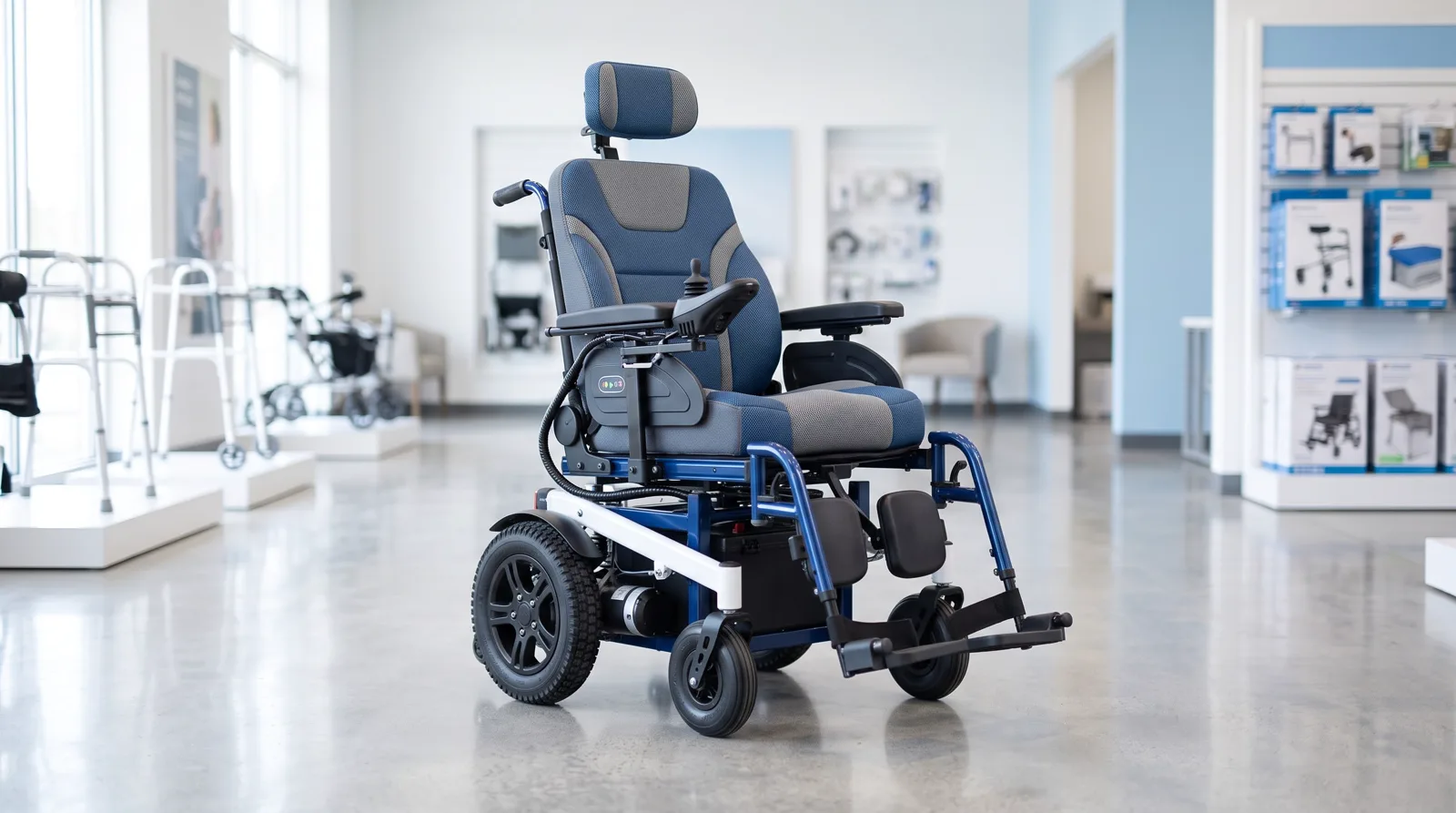
Electric Wheelchair Weight Capacity: The Spec B2B Buyers Overlook
If you are importing an electric wheelchair for resale, weight capacity is the specification most likely to cause returns, safety complaints, and liability exposure when it does not match your market. A 120kg-rated electric wheelchair used regularly by a 130kg user will fail early, and that failure is often excluded from warranty coverage. This comparison reviews how standard and bariatric electric wheelchair models differ across rated capacity, seat width, frame strength, motor output, and wheel hardware, then provides a selection framework for B2B importers.
Background: Weight Capacity and the Electric Wheelchair Market
The population data explains why this spec matters more every year, for every electric wheelchair distributor building a serious inventory. The World Health Organization estimates that more than 1 billion people worldwide live with obesity, and the global share of adults with a body mass index above 30 has roughly tripled since 1975. In the United States about 42% of adults are classified as obese; in Europe the figure ranges from roughly 17% to 25% depending on the country. A growing share of mobility users therefore needs an electric wheelchair engineered for higher body weight.
At the same time, the bariatric segment is expanding faster than the general electric wheelchair market. Distributors that stock only 100-120kg models are closing the door on a large, underserved customer base — one that often has the highest willingness to pay, because standard equipment simply does not work for them.
Evaluation Criteria for Electric Wheelchair Weight Capacity
We compared electric wheelchair models across six factors that determine real-world load performance:
|-----------|---------------|----------------|
Weight Capacity Tiers Compared
Most electric wheelchair products fall into three practical tiers:
|------|---------------|-------------------|---------------|---------------|
The jump from 120kg to 150kg is not a wider seat; it is a structural re-engineering of the electric wheelchair. Frames must use thicker-wall tubing or stronger alloys, motors must deliver more torque without overheating, wheels must carry higher tire load ratings, and brakes must hold the unit on steeper slopes. A model that simply widens a standard frame without upgrading these systems will fail the ISO 7176-8 static load test — and eventually fail the user.
What Happens When an Electric Wheelchair Is Overloaded
Overloading an electric wheelchair produces five predictable failure modes:
- Motor overheating. A 250W motor running continuously above its rated load draws excessive current, heats the windings, and can trigger thermal cutoff or permanent demagnetization.
- Frame fatigue. Repeated dynamic loading beyond design limits cracks welded joints, usually at the seat post or cross-brace, after months rather than years.
- Battery drain. Pushing extra weight increases current draw by 20-40%, cutting real-world range well below the brochure figure.
- Brake fade. Parking brakes rated for lighter loads may struggle to hold the chair on ramps, creating a fall hazard during transfers.
- Warranty denial. Most manufacturers define the rated capacity as the operating limit; damage from overloading is routinely excluded.
The 80% rule is the industry shorthand: spec an electric wheelchair with a rated capacity at least 20% above the heaviest expected user. A user weighing 110kg belongs on a 136kg-rated model, and a 130kg user belongs on a 150kg-rated model. This margin protects the motor, the frame, and your warranty exposure.
Frame Material and Load Performance Compared
Frame choice directly sets how much weight an electric wheelchair can carry:
- Steel frames offer the highest strength-to-cost ratio and are common on bariatric models rated 150kg and above. The trade-off is weight — steel chairs typically weigh 50-70kg, complicating transport.
- Aluminum 6061/7005 frames dominate the 100-136kg segment. They are corrosion-resistant and lighter than steel, but wall thickness and joint design determine whether the rated capacity is honest.
- Magnesium alloy frames are the lightest option, used on folding electric wheelchair models in the 42-47kg class. High-quality magnesium frames such as the MiniRedone series (rated 150kg at 42-47kg total weight) show that light weight and high capacity can coexist, but importers should verify the static and fatigue test certificates rather than trusting marketing numbers.
Verify before you order: ask for the ISO 7176-8 static load and fatigue test report for every electric wheelchair you plan to stock. The certificate states the tested load, the test duration, and the pass criteria. If a supplier cannot produce it, treat the rated capacity as unverified.
Motor Power at Full Load
Motor output determines whether a fully loaded electric wheelchair can climb ramps and kerbs without stress. Torque, not peak wattage, is the number that matters:
- 250W motors suit flat indoor environments with loads up to about 100-120kg.
- 350W motors are the mainstream choice for 130-150kg loads, including daily 10-15% ramp climbs.
- 400-500W dual-motor setups are typical for bariatric electric wheelchair models rated above 150kg.
A useful rule of thumb: divide the rated capacity by 0.45 to estimate the minimum combined motor wattage you should demand. A 150kg bariatric electric wheelchair should carry at least 330-350W of combined motor output, and most reputable models exceed that.
Wheel, Tire, and Brake Considerations for Heavy Loads
Weight capacity on an electric wheelchair is not just a frame spec. Pneumatic tires with higher ply ratings absorb shock better at full load, while solid tires must be selected from a supplier that publishes load ratings. Brakes deserve equal attention: electromagnetic parking brakes on bariatric electric wheelchair models are typically specified with 30-50% more holding torque than standard units. Ask the supplier for the holding-torque figure and the tested slope angle (a 15-degree slope test, aligned with ISO 7176-10 stability requirements, is a good baseline).
Decision Framework for B2B Importers
1. Map your market's body-weight distribution. Use national obesity statistics to estimate what share of customers falls above 120kg; if it is 20% or more, a bariatric electric wheelchair line is mandatory.
2. Apply the 80% rule to every model you stock. The rated capacity must exceed the heaviest expected user by at least 20%.
3. Request test certificates before ordering. ISO 7176-8 static/fatigue reports and ISO 7176-10 stability reports are the minimum documentation.
4. Stock at least two tiers. A standard 120kg line plus a 150kg+ line covers roughly 90% of the addressable market in most regions.
5. State capacity clearly in every electric wheelchair listing. Publish the rated capacity in kg on product pages and marketing materials to reduce returns and manage user expectations.
Practical Tips for Testing Capacity Claims
When you evaluate an electric wheelchair supplier, run these four checks:
- Ask for a loaded test video: a supplier that can show a 150kg electric wheelchair climbing a 10-degree ramp under load is more credible than one that cannot.
- Compare seat width and capacity together. A 560mm bariatric seat on a 136kg frame is a common mismatch.
- Check ground clearance and wheelbase — bariatric models need wider bases for stability, not just stronger parts.
- Confirm the controller's current limit matches the motor rating; some low-cost controllers throttle output under load, silently reducing capacity.
FAQ: Electric Wheelchair Weight Capacity
1. Can a 120kg electric wheelchair carry a 130kg user?
Technically it may move, but it violates the design limit. Motor strain, frame fatigue, and warranty denial make it a poor business decision. Spec the 136kg or 150kg tier instead.
2. What is the difference between static and dynamic load ratings?
Static rating is the load the frame can hold when parked; dynamic rating is the load it can carry while moving, over bumps and inclines. Dynamic loading is the more demanding spec and the one that matters for daily use.
3. Is a wider seat the same as a higher weight capacity?
No. A wider seat improves comfort but does nothing for the frame, motor, wheels, or brakes. Capacity claims must be verified against test reports, not seat dimensions.
4. Which certification proves a weight capacity claim?
ISO 7176-8 covers static, impact, and fatigue strength testing for wheelchairs. A certificate from an accredited laboratory naming the tested load is the strongest evidence.
5. Do bariatric electric wheelchair models cost significantly more?
Typically 15-40% more than standard models at the same build quality, reflecting stronger frames, larger motors, and heavier-duty wheels. The premium is usually easy to justify to end users because no standard product meets their needs.
The B2B Bottom Line
Weight capacity is the specification that separates a reliable electric wheelchair inventory from a returns problem. Distributors who map user demographics, apply the 80% rule, and verify ISO 7176-8 documentation will capture the fast-growing heavy-duty segment with far less risk than competitors who treat capacity as a marketing afterthought.
**Need capacity-verified electric wheelchair models for your market?** [Contact the MiniElephant export team](https://www.semwheelchair.com/contact) for ISO-tested models, specification sheets, and load-test documentation.
Interested in MiniElephant Electric Wheelchairs?
Get a customized quotation and product recommendation from our export team. Response within 24 hours.