Electric Wheelchair Brakes: Electromagnetic Braking Systems B2B Guide
Why Braking Performance Decides Electric Wheelchair Safety
The braking system is the most safety-critical component of an electric wheelchair — and the most under-specified. A wheelchair that accelerates smoothly but fails to hold position on a ramp, or rolls a few centimeters after the joystick is released, is a liability rather than a mobility aid. Across the powered mobility market, braking failures are a leading cause of wheelchair-related incidents, and most of them trace back to a specification that was never verified at purchase time. This guide explains how electric wheelchair brakes actually work, which specs matter, and what B2B buyers should verify before placing an order.
Background: How Electric Wheelchair Brakes Work
Modern electric wheelchairs do not use a mechanical handbrake. Instead, they combine three braking technologies that work together:
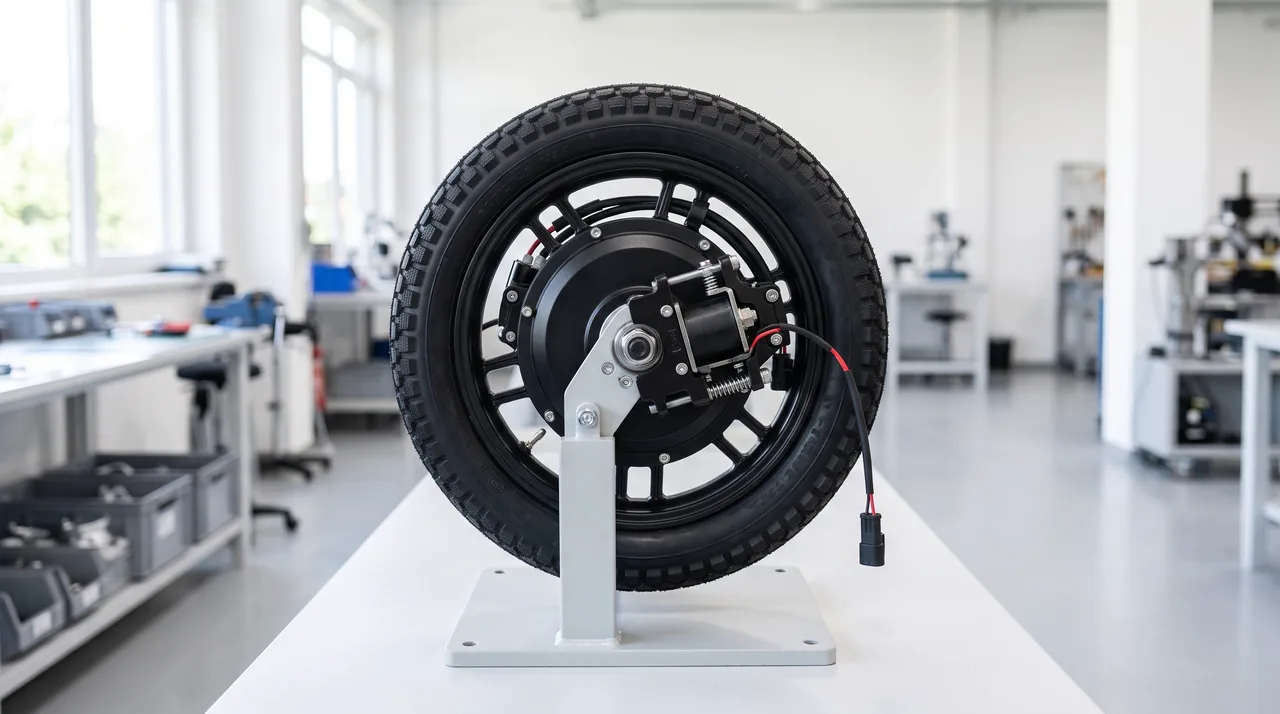
- Spring-engaged electromagnetic brakes — the default on most powered wheelchairs. When the chair is powered off, or the joystick is released, springs press brake pads against the motor shaft and lock the wheels. Power is applied only to *release* the brake, so the chair physically cannot roll away when the power is off. This is called a fail-safe, power-off brake.
- Regenerative braking — when the user releases the joystick while moving, the drive controller turns the motor into a generator, converting momentum into charge and slowing the chair smoothly. This recovers energy, reduces wear on the mechanical brake, and provides predictable deceleration.
- Dynamic (resistive) braking — the controller applies electrical resistance to slow the motor at low speeds, giving precise feathering control when maneuvering indoors or in tight spaces.
A well-designed electric wheelchair uses all three: regenerative braking for normal slowdown, dynamic braking for fine control, and spring-engaged electromagnetic brakes for parking, emergency stops, and power-off holding.
The B2B Specs That Actually Matter
When comparing electric wheelchair braking systems from different suppliers, verify these specifications rather than trusting a generic "safe braking system" line:
|---|---|---|
Brake torque and incline rating are the two numbers to compare. A chair rated to hold on a 6-degree slope may be fine for a flat urban market and dangerous in a hilly region. Ask for the holding-torque figure and the tested incline, then map them against the terrain where the end user will actually drive.
Hill Holding and Roll-Back: What the Data Shows
The most common braking complaint in electric wheelchairs is roll-back on slopes — the chair slides backward a few centimeters after the user releases the joystick on an incline. Real-world testing shows:
- Response time drives roll-back. A brake that engages in 50 ms may allow 3-5 cm of roll-back on a 10-degree slope at slow speed; a slower-engaging brake can allow much more. If the datasheet does not state response time, ask for it.
- Holding torque must exceed the chair's downhill force. For a 120 kg electric wheelchair (user + chair) on a 10-degree slope, the gravitational force trying to pull the chair downhill is roughly 200 N per drive wheel. A brake rated below that will not hold reliably.
- Wet conditions change the equation. Brakes tested on dry surfaces can slip on wet ramps, especially at outdoor entrances and parking lots. Check whether the manufacturer publishes wet-surface or all-weather braking data.
B2B tip: require the supplier to state braking performance at the chair's maximum rated weight and at the maximum incline, not at an empty-chair test weight. The difference is significant, and it is the spec most likely to be glossed over in a datasheet.
Freewheel Mode: The Feature That Gets Overlooked
Every electric wheelchair needs a freewheel (push) mode so a caregiver can push it, and so the chair can be loaded into a vehicle. The mechanism matters:
- Mechanical freewheel levers on the motor hubs disengage the drive. They are simple and reliable, but require the user or caregiver to bend down to operate them.
- Electromagnetic freewheel release disengages via a switch on the controller, with the brake holding only when the chair is in drive mode.
- Safety interlock: a good design automatically re-engages the brakes when the chair is powered on, preventing the dangerous situation of a chair in freewheel mode being driven accidentally.
Pitfall for B2B buyers: some budget models use freewheel levers that are hard to reach or that disengage one wheel at a time, causing the chair to veer when pushed. Verify that the freewheel mode is operable by a single caregiver and re-engages safely.
Maintenance, Wear, and Failure Modes
Electromagnetic brakes are durable, but they do wear:
- Brake pads on spring-engaged units typically last 2-4 years in daily use before the holding torque degrades. Replacement is a routine service item, not a sign of a bad product.
- Brake dust and moisture are the main enemies. IP-rated motor and brake housings (IP54 or higher) protect the braking components in outdoor and rainy markets.
- Common failure signs: the chair rolls back on slopes, creeps forward when powered on, or the battery drains faster (a stuck brake drags the motor). These are serviceable issues, but the supplier's spare-parts availability and service manual decide how painful they are.
Decision Framework for B2B Importers
1. Ask for the brake torque and tested incline rating — in writing, at maximum rated load.
2. Confirm fail-safe braking. The chair must lock automatically on power loss, every time.
3. Check response time if your market has ramps or hills. Slower response equals more roll-back.
4. Verify freewheel operation — single-lever or switch-operated, with safe re-engagement.
5. Request brake certification evidence (EN 12184 / ISO 7176 related tests) for CE and export compliance.
6. Confirm spare-parts and service documentation — brake pads, controllers, and motor assemblies should be orderable with published part numbers.
FAQ
Do electric wheelchairs have brakes?
Yes. Most use spring-engaged electromagnetic brakes that lock the drive wheels automatically when the power is off, plus regenerative and dynamic braking for controlled slowdown while driving. There is no separate mechanical handbrake on most models.
What happens if an electric wheelchair runs out of battery on a slope?
Nothing, if the braking system is correct. Fail-safe electromagnetic brakes engage automatically on power loss, holding the chair in place until power is restored or the chair is put into freewheel mode and pushed to safety.
How steep a slope can an electric wheelchair hold?
It depends on the model. Most standard electric wheelchairs are rated for 6-12 degree inclines; heavy-duty models with higher brake torque and motor power handle steeper slopes. Always compare the tested incline rating at maximum load, not the empty-chair figure.
Why does my electric wheelchair roll back on ramps?
Roll-back is caused by brake response time — the gap between joystick release and brake engagement. It is worst on budget models with slow-engaging brakes and on wet surfaces. A supplier that publishes response time and wet-surface data is the safer choice.
Is regenerative braking the same as a brake?
No. Regenerative braking slows the chair by converting motion into charge, but it cannot hold the chair stationary. The electromagnetic park brake is what holds the chair on slopes and when parked. Both are needed for a safe, well-rounded braking system.
The B2B Bottom Line
Braking is the one specification a B2B buyer should never compromise on. Spring-engaged fail-safe electromagnetic brakes, a fast response time, a tested incline rating at maximum load, and a caregiver-friendly freewheel mode turn a good specification sheet into a product that is safe in the field — and defensible in an audit. Distributors who verify braking specs and document them for their customers build a reputation for safety that price competition cannot match.
**Sourcing electric wheelchairs with certified braking systems?** [Contact the MiniElephant export team](https://www.semwheelchair.com/contact) for brake torque and incline test data, EN 12184 documentation, and B2B configuration support on the MiniRedone series.
Interested in MiniElephant Electric Wheelchairs?
Get a customized quotation and product recommendation from our export team. Response within 24 hours.