Electric Wheelchair Dealer Marketing: Lead Generation Playbook
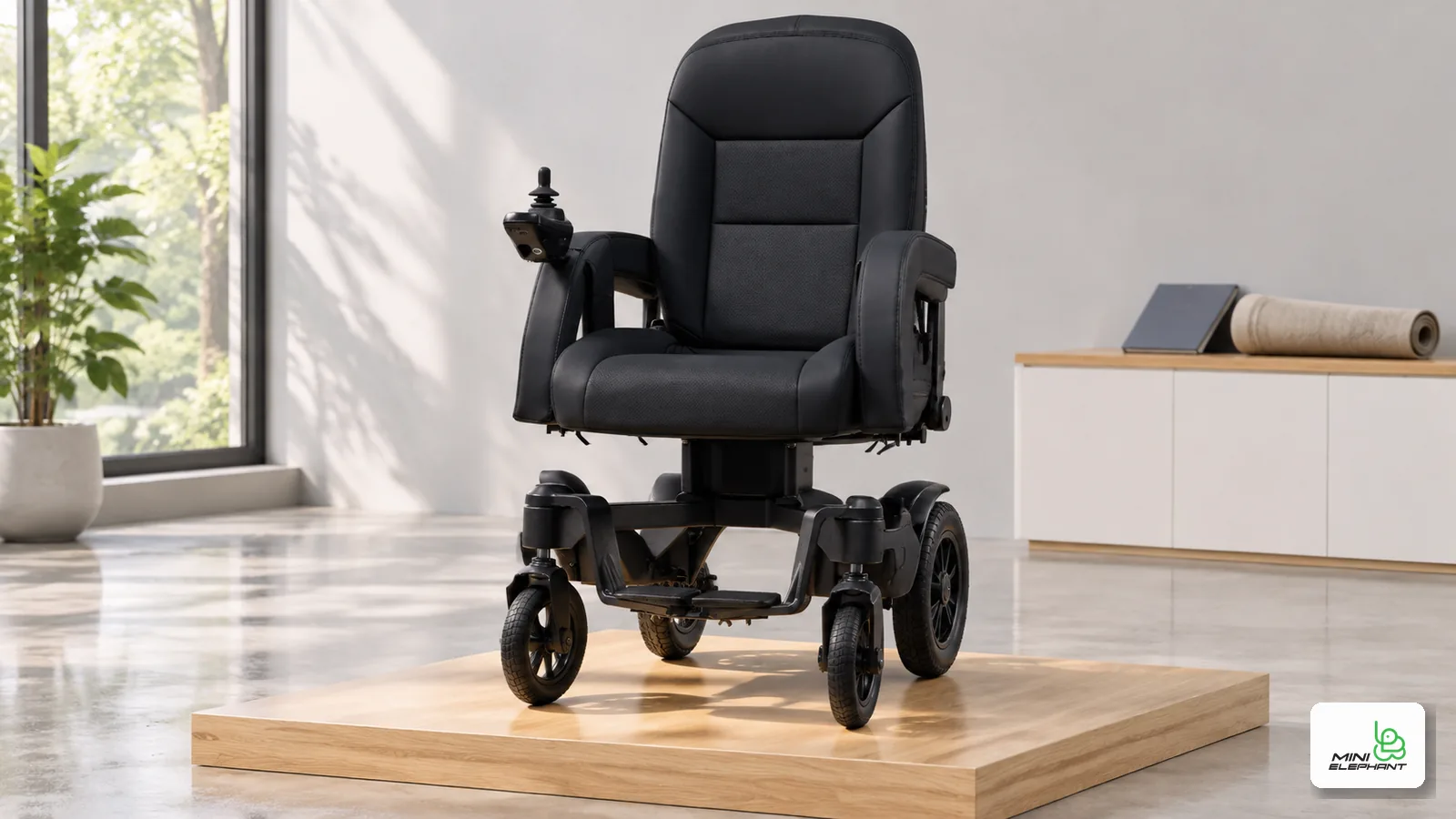
The short answer: most electric wheelchair dealers do not have a lead problem; they have a follow-up and proof problem. Fix the offer, the demonstration and the written follow-up before you increase any advertising budget, because paid traffic only multiplies what the sales process already does.
A distributor that starts selling electric wheelchairs into a new market usually starts from the wrong end: a budget line, a boosted post, a banner at a trade fair. Enquiries arrive, the sales team answers a few, and the rest stay in somebody's personal phone. Three months later the conclusion is that the market is not ready. In most cases the market was ready and the process was not.
What an electric wheelchair dealer marketing plan has to survive
Electric wheelchair retail is a considered purchase with an emotional core, and the buyer is usually not the user. The decision involves a family, sometimes a clinician, and a budget that was not planned for mobility equipment at all. Marketing that treats an electric wheelchair like fast-moving consumer goods produces clicks but no fittings.
A dealer marketing plan therefore has to survive five tests before a single euro goes into advertising, which is the sequence in our distributor market launch checklist. Does a stranger understand in ten seconds what the electric wheelchair costs, who it suits and what happens next? Can the dealer put that buyer into a seat within a week? Is there a written follow-up that runs whether or not the salesperson remembers? Can the dealer prove service capability in the buyer's own city? And is there a way to tell, after six weeks, which channel produced fittings rather than likes?
The three buyers behind one electric wheelchair enquiry
Almost every enquiry reaching a dealer is one of three people, and each one needs different proof. Treating them identically is the most common reason a small dealer budget produces nothing.
The self-paying user responds to a specific electric wheelchair model, an honest range figure and a visible price band. The family caregiver responds to reassurance: what happens if the electric wheelchair does not fit the doorway, who comes out to fix it, what the warranty actually covers. The institutional buyer, whether a care home, a clinic or a rental fleet, is not persuaded by a photograph at all; they need a specification sheet, a parts list and a service commitment in writing.
A dealer who publishes one page for all three writes a page that persuades nobody. Three pages, each answering the questions of one reader, convert better than one long page that hedges every claim.
Message discipline: claims that survive a question
The fastest way to lose a serious buyer is an unverifiable claim. "Longest range in the market" invites a comparison the dealer cannot win. A buyer who asks once and gets a vague answer does not complain; they simply stop replying.
Written claims should be limited to what the manufacturer can document. For the MiniRedone range the defensible facts are concrete: a magnesium alloy frame, two 350 W brushless hub motors, a 16 Ah LiFePO4 battery, maximum load 150 kg, range of approximately 30 km, net weight between 42 kg and 50 kg depending on model, charging time of four to six hours, and a warranty of five years on the frame with three years on the controller, battery and motor. Those numbers can be printed, compared and repeated by a salesperson without improvising, provided the sales team has been through structured electric wheelchair product training.
What should never appear in dealer marketing without a document behind it: a certification claim, a country approval, a delivery time, a clinical recommendation, or a statement that an electric wheelchair is suitable for a named medical condition. Market entry obligations sit with the importer, so the dealer's public copy should describe the electric wheelchair, not promise the approval, and the import compliance document checklist is the file that decides what can be printed.
One electric wheelchair hero model before a full catalogue
A new dealer wants to show the whole electric wheelchair range, because the range is impressive. The buyer sees ten similar electric wheelchair photographs, cannot tell which one is for them, and leaves. The retailer's answer is the hero model: one electric wheelchair that carries the traffic, one price band printed on the page, and a clear sentence explaining who should choose something else.
The hero model is usually the folding model that fits a car boot and a narrow hallway, because that is the objection that stops most purchases. The rest of the electric wheelchair range becomes the upgrade path: a larger frame for a heavier user, a wider seat, an electric wheelchair with a different backrest, an electric wheelchair built for rougher outdoor surfaces. The dealer who sells the upgrade path from a single entry point needs no advertising budget to explain the catalogue.
Local electric wheelchair search is the cheapest lead a dealer never buys
Most electric wheelchair dealer marketing spend goes to social platforms while the highest-intent searches go unanswered. Someone typing a phrase that includes a city name and "electric wheelchair" is not browsing; they are trying to find a place to sit in one. If the dealer's website has no page that mentions the city, the service area, the showroom address and the models on display, that buyer goes to a competitor with a worse product and a better page, which is exactly the gap the showroom display guide for distributors addresses.
The minimum local footprint is modest. One page per service city, each with the showroom address, opening hours, a map, the electric wheelchair models available to test, and the service radius. A service page describing what the dealer repairs and how a repair is booked, with the response commitment written as an after-sales service SLA rather than a promise. A demonstration page that names the models and states how long a session takes. Every phone number on those pages should be clickable, and every page should be reachable from the main navigation in two clicks.
Reviews belong in the same footprint. A dealer asking for a review at the moment of handover, while the buyer is still relieved, collects more than a dealer emailing a month later. Reviews should be requested in the buyer's own language and answer the questions other buyers actually ask: whether the showroom was easy to reach, whether the electric wheelchair was ready, whether the service call happened.
The electric wheelchair demonstration is the conversion event
For a product that costs as much as an electric wheelchair, the demonstration is not a courtesy at the end of the sales process; it is the sales process. Everything before it exists to book it, everything after it exists to close it.
Three things make a demonstration bookable. A specific time, not "come by whenever". A session length the buyer can plan around. And a stated scope, so the buyer knows they will try the electric wheelchair indoors, outdoors and in a car boot rather than watch a salesperson talk. The dealer who runs a scripted demonstration covering doorway clearance, turning radius, kerb approach, folding and loading converts at a different level from the dealer who improvises, which is why the dealer demonstration checklist is worth following line by line.
The demonstration also produces the content. A short video of a real electric wheelchair being folded and loaded into a real car boot, filmed in the showroom, answers a question no catalogue answers. That footage is reusable on the electric wheelchair product page, in the follow-up message and in the showroom display, and it costs nothing beyond the phone that filmed it.
Content that AI assistants will quote
Buyers increasingly ask an AI assistant to compare electric wheelchairs, summarise a warranty or explain whether a model fits a doorway, before they contact any dealer. That changes what content is worth writing. A page that ranks in a search engine by repeating a keyword is not the page an assistant quotes; the quoted page answers a question in one clear sentence, then gives the detail.
Three habits make dealer content quotable. Answer first, detail second: begin each section with the conclusion, then explain it. Use the real numbers, because an assistant summarising "approximately 30 km range and 150 kg maximum load" needs those figures to exist in the source. And keep the entity clear: name the dealer, name the city, name the models, so a summary attributes the answer to a real business rather than an anonymous page.
The same discipline applies to a specification table. A three-column table listing model, folded size and net weight is far more likely to be extracted and repeated than the same facts buried in three paragraphs of adjectives.
Electric wheelchair lead capture without a call centre
A small dealer cannot staff a call centre and does not need to. What it needs is that no enquiry depends on one person's memory. That means a single inbox or CRM where every enquiry lands, a written rule about who answers what, and a first reply that goes out the same working day.
The channels differ in urgency. A phone call expects an answer immediately; a WhatsApp message expects a reply within the working day; a website form expects an email or a call back the same day; a social media direct message expects at least an acknowledgement. A dealer who treats all four identically will lose the phone caller and irritate the form filler.
Every capture point should ask the same four questions, because they are the only four that matter for routing: who is the electric wheelchair for, what is the intended use, which city, and when does the buyer want to try it. Anything longer than that is a reason not to submit the form.
Qualify before you quote
Quoting an electric wheelchair price to an unqualified buyer wastes the dealer's scarcest resource, which is selling time. Four signals separate a buyer from a browser, and they can be collected in one short conversation.
A buyer who answers all four is worth a written quotation, a demonstration slot and a follow-up sequence. A buyer who answers none should receive a brochure and a newsletter, not a discount. The discipline protects margin, and it also protects the buyer from being pushed into an electric wheelchair that does not suit them.
The written follow-up that keeps electric wheelchair buyers
The follow-up is where most dealer marketing quietly dies. A salesperson promises to call, the week fills up, and by the time the call happens the buyer has bought elsewhere. A written sequence removes the memory dependency.
The sequence does not need to be elaborate. After a demonstration, a same-day message restating the model, the configuration, the price and the next step. Within the first week, one message that answers the objection the buyer voiced in the showroom, whether that was doorway width, battery charging or service response. Around the second week, an invitation to a second visit with the family member who was not present. After that, a low-frequency stay-in-touch message that carries useful information rather than urgency.
Two rules keep the sequence honest. Never invent a deadline that does not exist, because a buyer who discovers the "offer ends Friday" was fictional stops trusting the service promise too. And never send the same message to everyone; a caregiver and a care home manager need different content even when they asked about the same electric wheelchair.
Referral channels a dealer usually ignores
Three referral sources sit next to most dealers and are rarely worked. Occupational therapists and rehabilitation professionals see the buyer at the moment the need is identified, and they refer to dealers who make fitting easy rather than dealers who discount. Care homes and senior living operators buy in small fleets and value a service agreement more than a low unit price. Rental and tourism operators need electric wheelchairs that survive daily turnover, which is a different requirement from a private buyer and is covered in the rental fleet business guide.
A dealer does not need to advertise electric wheelchairs to these channels; it needs to be findable and easy to deal with. A one-page capability summary, delivered to a clinic, that lists the electric wheelchair models, the service radius, the spare parts stock and the contact name is more effective than a printed brochure full of lifestyle photography. The same page works for a care home procurement manager who has never heard of the dealer.
What to measure, and what to stop measuring
Dealer marketing reporting usually collapses into impressions and likes because those numbers are easy to obtain. They do not predict revenue. A short list of electric wheelchair leading and lagging indicators, reviewed every month, is enough to steer.
Two habits distort whichever numbers are chosen. Counting a demonstration request as a sale inflates confidence, and counting followers as demand makes a dead channel look alive. The only figure that matters at the end of a quarter is how many electric wheelchairs were fitted, delivered and serviced without complaint, and how many of those buyers would recommend the dealer.
Building electric wheelchair marketing on a documented product
None of the above compensates for a product the dealer cannot describe. Every electric wheelchair claim in a dealer's marketing inherits the manufacturer's documentation: the specification sheet, the parts list, the warranty terms, the packaging dimensions, the compliance file. A dealer whose supplier answers technical questions in writing can publish confident copy; a dealer whose supplier answers informally writes hedged copy and loses the comparison.
That is the part MiniElephant controls. The MiniRedone range documents frame material, motor rating, battery capacity, load limit, weight and folded dimensions per model, and the warranty split between frame and electrical components is stated rather than implied. Dealers building a marketing plan around a documented electric wheelchair can print numbers instead of adjectives. Contact Johnson at johnson@semwheelchair.com or +86 13819098967 for the specification pack behind any model.
FAQ
How much should a dealer spend on marketing in the first year?
There is no defensible percentage without the dealer's own margin, territory and capacity to demonstrate. The practical order is to fix the offer, the local pages and the follow-up first, spend a small fixed amount to test two channels for a quarter, and only increase the amount once fittings, not clicks, respond.
Does an electric wheelchair dealer need social media at all?
It helps for local awareness and for showing real demonstrations, but it is not the channel where considered purchases usually close. A dealer with no social presence and a strong local search footprint, a bookable demonstration and a written follow-up will outperform a dealer with an active feed and no process.
How long should a demonstration take?
Long enough to try the electric wheelchair indoors, outdoors and in the buyer's own car. A session that only covers the showroom floor leaves the buyer guessing about the two situations that decide the purchase, which are doorway clearance and loading.
Can a dealer publish prices on the website?
Yes, and for self-paying buyers a visible price band usually improves the quality of enquiries, because it filters out buyers who were never in the range. The band should reflect the configured electric wheelchair rather than a starting figure the dealer cannot actually supply, and the logic behind the band is the same one described in the wholesale pricing guide.
What content should be produced first?
The pages that answer the questions a buyer asks before contacting anyone: what the electric wheelchair costs, who it suits, how wide it folds, what the warranty covers, where it can be demonstrated, and what happens when it needs service under the warranty and after-sales terms. Video of a real electric wheelchair folding and loading sequence is the single most reusable asset a dealer can produce.
A dealer marketing plan is not a channel decision. It is the decision to make the offer specific, the demonstration bookable, the follow-up written and the claims documented. Channels only decide how many people hear about it.
Related reading
- Electric Wheelchair Payment Risk: Escrow, Cards and Contracts
- Electric Wheelchair Fleet Telematics: GPS Tracking for Rentals
- Electric Wheelchair Distribution Agreement: Territory Terms
- Electric Wheelchair Repair Depot Setup: Tools and Training
More in this topic: Dealer & Distributor Operations · All articles
MiniRedone models
Interested in MiniElephant Electric Wheelchairs?
Get a customized quotation and product recommendation from our export team. Response within 24 hours.