Electric Wheelchair Repair Depot Setup: Tools and Training
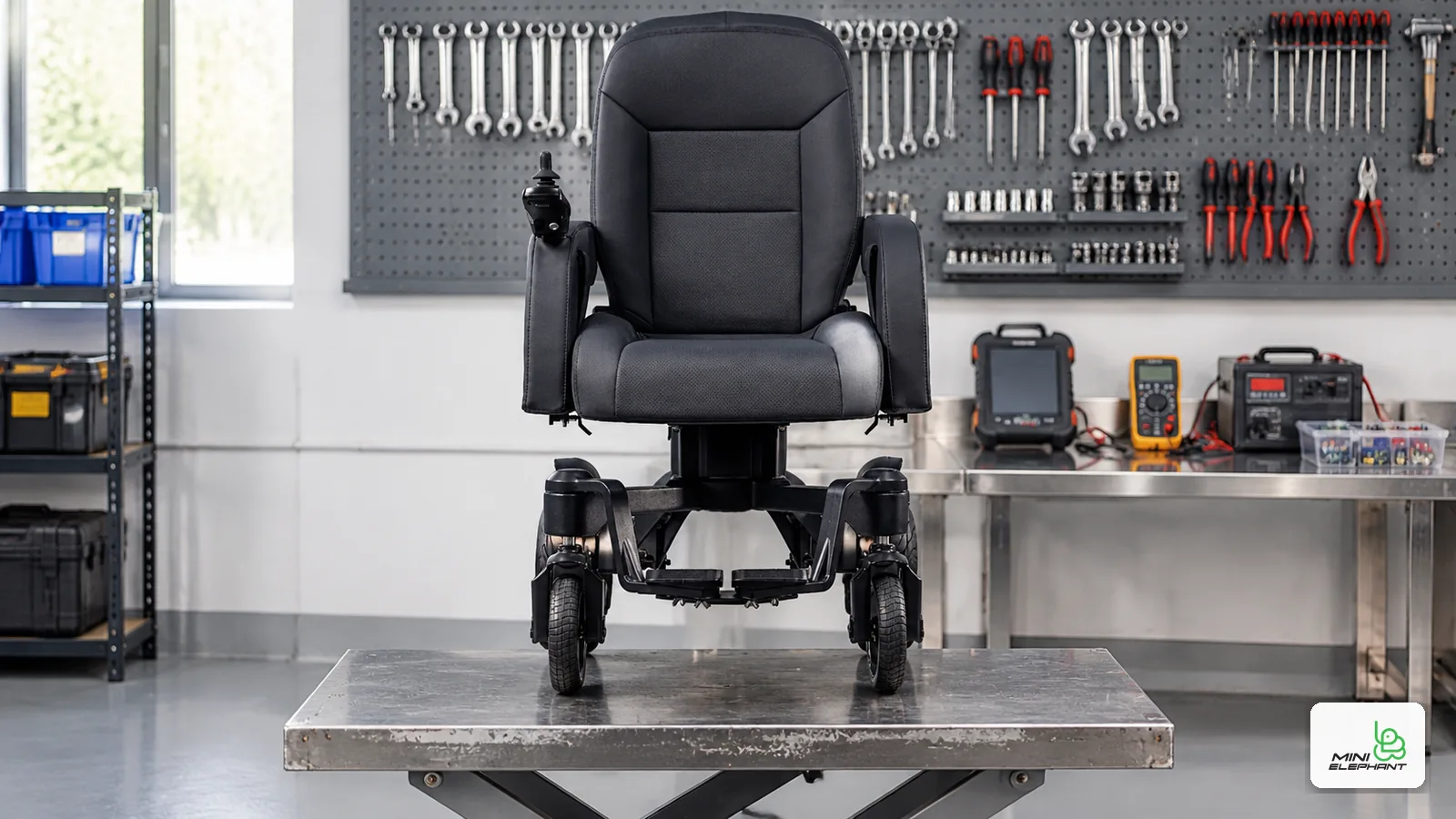
Opening a repair depot for electric wheelchairs looks like a property decision and is actually a parts-and-documents decision. Distributors who rent a workshop first and plan inventory second usually end up with a well-lit room, three lifts and no way to diagnose a controller that will not pair. The depots that run profitably start from the failure list, then work backwards to tools, training and stock.
This guide is written for importers and regional dealers building service capability for folding electric wheelchair fleets. It covers the five capabilities a depot needs, the tool list that covers most electric wheelchair faults, the training ladder for technicians, parts classification, and the records that make warranty claims payable instead of arguable.
Define the depot by capability, not by square metres
An electric wheelchair repair depot exists to return an electric wheelchair to service without shipping it back across an ocean. That single sentence defines the capability floor. If a fault cannot be diagnosed, repaired and verified in the electric wheelchair repair depot, the unit still travels, and the depot is only a post office.
Five capabilities cover the practical range: mechanical repair, drive and controller diagnostics, battery assessment, configuration and pairing, and documentation of the work. Each one needs a different combination of tools, training and parts, and each one can be added in sequence as volume grows.
The sequence matters more than the ambition. Most electric wheelchair service depots should be able to complete mechanical repair and battery assessment from day one, add controller diagnostics once a diagnostic handset or laptop tool is available, and only then move to full configuration control.
Space and layout that actually support repair work
You do not need a large building, but you do need three distinct zones. A reception and handover area where an electric wheelchair can be received, photographed and signed for. A work zone with clear access on both sides of the unit. A storage zone for parts, batteries and waiting units.
The mistake in an electric wheelchair repair depot is treating the work zone as a single bay. An electric wheelchair needs space to fold and unfold during diagnosis, and a folding electric wheelchair with a rear motor set needs access behind the battery box for wiring checks. A bay sized for a car does not solve that.
Two layout details reduce injury and rework, and both depend on how modular the unit is in the first place - see the serviceability comparison. First, a lift table or ramp so units are worked at waist height rather than floor level; a 42 to 50 kg electric wheelchair lifted repeatedly is an injury claim waiting to happen. Second, a dedicated charging position with ventilation and a fire-safe surface for battery work, separated from the parts shelving.
The tool list that covers most electric wheelchair faults
Tool buying for an electric wheelchair repair depot goes wrong in two directions: the depot buys a full factory toolkit it never uses, or it buys hand tools and then discovers that controller pairing needs software access.
Start with the fast-moving items. Torque wrench in the range used for wheel and frame fasteners, tyre levers and a bead breaker for pneumatic castors where fitted, a lift table, and good lighting. Add a multimeter that measures continuity and DC voltage accurately, and a battery load tester that can apply a real load rather than only read open-circuit voltage.
Then add the electric wheelchair repair depot items that decide whether a diagnosis is possible at all: the diagnostic handset or laptop service tool for the controller family in your market, the correct charging connector adapters, and a serial-number reading method. Without those, the depot can only replace parts by guesswork, which is the most expensive way to run service.
Small consumables in an electric wheelchair repair depot deserve their own line item and their own reorder trigger: heat-shrink, connector housings, cable ties, thread-locker, brake pads, inner tubes and controller gaskets. Depots that run out of a two-dollar connector lose a week of technician time.
Training ladder: three levels, three different skills
Training for an electric wheelchair repair depot is often sold as a single course. A single course produces a technician who can replace parts but cannot decide whether a controller is faulty or a harness is faulty, which is the decision that determines cost.
Level one is module replacement, the scope covered by the dealer product training guide: tyres, castors, armrests, footplates, seat frames, batteries by assembly swap. It is mechanical, teachable in a short session, and it covers the majority of reported electric wheelchair faults.
Level two is diagnostics, covered in detail in the dealer fault code guide: reading fault codes, checking supply and ground paths, isolating motor versus controller failures, and understanding when a fault is configuration rather than hardware. This level needs a fault code reference and a written decision tree, otherwise two technicians will diagnose the same electric wheelchair differently.
Level three is configuration and quality: pairing controllers to motor sets, reviewing speed and acceleration profiles, verifying braking behaviour after a controller change, and signing off a unit as ready for use. This is the level that protects the manufacturer's safety position and should not be delegated informally.
Each level should be documented with what the technician is authorised to do. An unsigned authorisation is what turns a well-meant repair into a warranty dispute.
Parts classification: A, B and C by failure rate and consequence
Electric wheelchair repair depots overstock slow movers and run out of fast movers because stocking decisions get made from a price list rather than a failure list. Classify parts by how often they fail and how badly the failure blocks a repair.
Class A parts are the ones that stop a unit from being used and fail often enough to justify stock: tyres and tubes, castor assemblies, battery assemblies, chargers, joystick modules, controller units. Class B parts fail less often but block a repair for days if missing: motors, harnesses, brake assemblies, seat frames. Class C parts are cosmetic and slow: body panels, decals, armrest pads, bags.
Stock A at depot level, B at regional level with a stated replenishment lead time, and C on order - the same logic used in our spare parts stocking guide. Write the rule down, because the alternative is a shelf full of class C inventory and a customer waiting for a joystick.
Two electric wheelchair specific stocking rules are worth adding. Batteries age on the shelf, so stock levels should be tied to turnover rather than to a discount quantity, and battery storage conditions should be recorded. Software and diagnostic tools also age: a service tool version that does not match the controller firmware in the field is useless, so tool updates belong in the maintenance calendar.
Records that make warranty claims payable
A warranty claim on an electric wheelchair repair is an evidence package, and the rules for what the factory will accept are described in distributor warranty planning. Depots that photograph everything get paid; depots that describe a fault in one sentence argue about it for months.
The minimum record set for each electric wheelchair repair is small and repeatable: a repair order with serial number and model, the reported symptom in the end user's words, the diagnostic steps performed with measured values, the parts replaced with part numbers and batch or serial where applicable, photographs before and after, the test performed to verify the repair, and the technician's authorisation level.
Condition reports from an electric wheelchair repair depot matter beyond warranty. When a unit returns from rental or lease, a written condition grade with photographs is what allows the depot to price refurbishment and fleet rotation honestly instead of discovering hidden damage after the quote.
Measuring whether the depot works
Service performance in an electric wheelchair repair depot is measurable and the numbers are simple: turnaround time from receipt to ready, first-time fix rate, repeat repair rate within a stated period, parts fill rate from depot stock, and the share of faults resolved without factory escalation.
Four of those five are operational. The fifth - factory escalation share - is the one that reveals training gaps. A depot escalating most electric wheelchair controller faults to the factory is not diagnosing, it is forwarding - and it undermines the response times promised in the after-sales service SLA.
Review these electric wheelchair repair depot numbers on the same cadence as the parts plan, because they feed each other. A falling first-time fix rate with a healthy parts fill rate points to training, not inventory.
What a depot should not attempt
Capability has a ceiling, and naming it prevents expensive mistakes. An electric wheelchair repair depot should not rebuild battery cells, should not machine structural frame components, and should not change safety-critical parameters without written factory authorisation. Each of those activities requires equipment, traceability and liability cover that a regional depot rarely has.
The useful test is whether the work can be verified inside the depot. Tyre replacement, castor service, controller replacement and pairing can all be verified on site with a road test and a diagnostic read. Cell-level battery repair and frame welding cannot, so the correct action is replacement of the assembly and return of the failed part for analysis.
Declining work is also a commercial decision. An electric wheelchair repair depot that says no to a cell rebuild but completes the RMA return properly keeps the customer, the warranty position and the factory relationship intact.
Common mistakes when setting up a depot
- Buying a factory toolkit before defining which faults the depot will handle
- Skipping the diagnostic tool, then replacing good controllers by guesswork
- Sizing the bay so an electric wheelchair cannot be worked from both sides
- No lift table, so heavy units are lifted by hand
- Storing batteries on shelving next to parts without ventilation or fire separation
- Training technicians without documented authorisation levels
- Recording faults as one-line descriptions instead of evidence packages
- Stocking cosmetic parts because they are cheap and visible
FAQ
How much space does an electric wheelchair repair depot need to operate?
Less than most people expect, provided the layout is right. What matters is the ability to access both sides of a unit, to fold and unfold it during diagnosis, and to charge batteries away from parts storage. A compact, well-organised bay outperforms a large open floor.
What is the single most important tool?
The diagnostic tool for the controller family you sell. Without it, a depot cannot separate a controller fault from a harness fault, and will replace parts until the fault disappears, which is expensive and hides the real cause.
Should an electric wheelchair repair depot open battery packs?
Battery work should be limited to assessment, connector service and assembly-level replacement. Cells inside a sealed electric wheelchair pack are a factory matter, and opening a pack without the correct procedure and equipment creates both a safety and a liability problem.
How many parts should a new electric wheelchair repair depot stock?
Enough to complete the most common repairs without ordering: tyres, castors, charger, joystick module and one controller family. Depth beyond that should follow observed failure data rather than a discount tier.
Do electric wheelchair repair depot technicians need manufacturer certification?
For controller pairing, configuration changes and safety-critical verification, yes - formal authorisation protects both the technician and the warranty position. For consumable replacement, documented in-house training is normally sufficient.
Build the depot around the failure list
An electric wheelchair repair depot is a diagnostic capability with a stockroom attached, not a workshop with a catalogue. Start from the faults your installed base actually reports, buy the tools that make those faults diagnosable, train technicians to a written authorisation level, and record every repair as an evidence package. An electric wheelchair service network built that way turns after-sales from a cost centre into a reason distributors keep the line.
Related reading
Interested in MiniElephant Electric Wheelchairs?
Get a customized quotation and product recommendation from our export team. Response within 24 hours.