Indoor Electric Wheelchair Buying Guide: What B2B Buyers Should Compare
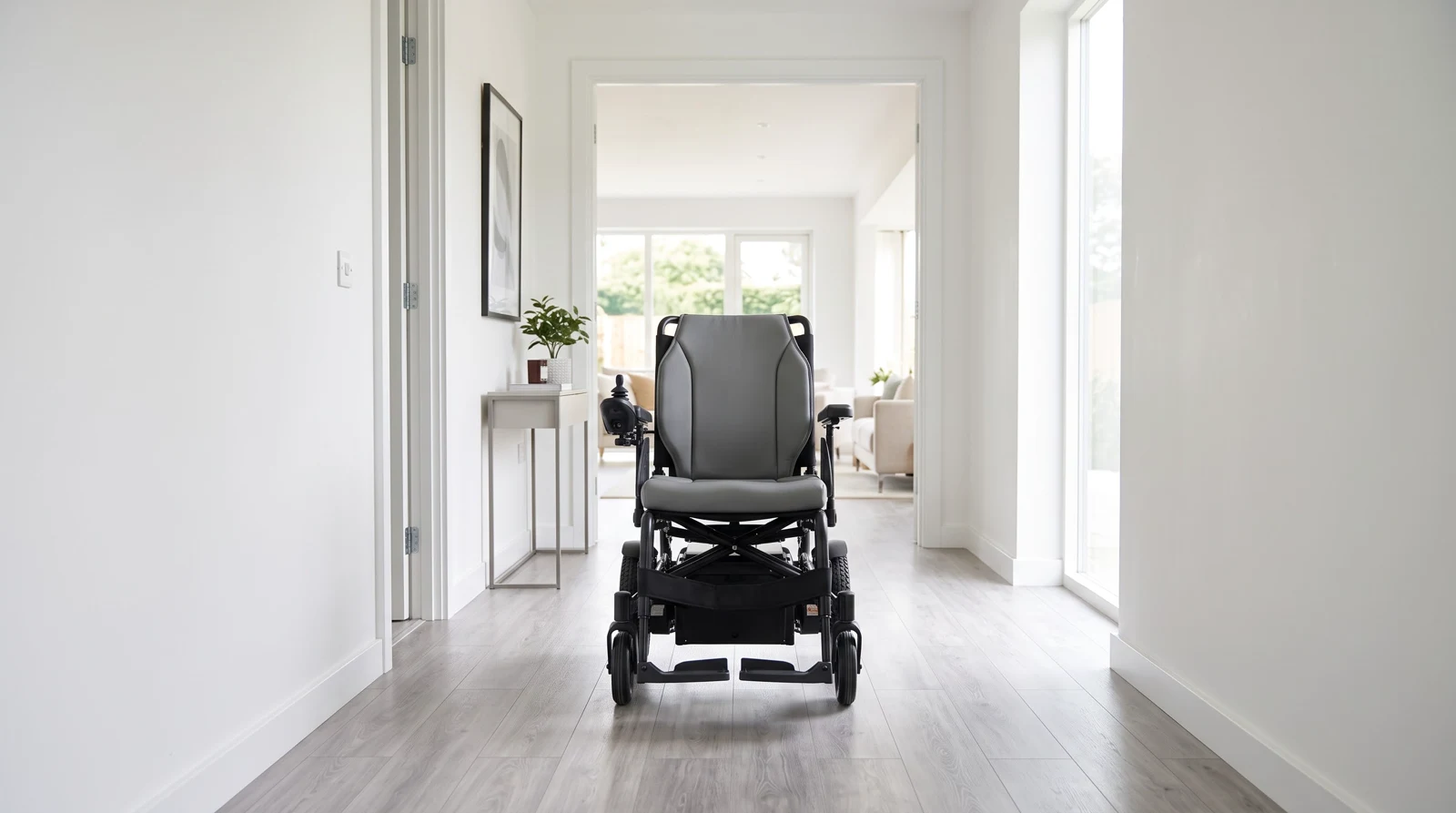
Indoor Electric Wheelchair Buying: Start With the Actual Route
For an indoor electric wheelchair, the right choice is the model that can complete the user's everyday route safely and comfortably—not simply the shortest or lightest model in a catalog. B2B buyers should translate indoor use into measurable requirements before comparing quotations.
For a distributor, importer, rehabilitation dealer, or care-facility buyer, the relevant route may include a bedroom doorway, bathroom entrance, lift, kitchen turn, reception desk, charging point, and vehicle transfer. Each route has different clearance, floor, slope, and operating demands.
1. Define the Environment Before Reviewing Models
Ask the customer or end user to document the real use environment:
- narrowest doorway and corridor width;
- tightest turn or landing;
- threshold height and floor transitions;
- lift or elevator dimensions;
- indoor floor surfaces, rugs, and ramps;
- required daily driving range; and
- storage and charging location.
These details make a specification more useful than a broad request for a small electric wheelchair. They also help a supplier recommend a configuration with realistic margins rather than an optimistic paper fit.
2. Compare Dimensions in Operating Condition
A brochure dimension is only meaningful when buyers know how it was measured. Confirm the overall width with armrests installed, overall length with footrests fitted, height, folding dimensions where applicable, and the space required to turn.
A wheelchair that passes through a doorway may still be awkward at the next corner. Request drawings, measurement photographs, or a video that shows the wheelchair completing representative turns. For important orders, reproduce the tightest route with tape on the floor during sample evaluation.
3. Match Drive Layout and Controls to Daily Tasks
Drive-wheel layout can influence maneuverability, obstacle handling, and how the chair behaves around furniture. A compact chassis may work well in a flat apartment, while another user may need more stability on thresholds or short ramps.
Control placement matters too. Check joystick reach, programmability, attendant-control options, speed settings, and the ability to operate the chair while seated in the chosen cushion and support configuration. A good indoor model should be easy to control at low speed without forcing the user into an uncomfortable posture.
4. Do Not Treat Seating as an Accessory Decision
Seat width, depth, back support, armrest height, footrest adjustment, and cushion choice affect both comfort and the chair's final footprint. For B2B purchasing, record the approved seating configuration on the purchase order so that production, inspection, and after-sales teams are working from the same baseline.
When the chair will be used for many hours each day, involve the relevant clinician, therapist, or qualified mobility professional in the fitting decision. Product specifications support procurement; they do not replace an individual assessment.
5. Build a Sample Test Into the Buying Process
Before a larger order, use a sample to verify the points that matter in the target market:
1. Drive through a representative doorway and corridor.
2. Complete left and right turns at the tightest practical corner.
3. Cross typical indoor transitions at a controlled speed.
4. Check joystick access, braking, and parking in the user's normal position.
5. Confirm charging access and storage dimensions.
6. Record any configuration changes needed before mass production.
A short, documented test reduces the risk of selling an electric wheelchair that looks compact online but does not suit the customer's home or facility.
6. Questions to Put in an RFQ
A clear RFQ for an indoor electric wheelchair can ask for configured overall dimensions, turning requirement, net weight, drive-wheel type, seat and footrest adjustment range, battery and charger information, available attendant controls, service documentation, and sample lead time.
This creates an auditable comparison table for suppliers. It also helps the sales team explain why the selected configuration suits a defined use case.
Final Takeaway
The best indoor electric wheelchair is chosen against a real route, a real seating need, and a real support plan. By comparing operating dimensions, maneuvering evidence, controls, seating, and sample-test results, B2B buyers can make a more reliable recommendation for distributors and end users.
Interested in MiniElephant Electric Wheelchairs?
Get a customized quotation and product recommendation from our export team. Response within 24 hours.