Electric Wheelchair Tires: Solid vs Pneumatic Wheels B2B Guide
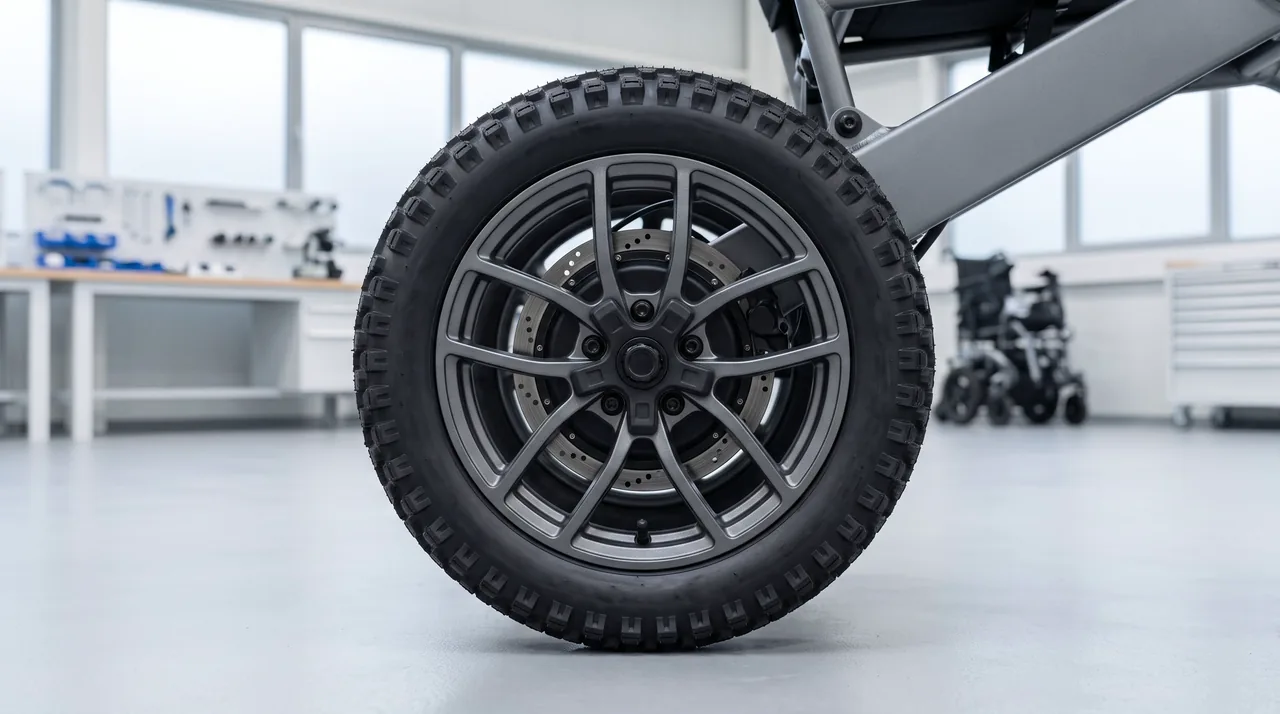
Electric Wheelchair Tires: Solid vs Pneumatic — The B2B Guide to Wheels
Wheels are the part of an electric wheelchair that touches the world, and the tire choice quietly decides how the chair performs for the next five years. A pneumatic tire glides over pavement but punctures in a workshop environment; a solid tire never goes flat but transmits every bump to the user's spine. For B2B importers, tire selection is not a small accessory decision — it determines ride comfort, flat-free reliability, rolling resistance, and maintenance cost across the entire fleet. This guide compares solid, pneumatic, and foam-filled electric wheelchair tires and gives distributors a framework for matching wheels to their market.
The Three Tire Types: How They Compare
|---|---|---|---|---|---|
The trade-off in one sentence: pneumatic tires ride best but need maintenance; solid tires need no maintenance but ride firmest; foam-filled tires sit in between, trading a little comfort for puncture-proof reliability.
Pneumatic Tires: Comfort at the Cost of Care
Pneumatic tires use an inner tube filled with air, usually inflated to 30-45 PSI for electric wheelchairs.
Strengths:
- Best shock absorption. The air column absorbs road vibration, reducing pressure on the user's spine and joints — clinically relevant for users with back pain or reduced sensation.
- Low rolling resistance. A properly inflated pneumatic tire rolls more easily, which translates to slightly longer range per charge.
- Better grip on wet and uneven surfaces, thanks to the larger contact patch that conforms to the ground.
Weaknesses:
- Punctures and slow leaks. A nail, a sharp curb edge, or years of low pressure will eventually flatten a pneumatic tire. Every flat means downtime and a service call.
- Ongoing maintenance. Tires must be checked and inflated regularly; an under-inflated tire increases rolling resistance, drains the battery faster, and wears unevenly.
- Pressure-dependent handling. Performance degrades silently as the tire loses pressure.
Best B2B fit: home-use electric wheelchairs in smooth urban environments, where comfort matters most and the user or a family member can maintain the tires.
Solid Tires: Flat-Free Reliability for High-Utilization Fleets
Solid tires are made from solid rubber or a polymer compound molded onto the wheel, with no air inside.
Strengths:
- Zero flats, guaranteed. A solid tire cannot puncture, cannot go flat, and never needs inflation. This is the single most valuable property for rental fleets, hospitals, airports, and industrial sites where a flat tire means a disabled chair and a service call.
- Virtually zero maintenance. No inflation checks, no patches, no pressure-related handling changes.
- Predictable behavior. Performance does not degrade over time; the chair handles the same on day one and day 500.
Weaknesses:
- Firmer ride. Solid tires transmit road vibration to the frame and the user. On rough surfaces this is uncomfortable and, for some users, clinically undesirable.
- Higher rolling resistance. The tire deforms less and grips more, which can reduce range slightly and add motor load.
- Weight. Solid tires are heavier, which matters on a lightweight folding model where every kilogram counts.
Best B2B fit: rental operators, hospitals, rehabilitation centers, and any fleet where uptime is more valuable than ride comfort.
Foam-Filled Tires: The Middle Ground
Foam-filled tires use a compressed foam core that never loses pressure, in a tire shaped like a pneumatic.
Strengths: puncture-proof like solid tires, but softer and more comfortable because the foam compresses and absorbs shock. No inflation, no flats, no pressure checks.
Weaknesses: heavier than pneumatic, slightly less comfortable than a properly inflated pneumatic tire, and the foam can harden or degrade over years of UV exposure. Replacement cost is higher than a standard tube.
Best B2B fit: outdoor users and semi-commercial environments that need flat-free reliability but want more comfort than a solid tire, such as community mobility services and outdoor rental operations.
Rolling Resistance, Range, and Battery Impact
Tire type has a measurable effect on battery range because the motor must overcome rolling resistance:
- Pneumatic tires at correct pressure have the lowest rolling resistance and give the longest range per charge.
- Solid tires typically add 5-15% rolling resistance, which shortens range slightly on the same battery.
- Under-inflated pneumatic tires are the worst case — a half-flat tire can cut range significantly while also damaging the tire and increasing motor heat.
B2B tip for range-sensitive orders: if the buyer's spec demands maximum range, pneumatic or foam-filled tires on a lithium-battery model are the better combination than solid tires on the same chassis.
Tread Patterns and Terrain Matching
Tread design matters more in some markets than others:
- Smooth or shallow-tread tires roll quietly and cleanly indoors, and are the standard for home and hospital use. They collect less debris and are easier to keep clean.
- All-terrain tread (deeper lugs) grips grass, gravel, and light trails, and is a differentiator in markets with outdoor use. The cost is more vibration and noise on hard floors.
- Wide tires distribute weight and improve stability on soft ground, at the cost of a wider turning radius and heavier steering.
B2B fit: match tread to the dominant surface in the buyer's region — shallow tread for dense urban markets, all-terrain for rural and suburban markets with unsealed surfaces.
Decision Framework for B2B Importers
1. Define the use case first. Rental fleet and hospital? Choose solid or foam-filled for zero downtime. Single home user? Pneumatic for comfort, or foam-filled for convenience.
2. Ask the wheel size and tire availability. Standard sizes (typically 8-16 inch rear wheels, 6-10 inch front casters) have the cheapest and most available replacement tires. Non-standard sizes create a spare-parts headache for your customers.
3. Check the spare tire price and availability. A $8 tire that is in stock beats a $20 tire that takes six weeks to ship.
4. Match tread to terrain. Confirm the standard tread and whether an all-terrain option exists on the same wheel.
5. Consider the climate. Hot climates harden rubber faster; wet climates favor tread designs that shed water. Ask about the tire compound's temperature range.
6. Verify the tire is a standard fit so end users and local shops can service it — proprietary wheels that only the factory can service are a long-term liability.
FAQ
Do electric wheelchairs use air-filled tires?
Many do. Pneumatic tires are common on home-use electric wheelchairs because they give the smoothest ride. However, solid and foam-filled flat-free options are increasingly standard on rental and commercial models, where punctures are unacceptable.
How often do solid wheelchair tires need replacing?
Rarely. Solid tires typically last several years under normal use, and their performance does not degrade with pressure loss. They are replaced when the tread wears down or the rubber hardens, usually far less often than pneumatic tires need new tubes.
Can you convert a pneumatic wheelchair wheel to solid?
On most models, yes — solid and foam-filled tires are available for the same standard wheel rims. Conversion is a common service upgrade for rental fleets that want flat-free reliability on an existing chassis. Check the rim size and tire standard before ordering.
Do solid tires affect battery range?
Yes, slightly. Solid tires have higher rolling resistance than a properly inflated pneumatic tire, which typically adds 5-15% load on the motor and reduces range by a small margin. If range is a critical spec, pair flat-free tires with a larger battery or lithium chemistry.
Which tire is best for outdoor use?
For mostly smooth outdoor surfaces, a pneumatic tire at correct pressure gives the best comfort and grip. For rough or unsealed ground, an all-terrain tread on either a pneumatic or foam-filled tire performs best. For industrial or high-downtime-cost environments, solid tires win on reliability.
The B2B Bottom Line
Tire selection is a fleet-level decision, not an accessory choice. Pneumatic tires maximize comfort and range for home users; solid and foam-filled tires maximize uptime for rentals and institutions; and tread pattern should match the terrain of the target market. Distributors who offer the right tire package — and stock the spare tires for it — reduce warranty calls, build customer trust, and protect their margin on every chair sold.
**Choosing wheels for your electric wheelchair order?** [Contact the MiniElephant export team](https://www.semwheelchair.com/contact) for tire options, wheel sizes, and B2B configuration support on the MiniRedone series.
Interested in MiniElephant Electric Wheelchairs?
Get a customized quotation and product recommendation from our export team. Response within 24 hours.