Electric Wheelchair in Winter: Cold Weather Performance Guide
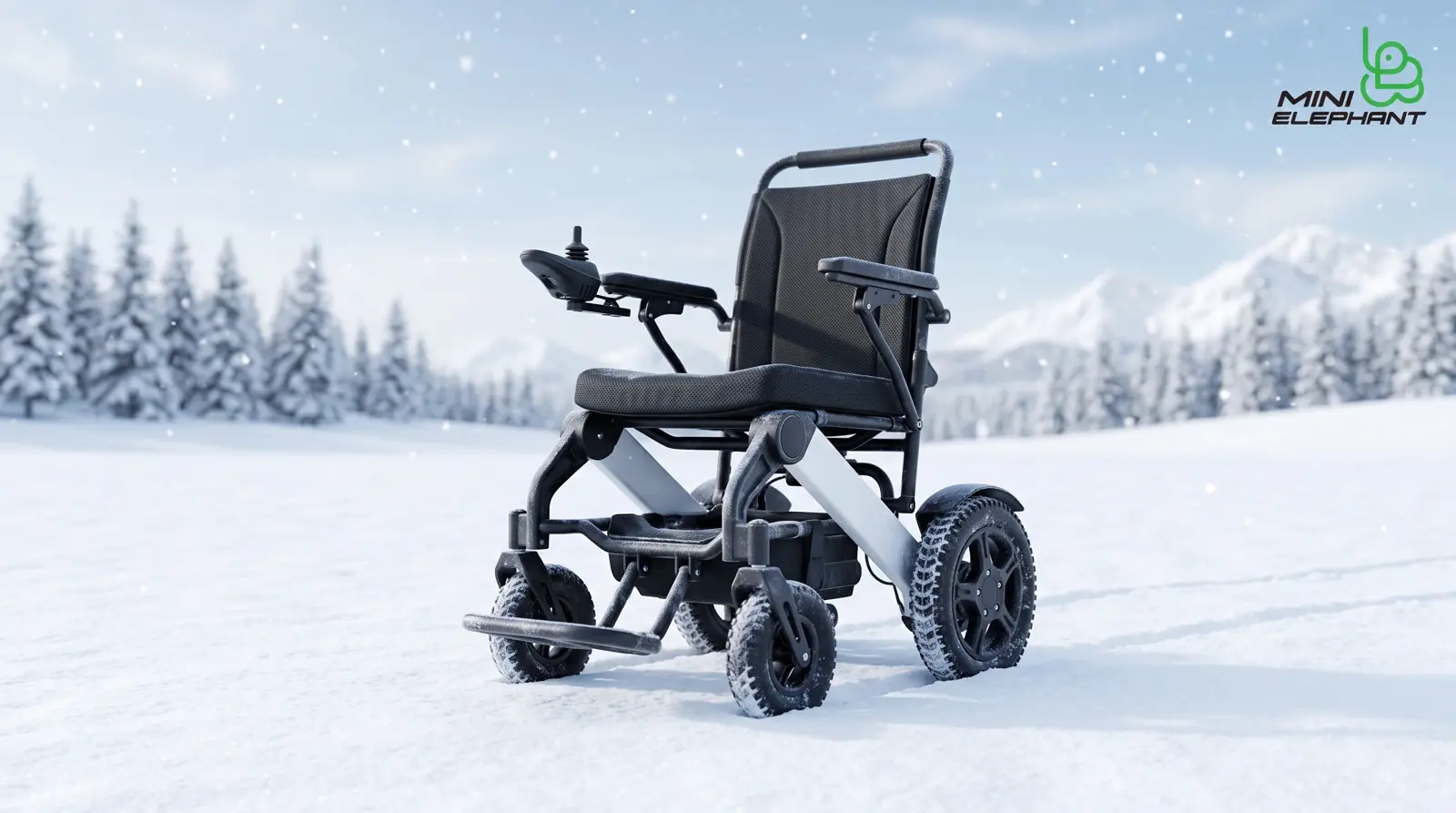
Electric Wheelchair in Winter: A Cold Weather Performance Guide
Winter is the season when electric wheelchairs fail most often — and when customers complain most loudly. Cold reduces battery capacity, tire grip, and joystick responsiveness; moisture attacks connectors, controllers, and frames; and users who relied on the chair for daily independence suddenly find themselves stranded. This guide explains exactly how cold weather affects an electric wheelchair, what users and dealers can do to prevent winter breakdowns, and what B2B buyers should check when sourcing models for cold-weather markets.
Background: Why Winter Is the Electric Wheelchair Failure Season
Every component of an electric wheelchair is affected by cold and moisture, but the failures cluster in predictable ways. Distributors in northern markets report that service calls spike in the first cold snap of the year: batteries that will not hold charge, controllers that behave erratically, tires that slip on frost, and connectors that corrode after wet rides.
The economics matter too. A wheelchair that fails in January creates a service call, a loaner, a refund, or a negative review — all of which cost more than the winter preparation that would have prevented them. For B2B buyers, understanding winter performance is not a detail; it is a market-entry requirement for cold regions.
How Cold Affects the Battery
The battery is the winter bottleneck:
- Lithium batteries lose 10-30% of usable capacity below 0°C. The chemical reactions inside the cell slow down in the cold, so the same pack delivers fewer watt-hours and the voltage sags earlier under load.
- Lead-acid batteries lose even more. A lead-acid pack can deliver 50-60% of its rated capacity at freezing temperatures, and repeated cold discharges shorten its service life.
- Charging in the cold is dangerous and slow. Charging a frozen lithium pack damages it; most lithium battery management systems refuse to charge below 0°C. Lead-acid charging in cold also loses efficiency.
- The voltage sag is the real-world effect. The controller may show low battery and cut speed even though the pack was "fully charged" — because cold has temporarily stolen the capacity.
Practical rule: expect winter range to be 60-80% of summer range for lithium models, and less for lead-acid models. A chair that covers 25km in July may cover 15-18km in January. This is not a defect; it is chemistry — and customers should be told before winter, not after a mid-journey failure.
Tires and Traction in Winter
Traction is the second winter failure point:
- Pneumatic tires with good tread perform best on frost, slush, and light snow. Smooth hard tires are dangerous on icy surfaces.
- Tire pressure drops in cold — roughly 1-2 PSI per 5°C drop — which increases rolling resistance and reduces range further. Weekly pressure checks are the cheapest winter upgrade available.
- Anti-tip and caster behavior changes on icy surfaces; users should slow down and take turns wider than in summer.
B2B tip: When sourcing for cold markets, check the standard tire spec and the availability of winter tread options. A factory that can supply aggressive-tread pneumatic tires as a standard option saves dealers from improvising aftermarket solutions.
Moisture, Corrosion, and the Controller
Winter is wet: snow melts, salt is spread on paths, and slush sprays the underside of the chair. Moisture is the quiet killer:
- Connectors and controllers corrode when salt-laden moisture wicks into joints. A single corroded connector can cause intermittent drive failures that are hard to diagnose.
- IP ratings matter. Check the ingress protection rating of the controller and motor connectors. A controller rated IP54 handles rain and splashes far better than an unrated unit.
- Frames rust. Look for corrosion-resistant frames — magnesium alloy and powder-coated aluminum resist winter abuse better than bare steel.
- Storage matters. A chair stored in a cold, damp garage corrodes faster than one stored indoors. Advise users to dry the chair after wet rides and store it in a dry, cool place — never next to a radiator, which can overheat the battery.
Charging and Storage Protocols for Winter
The most common winter mistakes are charging and storage errors:
1. Charge indoors. Bring the battery (if removable) or the whole chair to a room-temperature space before charging. Charging a cold battery is slow at best and damaging at worst.
2. Never charge a frozen battery. If the pack has been below freezing, let it warm to room temperature before connecting the charger.
3. Store at partial charge. For long storage periods, lithium packs are happiest around 50-70% charge, not 100% and not empty.
4. Warm the battery before a trip. A battery that starts the day at room temperature delivers noticeably more range than one that spent the night in a cold garage.
5. Dry the chair after wet rides. Wipe connectors, check for moisture in the joystick well, and let the chair dry before storing it.
Winter Accessories Worth Stocking
For dealers, winter accessories are both a service to customers and a revenue line:
- Weather covers and rain guards for the controller and joystick.
- Winter tire options with deeper tread.
- Insulated battery blankets or bags that slow heat loss on outdoor trips.
- Handlebar mitts and heated grips for manual-drive portions of the journey.
- Reflective gear and lights — winter means shorter days, and visibility is a safety issue, not a convenience.
Decision Framework for B2B Buyers Sourcing for Cold Markets
1. Ask for cold-weather test data. A supplier who can show battery performance at -10°C, rather than only brochure range at 25°C, is selling engineering rather than marketing.
2. Prefer lithium chemistry for cold regions. Lithium loses less in the cold than lead-acid and handles the winter range penalty far better.
3. Check IP ratings on the controller and connectors. For markets with snow and salt, this is a durability spec, not a detail.
4. Confirm winter tire options and spare-part availability for tires, tubes, and connectors.
5. Educate your dealers and customers. A one-page winter care sheet — charge indoors, warm before trips, check tire pressure, dry after wet rides — cuts winter service calls dramatically and builds customer loyalty.
FAQ: Electric Wheelchair in Winter
Q: Why does my electric wheelchair lose so much range in winter?
A: Cold slows the chemical reactions inside the battery, reducing usable capacity — roughly 10-30% for lithium and more for lead-acid. Expect winter range to be 60-80% of summer range, and plan trips accordingly.
Q: Can I charge an electric wheelchair battery in the cold?
A: You should not. Charging a frozen lithium battery can damage it, and most battery management systems refuse to charge below 0°C. Move the chair or the removable battery to room temperature before charging.
Q: How should I store an electric wheelchair over winter?
A: Store it indoors or in a dry, cool space — not a damp garage — ideally with the lithium battery at 50-70% charge. Dry the chair after wet rides and disconnect nothing that is not designed to be disconnected.
Q: Are some electric wheelchairs better in winter than others?
A: Yes. Lithium batteries, sealed connectors with higher IP ratings, corrosion-resistant frames, and pneumatic tires with winter tread all improve cold-weather performance. Ask suppliers for cold-weather test data before sourcing for winter markets.
The B2B Bottom Line
Winter is where electric wheelchair quality is revealed. Models with lithium batteries, protected connectors, corrosion-resistant frames, and good tire options keep working when temperatures drop — and the dealers who prepare their customers with charging, storage, and tire guidance earn loyalty that survives far past the season. For B2B buyers, cold-weather readiness is a specification, a service package, and a competitive advantage.
**Sourcing electric wheelchairs for cold-weather markets?** [Contact the MiniElephant export team](https://www.semwheelchair.com/contact) for lithium battery specifications, IP-rated controller options, and winter-ready configurations on the MiniRedone series for B2B partners.
Interested in MiniElephant Electric Wheelchairs?
Get a customized quotation and product recommendation from our export team. Response within 24 hours.