Smart Electric Wheelchairs: App Control and Connectivity for B2B Buyers
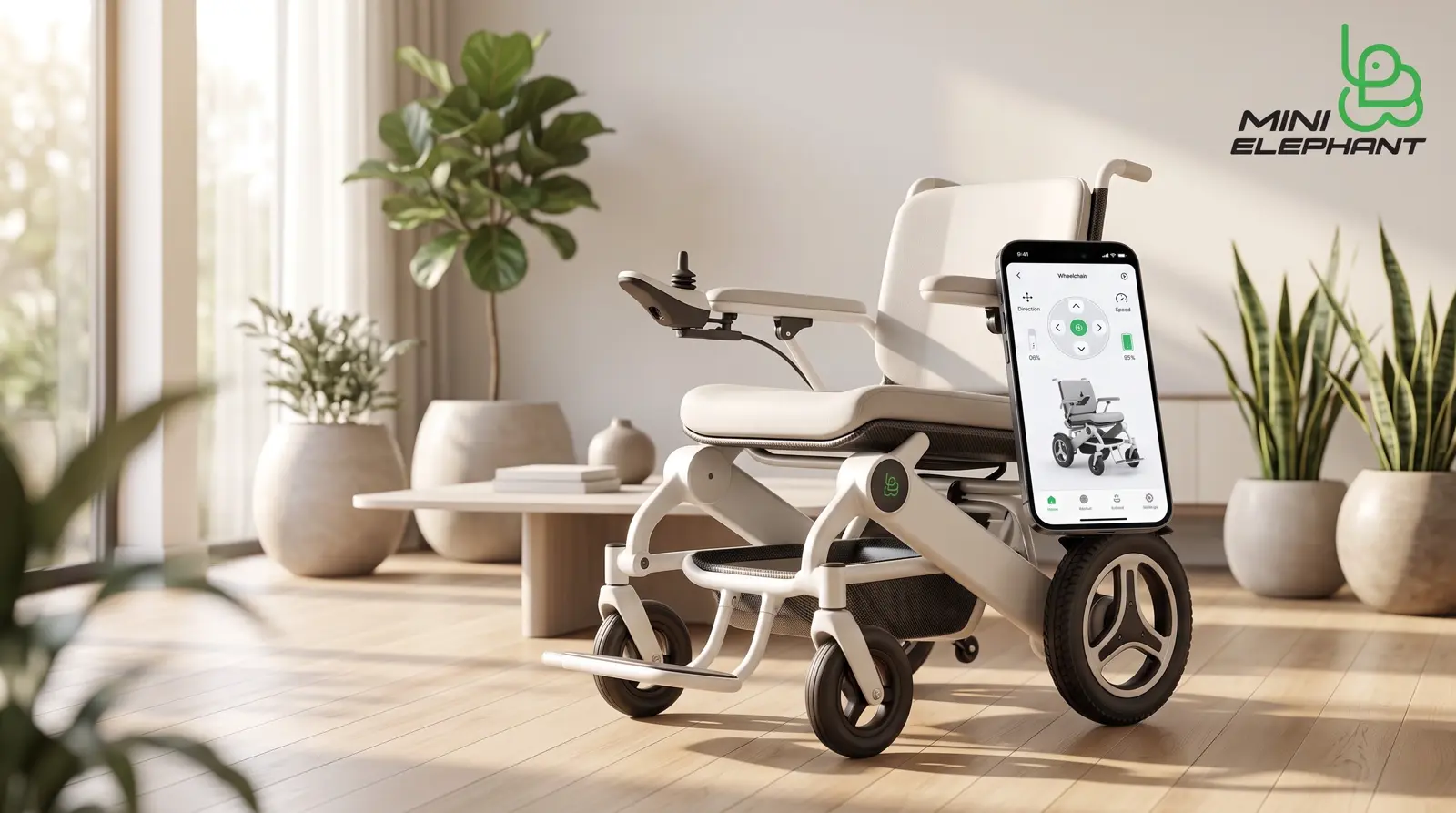
Smart Electric Wheelchairs: What Connectivity Really Delivers
App-controlled electric wheelchairs have moved from novelty to a serious B2B differentiator. As consumer expectations for connected devices carry over into medical mobility, distributors are seeing end users ask for models with app control, driving profiles, and remote diagnostics. This guide explains what smart features actually do, what importers should verify before stocking a connected model, and how connectivity changes the after-sales relationship.
Why Smart Features Matter to the Electric Wheelchair Market
The market for connected mobility aids is growing faster than the electric wheelchair market as a whole. Three forces drive the shift:
- Caregiver demand for visibility. Family caregivers and care-home staff want to know where the wheelchair is, how much battery remains, and whether the user is moving — without asking.
- User demand for personalization. Speed limits, acceleration curves, and driving behavior that once required a technician can now be changed from a phone.
- Distributor demand for service efficiency. A wheelchair that reports its own fault codes remotely can be diagnosed in minutes instead of weeks.
What App Control Actually Does
|---------|--------------|--------------|
The MiniRedone series includes app control across its models, with remote speed profiles and battery monitoring available through the companion application.
How to Evaluate a Smart Electric Wheelchair as an Importer
Connectivity claims vary widely between factories. Before stocking a connected model, verify these points:
|-----------|---------------|----------|
The single most important test: switch the phone off and drive the wheelchair. A well-designed smart electric wheelchair is a complete product without its app; connectivity adds convenience, not essential functions. If a factory's app is required for basic operation, the product becomes a support liability the moment an end user changes phones.
The B2B Angle: Connectivity Reduces Service Costs
For distributors, the strongest financial case for smart features is remote diagnostics. A controller fault that would normally require a technician visit — or a warranty return shipped across the ocean — can often be diagnosed from a phone screenshot within minutes. Distributors with connected fleets report fewer no-fault returns and faster warranty resolutions, because the event log shows exactly what happened before the failure.
Connected models also extend the addressable market:
- Rental and rehabilitation fleets use geofencing and usage analytics to protect assets and bill accurately.
- Care homes configure per-resident speed limits and monitor night-time movement.
- Distributors can pre-empt support calls with battery-health alerts.
Risks to Manage Before Committing
|------|-----------|
Checklist for B2B Buyers
1. Test the wheelchair with the app disconnected — it must work fully.
2. Confirm iOS and Android app availability in your target market's app stores.
3. Request a copy of the privacy policy and data server location.
4. Ask how long firmware updates are supported after purchase.
5. Check whether the app supports multiple users and multiple chairs (fleet mode).
6. Confirm whether remote diagnostics are available to distributors or only to the factory.
FAQ
Q: Does an electric wheelchair need internet access to work?
A: No. Connectivity features are optional in a well-designed model. The wheelchair operates fully offline; the app adds monitoring, configuration, and diagnostics when a phone is paired.
Q: Can a caregiver control the wheelchair remotely?
A: In most app-controlled models, remote control is limited to lock, unlock, and emergency stop. Full driving control from a phone is rare and generally not recommended for safety reasons.
Q: Do smart electric wheelchairs cost more?
A: Typically 5-15% more than an equivalent non-connected model. The premium is often offset by lower service costs and the ability to serve rental and fleet customers who specifically request connectivity.
Q: What happens if the app is discontinued?
A: The wheelchair continues to work as a standard electric wheelchair. This is why offline capability is the first evaluation criterion — never buy a product whose core function depends on an app.
The B2B Bottom Line
Smart features are no longer optional extras for distributors serving rental fleets, care homes, and tech-forward end users. The key is separating genuine value — remote diagnostics, driving profiles, battery monitoring — from marketing gimmicks. Evaluate connectivity claims with the checklist above, insist on full offline operation, and connected electric wheelchairs will reduce your service burden while differentiating your catalog.
**Looking for app-controlled electric wheelchair models?** [Contact the MiniElephant export team](https://www.semwheelchair.com/contact) for app feature specifications, privacy documentation, and fleet-mode capabilities.
Interested in MiniElephant Electric Wheelchairs?
Get a customized quotation and product recommendation from our export team. Response within 24 hours.