Electric Wheelchair Accessories Guide: Configuration Planning for Distributors
Electric Wheelchair Accessories: Start With a Configuration Record
For distributors, the best electric wheelchair accessory plan is not a long list of options. It is a written configuration record that links each requested item to a defined model, intended user need, compatibility check, sample evidence, and order document. This approach helps a B2B team compare like with like and prevents a quotation, sample, packaging list, and final electric wheelchair order from drifting apart.
MiniElephant is the brand of Jiaxing Small Elephant Medical Technology Co., Ltd. Its MiniRedone range is a folding electric wheelchair line for B2B discussions. Available accessories, fitment, appearance, documentation, packaging, commercial terms, and destination-market suitability must be confirmed for the specific model and request. A guide cannot replace the approved quotation, product record, sample review, or purchase agreement.
Why electric wheelchair accessory planning matters
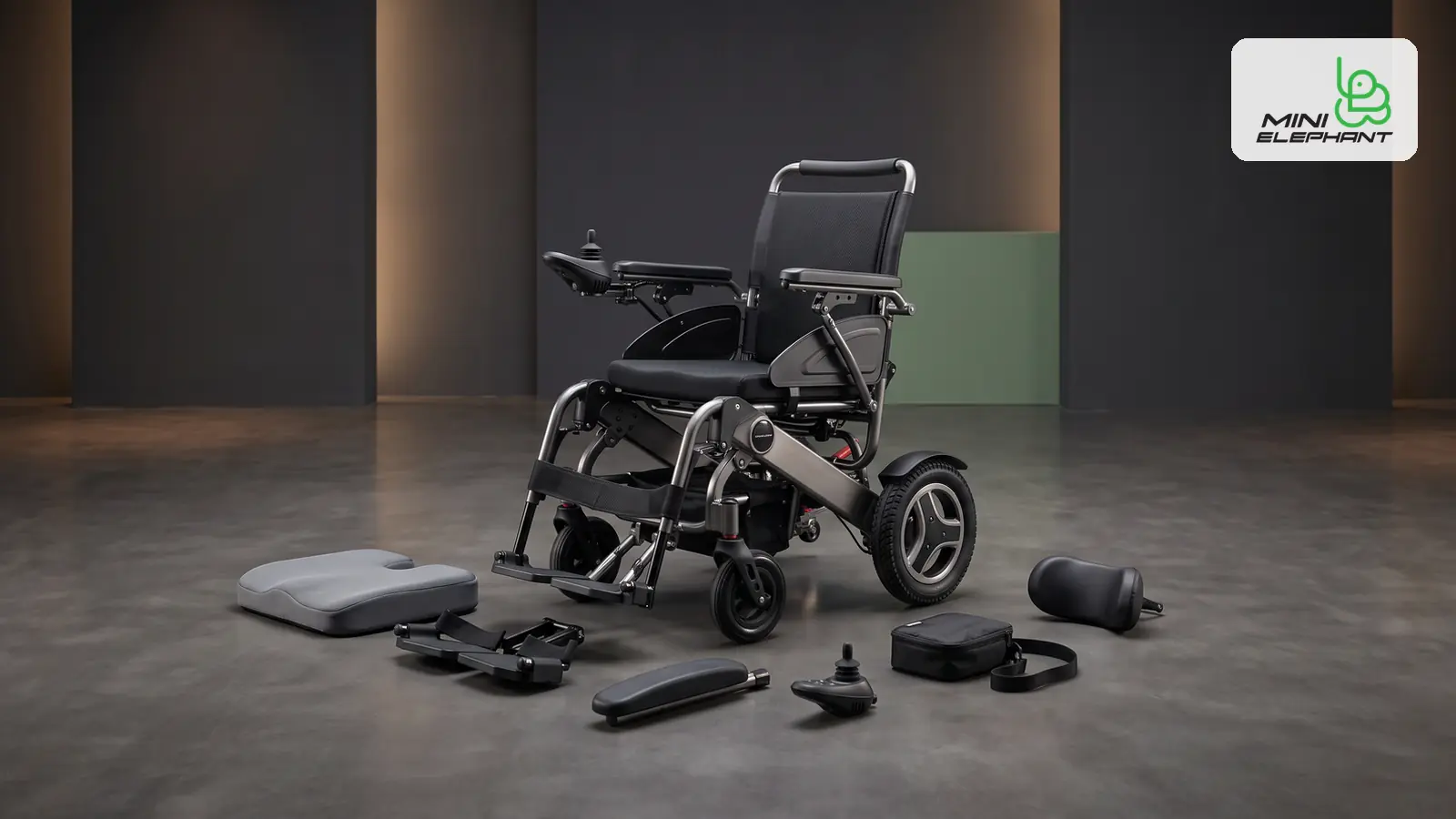
An electric wheelchair may look complete in a product photograph, yet a buyer can still have open questions about seating, foot support, arm support, control position, storage, or replacement items. A distributor may also need to decide which configuration is suitable for a showroom unit, a customer trial, a retail listing, or a repeat order.
The risk is not simply choosing the wrong accessory. An unstructured electric wheelchair request can lead to a sample with one setup, a quotation with another, and a delivery expectation based on neither. The remedy is a short, controlled list that records what is requested, why it is requested, and what evidence proves the proposed electric wheelchair configuration.
Build the configuration sheet before requesting a quote
A useful sheet can be one page. It should make the electric wheelchair model and every open question visible to the buyer, supplier, logistics team, and local market stakeholders.
| --- | --- | --- |
Do not use a generic accessory image as proof of fitment. Ask whether the requested item is supplied with, optional for, or unavailable for the named electric wheelchair configuration. If an item is critical to a buying decision, include it in the RFQ and ask for the same configuration to be shown in the quotation or sample evidence.
Group accessory questions by user need
A distributor does not need to diagnose an end user in order to ask practical electric wheelchair configuration questions. The buyer can document the functional purpose of a request and direct any clinical or individual-fit assessment to appropriately qualified local professionals.
Seating and contact areas
For an electric wheelchair, seating-related questions can cover seat dimensions, cushion arrangement, back support, head support, arm support, and adjustment positions. Record the intended requirement, not an assumed medical outcome. A sample review should check visible fit, attachment points, movement, finish, and access to controls.
Foot and leg support
Footrest style, height, angle, clearance, and folding interaction can influence how an electric wheelchair is stored, transferred, or used in a specific environment. Request drawings, photos, or a demonstration of the exact proposed arrangement. Confirm whether the footrest changes folded dimensions or packing requirements before final approval.
Controls and practical carry items
A joystick position, controller mount, storage pouch, cup holder, or other convenience item should be evaluated in the context of the named electric wheelchair. Ask whether it affects control access, folding operation, carton packing, or replacement-part identification. These questions are more useful than treating every option as a universal add-on.
Use a sample to verify the electric wheelchair setup
For an important configuration, a sample is the most practical way to turn a description into inspectable evidence. Photograph the electric wheelchair from agreed views, record the model and requested items, check mounting points and folding operation, and note anything that differs from the quotation.
The sample is not a blanket approval for future changes. When the configuration changes, record the difference and request revised evidence. This is especially important when an electric wheelchair is being evaluated by several people: sales, technical, purchasing, logistics, and local compliance teams may each need different information.
For a detailed inspection sequence, see the Electric Wheelchair Sample Evaluation Checklist for Importers. For a quote format that keeps configuration points comparable, use the Electric Wheelchair RFQ Template for Importers.
Define responsibilities before the order is released
A transparent electric wheelchair accessory plan assigns the next action instead of assuming that another party owns it.
| --- | --- |
This matrix does not transfer legal or regulatory responsibility. It simply makes the electric wheelchair procurement process easier to review and follow.
Keep accessories connected to packaging and after-sales planning
An electric wheelchair accessory may be fitted to the product, packed separately, or supplied as a replacement item. Each route creates a different receiving and inventory question. A dealer should know what the carton should contain, how an item is identified, whether it has installation instructions, and what evidence to capture if something is missing or damaged.
Before repeat orders, compare the approved electric wheelchair configuration against the new purchase order line by line. If a requested item is not mentioned in the final document, treat it as unresolved rather than assumed. The same discipline helps a distributor plan spare parts and organize a clear after-sales record.
Read the Electric Wheelchair Carton and Packaging Guide for Importers and the Electric Wheelchair Spare Parts Planning Guide for related workflows.
FAQ: electric wheelchair accessory configuration
Can a distributor assume an accessory fits every electric wheelchair model?
No. Compatibility should be confirmed for the exact electric wheelchair model and requested configuration. A product image or a general category name is not sufficient evidence of fitment.
What should be included in an electric wheelchair accessory RFQ?
Identify the base electric wheelchair model, the requested item, quantity, preferred configuration, intended use, destination, documentation questions, and the evidence required for review. Ask the supplier to clarify any item that is not confirmed for the named configuration.
Does an accessory guide confirm a medical or compliance outcome?
No. This electric wheelchair guide supports procurement planning only. Individual suitability, clinical assessment, registration, labeling, transport, and destination-market obligations must be assessed by the responsible parties and qualified local professionals where needed.
How can a buyer discuss a MiniRedone electric wheelchair configuration?
Send MiniElephant a structured inquiry with the intended MiniRedone model, requested configuration, use case, destination, and evidence needed for review. The team can provide product information for a defined request. Visit the contact page to begin.
Plan a clear electric wheelchair request with MiniElephant
For a distributor, accessory planning works best when the electric wheelchair configuration is documented before the order is finalized. A defined record makes it easier to compare product information, review a sample, manage packaging, and communicate changes across the buying team. This creates a more traceable electric wheelchair buying process.
To discuss a MiniRedone folding electric wheelchair configuration, contact Jiaxing Small Elephant Medical Technology Co., Ltd. through the MiniElephant website.
Interested in MiniElephant Electric Wheelchairs?
Get a customized quotation and product recommendation from our export team. Response within 24 hours.