Electric Wheelchair Corrosion Protection: Salt and Humidity
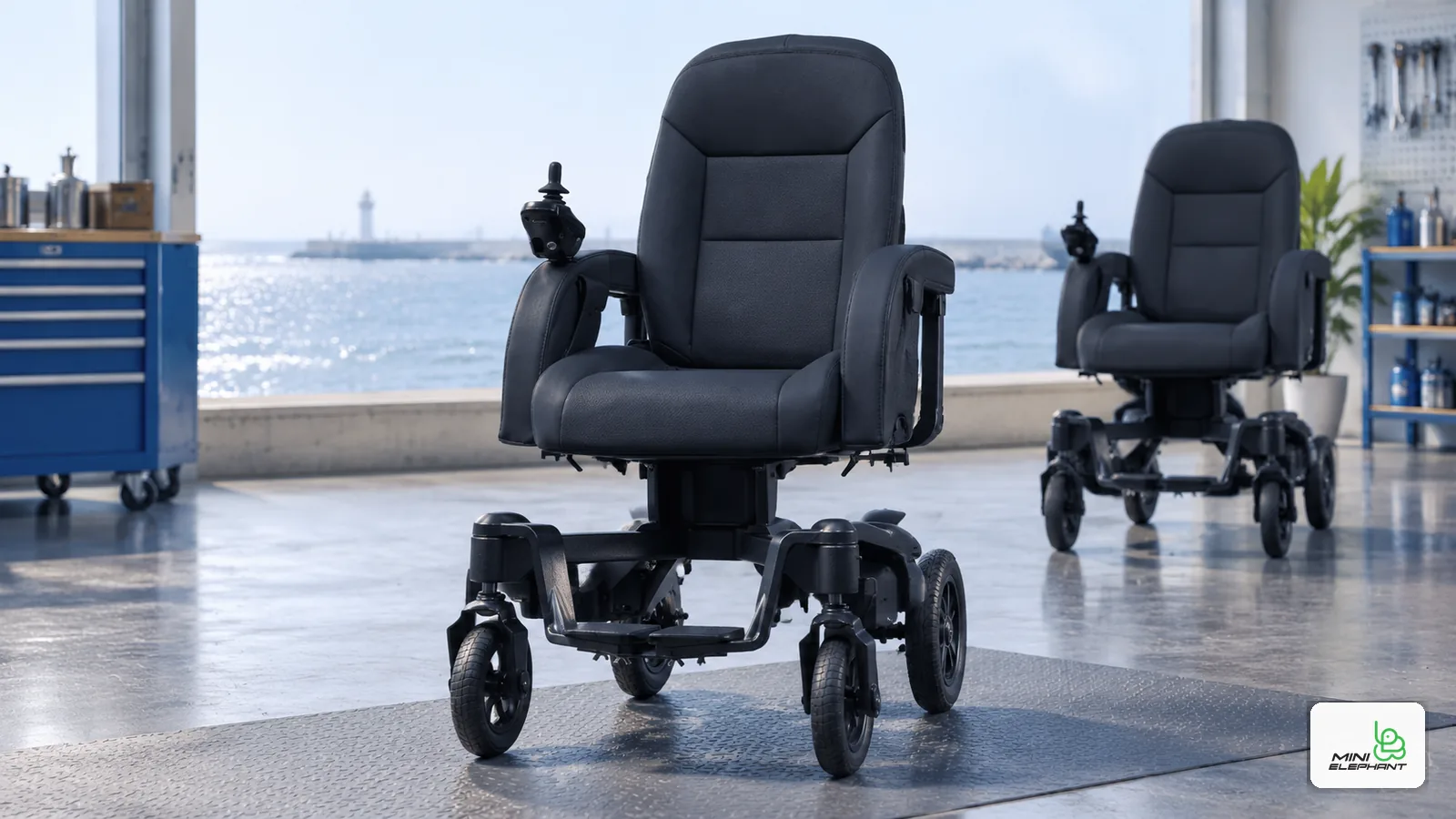
Salt air does not destroy an electric wheelchair in one dramatic event. On an electric wheelchair it works through the fasteners, the folding hinge, the connector pins and the paint edges, and it does so over eighteen months while the dealer blames the factory and the factory blames the climate. By the time the complaint arrives, nobody can prove which side introduced the moisture.
That is the practical problem this electric wheelchair guide addresses. Importers selling an electric wheelchair into the Gulf, the Red Sea corridor, coastal West Africa, the Caribbean, South East Asian port cities or the Mediterranean need a corrosion plan that is written down, inspectable and defensible — not a hopeful sentence in a brochure.
Why humid markets fail differently from cold markets
Cold weather on an electric wheelchair is a temperature problem with a clear season. Humidity and salt are a chemistry problem that runs all year.
Three mechanisms matter on an electric wheelchair, and they are often confused with each other.
- Chloride attack. Salt aerosol settles on surfaces as a fine film. It is not washed off by condensation, it concentrates as water evaporates, and it keeps the surface chemically active long after the air looks dry. Fasteners and hinge pins sitting under that film corrode first.
- Condensation cycling. A container or a warehouse that heats during the day and cools at night pushes an electric wheelchair through dew-point crossings twice a day. Water forms inside enclosures, under seat foam and between the frame and its cover, from the inside out.
- Galvanic coupling. Where two dissimilar metals touch and moisture bridges them, the less noble one gives up material. This is why a stainless bolt in an aluminium bracket can create a corrosion cell that neither part would produce alone.
A cold-weather failure is usually visible, seasonal and predictable. A humidity failure is slow, hidden and shows up as a warranty claim in a market where you have no technician.
What salt actually attacks on an electric wheelchair
Not every part of an electric wheelchair corrodes equally. The commercial risk on an electric wheelchair sits in a short list of parts, and it is worth naming them in your inspection sheet rather than writing "check for corrosion" and hoping.
- Frame fasteners and bracket hardware. Small electric wheelchair parts, large consequences. One seized bolt turns a hinge adjustment into a stripped thread.
- The folding hinge and its pivot pins. Moving parts cannot be fully painted, so they are the first place an electric wheelchair shows surface rust.
- Axle hardware and brake linkage. Hidden behind the electric wheelchair wheel, rarely inspected, expensive to replace as an assembly.
- Controller and motor connector pins. The electric wheelchair pins themselves may survive while the plating fails, which produces intermittent faults that read as controller failure.
- Charger contacts and the charge port. On an electric wheelchair, salt film plus current equals heat, and heat plus plating loss equals a burnt pin.
- Seat frame and upholstery edges. Foam in an electric wheelchair holds moisture against metal; the damage appears under the seat where nobody looks.
- Paint edges, weld seams, stone chips. Every break in an electric wheelchair coating is an entry point, and coastal gravel is unforgiving.
- Labels, nameplates and printed serials. If the electric wheelchair serial cannot be read at the third service visit, warranty administration collapses.
The electric wheelchair in this product class carries a magnesium alloy frame. That choice is good for weight and stiffness, but it changes the maintenance story: a coating chip exposes bare alloy that reacts faster in salt air than a painted steel frame would. Touch-up paint is therefore a scheduled maintenance item in humid markets, not a cosmetic afterthought.
The three failure modes to design against
Most electric wheelchair corrosion claims reduce to one of three patterns. Understanding which one you are looking at tells you whether the fix belongs in the factory, the packing line or the dealer's storage room.
Crevice corrosion on an electric wheelchair is a design and assembly issue: trapped water plus no drainage path. Galvanic corrosion on an electric wheelchair is a materials and specification issue. Fretting is an assembly and vibration issue that only becomes a corrosion issue because moisture is present.
If your market returns repeat electric wheelchair failures on the same part number, stop replacing the part and read the pattern. Three failures on the same connector in one market is a specification answer, not a service answer.
Factory-side decisions that decide the outcome
An electric wheelchair built for a coastal distributor should differ from one built for an inland distributor, even when the model number does not change. The differences are cheap at the factory and impossible to retrofit on a finished electric wheelchair.
- Drain paths. Every electric wheelchair enclosure, hinge cover and seat pan should have a low point where water can leave. A sealed electric wheelchair box without drainage becomes a reservoir.
- Fastener specification. Where a fastener contacts alloy, the plating choice matters more than the strength grade. Written specification beats verbal assurance.
- Connector orientation and strain relief. Downward-facing connectors with a drip loop are worth more than any coating.
- Coating edge discipline. Cut edges, threads and weld seams need protection. A coating that stops neatly at a sharp edge invites a crevice.
- Seal channel integrity. Gaskets must be continuous around the whole perimeter; a single gap at a cable exit defeats the rest of the design.
- Touch-up supply in the carton. A small bottle of matching electric wheelchair paint in the tool kit converts a future warranty claim into a ten-minute task for the dealer.
- Serial and nameplate durability. Etched or laser-marked electric wheelchair identifiers survive; adhesive labels in a humid market do not.
None of this requires a new model. It requires a purchase specification that names the requirement, and an acceptance test that checks it before shipment. The pre-shipment inspection checklist is the right place to record that evidence.
Packing for a sea voyage, not for a warehouse
Container rain is not a myth, and it is one way an electric wheelchair arrives already corroded. A steel box crossing a temperature gradient produces condensation on the underside of the roof, and that water drips onto whatever is loaded at the top.
Practical packing rules for a coastal-bound electric wheelchair:
- Vapour-phase protection. VCI film or emitters protect enclosed metal surfaces during transit, but only where air can circulate around the part. Wrapping an electric wheelchair airtight and then adding VCI does nothing.
- Desiccant placement, not desiccant quantity alone. Sachets work when they are near the surfaces that matter and when the enclosure is closed after placement.
- Breathable outer wrapping. Sealed plastic that traps residual moisture is worse than an open carton in a ventilated container.
- Load position. Nothing moisture-sensitive goes directly under the roof. Use the container loading plan to decide what sits where before the truck arrives.
- Documentation in the carton. A packing slip that states what protection was applied, and what the dealer must do on arrival, converts a hidden process into an auditable one.
The electric wheelchair intake instruction belongs in the same document. If it is only in an email from a sales manager, it will not survive the first staff change.
Dealer intake in a humid market
The first 72 hours after uncrating an electric wheelchair decide more than the next two years of cleaning.
- Unpack in a dry, ventilated area — not in the rain, not on a wet quay.
- Photograph the carton, the packing materials and the electric wheelchair before removing protection.
- Remove VCI film and desiccant; do not leave sachets inside a closed enclosure.
- Inspect the eight items listed earlier and record severity, not just presence.
- Dry any condensation with a cloth; do not use heat guns near electronics or foam.
- Charge and run the electric wheelchair through a full functional check, including the fold cycle.
- Store on a pallet or rack, never directly on a concrete floor that wicks moisture.
- Record the electric wheelchair's storage location so a later claim can be traced to a batch and a room.
Dealers who skip step four discover corrosion at the first paid service, when the customer has already formed an opinion about the brand.
Cleaning rules that prevent most claims
A high-pressure washer is the fastest way to destroy an electric wheelchair in a coastal market. Water driven past an electric wheelchair seal does not leave, and the damage appears weeks later at a part nowhere near where the nozzle was pointed.
- Rinse with low pressure, fresh water, after beach or salt-road use — salt left on a surface keeps working.
- Never direct water at the controller, the charge port, connector boots or the hub motor cable entry.
- Dry hinges mechanically, then apply the lubricant named in the manual.
- Clean seat upholstery with a damp cloth and let it dry fully before folding the electric wheelchair closed.
- Remove sand from the fold mechanism; sand plus moisture is an abrasive slurry inside a pivot.
- Inspect and touch up chips at every cleaning, not at every annual service.
If a customer insists on washing with a pressure washer, sell them the schedule instead of the argument: monthly inspection, immediate touch-up, and a written note that water ingress damage is excluded from the warranty terms.
A preventive maintenance calendar that fits a small dealer
The maintenance calendar does not need to be elaborate. It needs to be short enough that a two-person service desk will actually follow it.
- Monthly: fold cycle inspection, hinge lubrication, fastener torque check on the eight exposed positions, visual scan for paint chips, charge port cleaning.
- Quarterly: connector inspection with the boots opened, axle hardware check, seat frame inspection under the cushion, photograph set filed against the serial.
- Annually: full corrosion map, touch-up of every chip found, brake linkage check, replacement of any fastener showing plating loss rather than waiting for seizure.
- Per season: intake of the storage routine before a low season, and a re-commissioning check after it.
Electric wheelchair consumables should be planned, not ordered in a panic. Fasteners, touch-up paint, hinge pins and connector boots are exactly the parts a coastal market runs out of first, which is why they belong in the spare parts plan from day one.
Writing corrosion into the purchase contract
A corrosion specification that is not in the electric wheelchair contract is a preference. Four clauses change the outcome more than any conversation.
The electric wheelchair severity scale should be agreed in advance. A simple 0–3 scale works: 0 clean, 1 surface discolouration that wipes off, 2 pitting or plating loss, 3 structural section loss or seized fastener. Dealers photograph level 2, escalate level 3, and no longer argue about adjectives.
Warranty conversations that stay factual
The factory warranty on this electric wheelchair line is five years on the frame and three years on controller, battery and motor. A corrosion claim that arrives as "the frame is rusty" cannot be judged. A claim that arrives with a serial, an intake photo set, a severity level, the storage location and a cleaning log can be judged in one meeting.
Two rules keep the conversation short:
- Distinguish coating damage from structural damage. A chip that was never touched up is a maintenance record, not a manufacturing defect.
- Distinguish transit from field. If the intake photo already shows level 2 on the hinge, the claim belongs to the shipping stage and the evidence exists.
Importers who inspect every electric wheelchair this way stop arguing about climate and start improving specifications, which is the only part of the equation they control.
MiniElephant specifics for humid markets
The MiniRedone range uses a magnesium alloy frame, two 350W brushless hub motors, a 16Ah LiFePO4 battery that stays inside the chassis, a 150 kg rated load and roughly 30 km of range. Three points follow directly from that configuration.
- The battery is not customer-removable, so the enclosure seam is the only moisture boundary. Inspect that electric wheelchair seam at every service rather than assuming it is maintenance-free.
- The fold mechanism separates seat and chassis for transport, which means two extra mating surfaces on each electric wheelchair. Both need lubrication and both need inspection after every sea voyage.
- Hub motors put the cable entry low and exposed. That electric wheelchair cable entry is the single most important thing to check after beach use, because a damaged boot is invisible until the motor fails.
For markets where humidity is a year-round condition rather than a season, the honest recommendation is to specify the corrosion package in writing on the purchase order and to train one person at the dealership to own the inspection sheet. The after-sales service structure is the place to define who that person is.
What to do in the next thirty days
- Add the eight inspection points to your intake form and photograph them on the next delivery.
- Add the four contract clauses to your next purchase order.
- Buy the consumables list once, in a quantity that covers a year.
- Train the service desk on the 0–3 severity scale and on where to file the photos.
- Review the first ten photo sets and look for a pattern in one part number.
Cold-weather preparation for an electric wheelchair is a seasonal task. Corrosion protection is an operating standard. Importers who treat it as documentation rather than luck stop losing margin to parts they cannot even prove were defective.
FAQ
Does an electric wheelchair need different preparation for a coastal city than for an inland city?
Yes. The difference is not the electric wheelchair model but the packing, the fastener specification, the touch-up supply and the intake inspection. Those four items cost very little at the factory and are almost impossible to fix after arrival.
Is surface rust on an electric wheelchair hinge a warranty defect?
Usually not. It is a maintenance signal. A hinge that was never lubricated or touched up is a service record; a hinge that arrived already corroded is a transit claim. The photo set at intake is what separates the two.
Can I pressure-wash an electric wheelchair after beach use?
No. Low-pressure fresh water directed away from the electric wheelchair controller, charge port, connector boots and hub motor cable entry. Pressure drives water past seals and the damage appears weeks later somewhere else.
How often should fasteners be replaced rather than re-tightened?
Replace electric wheelchair fasteners when plating loss is visible. Waiting for seizure means the thread comes out with the bolt, and that turns a fastener into a frame repair.
Does VCI film protect an electric wheelchair if the carton is sealed airtight?
Badly. VCI needs air circulation to reach the metal surfaces. Airtight wrapping plus VCI gives a false sense of protection and traps residual moisture at the same time.
What is the single most useful record in a corrosion claim?
A dated electric wheelchair photo set taken at dealer intake, tied to the serial number, with the severity level written down. It answers the only question that matters: did this arrive damaged or did it become damaged here?
Related reading
- Electric Wheelchair Battery Recycling: B2B End-of-Life Comparison
- Electric Wheelchair Storage: Preparing for Weeks Without Use
- Electric Wheelchair Upholstery: Comfort, Cleaning and Daily Care
- Electric Wheelchair Portability: Folded Size vs Lifting Weight
More in this topic: Product & Technology · All articles
MiniRedone models
Interested in MiniElephant Electric Wheelchairs?
Get a customized quotation and product recommendation from our export team. Response within 24 hours.