Electric Wheelchair Freight Damage Claims: A Distributor Guide
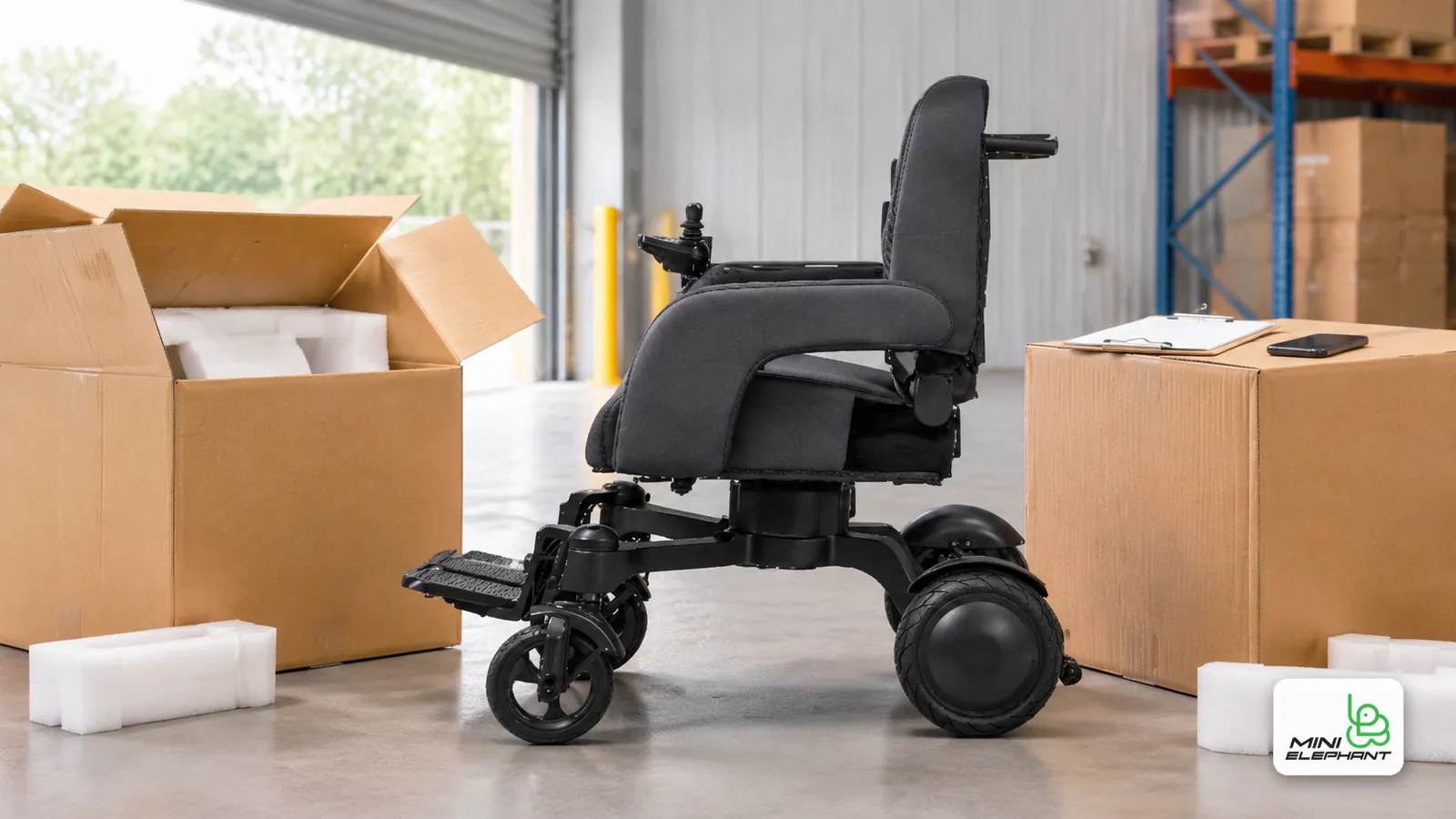
An electric wheelchair that arrives damaged is only recoverable if the damage is documented before the carrier leaves your dock. That single sentence is the whole discipline. Most importers lose electric wheelchair freight claims not because the carrier disputes the facts, but because the file was assembled three days later from memory, with a clean delivery receipt and two phone photos. This electric wheelchair guide sets out the evidence sequence, the receipt wording, the claim file contents, and the repair or replace decision an electric wheelchair distributor has to make in the first 48 hours.
It is written for importers and distributors taking delivery at a warehouse or dealership. This is commercial guidance, not legal advice: claim windows, liability limits and documentary requirements come from your carrier contract, cargo policy and sales terms.
Why Electric Wheelchair Freight Damage Claims Fail Early
An electric wheelchair claim fails in the first hour far more often than at the review stage. The usual cause is a delivery receipt signed clean. Once a consignee signs for the goods without notation, the carrier's position becomes simple: the shipment left the terminal in good order and the damage happened after handover. Recovering anything on a damaged electric wheelchair then depends on goodwill, on a cargo policy, or on proving the damage was concealed and could not have been seen.
Delay is the second cause in most electric wheelchair claims. Damage discovered on day four, reported on day ten and photographed after the cartons were broken down leaves an electric wheelchair claim reviewer with no way to separate transit damage from warehouse damage. An electric wheelchair is a large, heavy, wheeled product; once it has been pushed across a yard, no photograph can prove where the bend in a frame or the crack in a shroud came from.
Who Owns the Risk When the Container Lands
Risk transfer on an electric wheelchair shipment is decided by the trade term on the invoice, not by who paid the freight. Under EXW or FOB the electric wheelchair buyer generally carries risk from loading. Under CIF or CFR the seller arranges carriage but risk still passes at shipment, which surprises electric wheelchair buyers who assume the seller is responsible until the container reaches their yard. Under DAP or DPU the seller carries risk to the named destination, and the claim path changes because the seller, not the importer, is the claimant.
The practical consequence for an electric wheelchair importer is that you must know, before the truck arrives, whether you are claiming against your own cargo policy, the seller's insurance, or the carrier under a convention or national road-freight regime. Three electric wheelchair claim paths mean three evidence packs.
Cargo insurance is the lever most electric wheelchair distributors under-use: an all-risks policy can pay on damage a carrier excludes as inadequate packing or ordinary handling. Compare the premium against the replacement value of one container of electric wheelchairs.
Inspect the Electric Wheelchair Shipment at the Delivery Point
Electric wheelchair inspection starts with the vehicle, not the product. Photograph the container seal or the truck's load bed before anything is unloaded, then each pallet in place, then each carton face before it is moved. The sequence looks excessive until the first dispute, when it is the only thing that establishes the shipment's condition at handover.
Unload in a lit area with room to walk around each pallet. Count electric wheelchair cartons against the packing list while they are still on the pallet, and note any count difference on the delivery document at the same time as the damage. A short shipment and a damaged shipment are two separate claims.
Open at least one electric wheelchair carton per pallet in front of the driver, and every carton showing crush, puncture, water staining or a broken pallet board. Check the electric wheelchair inside for bent frame tubes, cracked shrouds, deformed footrests, scuffed paint on load-bearing joints, and a battery pack that has shifted on its mount. Then switch the unit on, run it forward and back, test the joystick in both directions and listen for a motor or gearbox noise that should not be there.
If the driver will not wait for an electric wheelchair inspection, sign with notation and finish the inspection the same day, noting the unloading time and the receiver's name.
Photographic Evidence a Claim Reviewer Accepts
Electric wheelchair claim reviewers work from consistency, not volume. Twelve sharp photographs taken in one sequence beat forty random ones. The sequence that settles most electric wheelchair claims runs outside in: the vehicle or seal, the pallet in place, the damaged carton face with the shipping label readable, the carton opened with packaging still around the unit, the damaged component in close-up with a scale reference, the serial number plate, and the unit powered on if the fault is electrical.
Every photograph needs its own context. A close-up of a cracked shroud proves nothing about transit; the same crack with the crushed carton corner beside it, the impact mark aligned, proves the whole chain.
Keep the original files. Most phone cameras embed capture time and location, and reviewers check metadata when a claim is contested. Sending resized electric wheelchair images through a chat app strips that metadata and converts a record into a picture.
**Need packaging data before you open a claim?** Ask the MiniElephant export team for the carton dimensions, drop-test report and pallet configuration of the model you are importing, so your inspection note matches the packaging actually shipped.
Wording on the Delivery Receipt That Protects the Buyer
The delivery receipt is the most valuable electric wheelchair document in the file and the one most often signed without reading. Write the notation before you sign, keep it factual, and describe what you can see rather than what you conclude. "Carton 14 crushed on the lower right corner, contents not yet inspected" is defensible. "Boxes damaged, goods probably broken" invites the reply that the consignee accepted the goods.
Where electric wheelchair damage is visible, add the words "damaged" or "crushed" with the carton numbers, and ask the driver to countersign. A countersigned notation is much harder to dispute than a consignee-only note.
Where damage is not visible, write "subject to inspection" or "unexamined" rather than signing clean. This preserves the concealed-damage route, which exists for cartons that look intact but contain a damaged electric wheelchair. Concealed-damage claims carry a shorter reporting window than visible damage in most contracts, so open the cartons the same day and report inside the window your carrier specifies.
Building the Electric Wheelchair Claim File
A complete electric wheelchair claim file answers five questions in order: what was shipped, what arrived, what is wrong, what it costs to fix, and who was responsible. Assemble documents against those five questions rather than by document type, and the file writes itself.
Attach a one-page summary at the front: shipment reference, dates, cartons affected, units affected, serial numbers, claimed amount and the document behind each number.
Reading Carton, Crate and Pallet Damage
The packaging on an electric wheelchair shipment tells you where the impact came from and therefore which evidence to collect. Crush on one corner suggests a drop or a stacked load; a puncture suggests forklift tines; water staining suggests a container leak or a wet terminal; a broken pallet board suggests handling rather than transport. A crate that has been opened and re-nailed is a separate problem: photograph the nails and lid before opening, because reworked crates may mean the contents were disturbed.
Loading quality is visible at pallet level. Electric wheelchair units stacked on their side against the shipping mark, cartons with no edge protection, pallets with overhang and a container packed to the doors all raise the probability of damage on a rough leg. Review the loading plan against what arrived before you blame the last carrier; the container loading guide covers the patterns that most often show up as damage at destination, and the carton versus crate comparison sets out the protection each option buys against its freight volume cost.
Repair, Replace or Scrap a Damaged Electric Wheelchair
Not every damaged electric wheelchair is a claim of the same size. Separate cosmetic damage from functional damage and structural damage on an electric wheelchair, and price each one, because a carrier will settle the first quickly and contest the third.
Structural damage on a load-bearing joint is the case to hold firm on. A straightened frame tube may look acceptable and still change the geometry that keeps all four wheels on the floor, which affects stability on a slope. If a workshop proposes straightening, ask for the measurement proving the geometry is back inside tolerance.
Repair economics depend on parts availability, not only labour cost. A unit waiting six weeks for a shroud costs more in lost sales than the part costs. The spare parts stocking guide covers how distributors size that buffer for the models they sell.
Carrier Claim or Cargo Insurance Claim
These are two different electric wheelchair claim processes with different evidence standards, and they rarely both pay. The carrier claim is contractual and limited: it is bounded by the convention or national regime governing the leg, by the declared value and by the carrier's liability limit, which is often far below the invoice value of an electric wheelchair. The insurance claim is indemnity: it pays the loss the policy covers, subject to deductible, exclusions and required evidence.
Filing both is normal, but declare one to the other. Recovering twice for the same unit is a fast route to a declined claim and a damaged relationship. Where the carrier limit is small, the usual structure is a carrier claim for the recoverable portion and an insurance claim for the balance after deductible.
Feeding the Claim Back Into Packaging and Loading
A claim that ends with a payment and no change to the packaging is a claim you will file again next quarter. Record what failed on the electric wheelchair and at which interface, and send it to the supplier with the photographs. Specific feedback gets a specific change: corner protectors on the two faces that crushed, a different pallet pattern for a model whose footrest overhangs, strapping instead of banding that cuts the carton.
Track damage by model as well as by shipment. Some models travel well and others do not, and the difference is usually a projection, a centre of gravity or a part that sticks out beyond the carton footprint.
The same review belongs in your inbound process. A distributor who inspects an electric wheelchair against a written checklist finds damage a visual glance misses, and the pre-delivery inspection guide is a usable starting point for the check that happens after the freight question is closed and before the unit reaches a customer. For units crossing borders with paperwork as well as cartons, the export shipping logistics guide maps the documents that travel with the freight.
Internal Records That Reveal a Pattern
One electric wheelchair claim is an incident; four claims on the same route in two quarters is a supplier, packaging or routing decision. Keep an electric wheelchair damage register: shipment date, carrier, route, model, cartons damaged, units damaged, damage class, claimed amount, recovered amount and time to settle. It costs a few minutes per shipment and answers questions anecdote cannot.
Review it quarterly against total electric wheelchair units received, and express damage as a rate rather than a count. A rate lets you compare a 40-unit container with a 200-unit container, and it lets you hold a carrier or a packaging change to a measurable result. The recovered-amount column is the one that changes behaviour: a route where you recover a tenth of what you claim is a route where the packing or the carrier has to change.
Electric Wheelchair Freight Damage: Common Questions
Can I claim if I signed a clean delivery receipt? Only through the concealed-damage route, and only if your contract still allows it. Report immediately, keep the electric wheelchair packaging, and expect a higher evidence standard than a notated receipt would require.
Should I refuse a damaged shipment? Refuse only when the damage is extensive and the unit cannot be made safe. For one damaged carton in a mixed pallet, notate and accept; a refused consignment can cost more in storage and re-delivery than the unit is worth.
Does a damaged electric wheelchair need re-testing before sale? Yes. Any unit that has taken an impact should be functionally tested, and any unit with structural damage should be assessed against the manufacturer's specification rather than repaired by eye. For a model-by-model view of the range and its load ratings, see the MiniRedone II specification page.
Electric wheelchair damage documented at the dock is a claim. Damage discovered in the warehouse is a cost. The difference is a checklist, a camera and ten minutes with a driver who is waiting to leave. Distributors who run it on every inbound consignment stop paying for the same lesson twice, and they gain a supplier conversation about packaging improvement rather than blame.
If you are setting up an inbound process for folding electric wheelchairs and want the packaging specification, carton data and serial records a claim file needs, contact Johnson at johnson@semwheelchair.com or +86 13819098967 on WhatsApp.
Related reading
- Electric Wheelchair Quotations: DAP vs DPU Delivery Review
- Electric Wheelchair Weight: Net vs Transport Weight Compared
- Electric Wheelchair Battery Shipping Documentation Guide for Importers
- Electric Wheelchair Transit Transportation Guide for Dealers
More in this topic: Shipping & Logistics · All articles
MiniRedone models
Interested in MiniElephant Electric Wheelchairs?
Get a customized quotation and product recommendation from our export team. Response within 24 hours.