Electric Wheelchair Folding Mechanism Guide for Wholesale Buyers
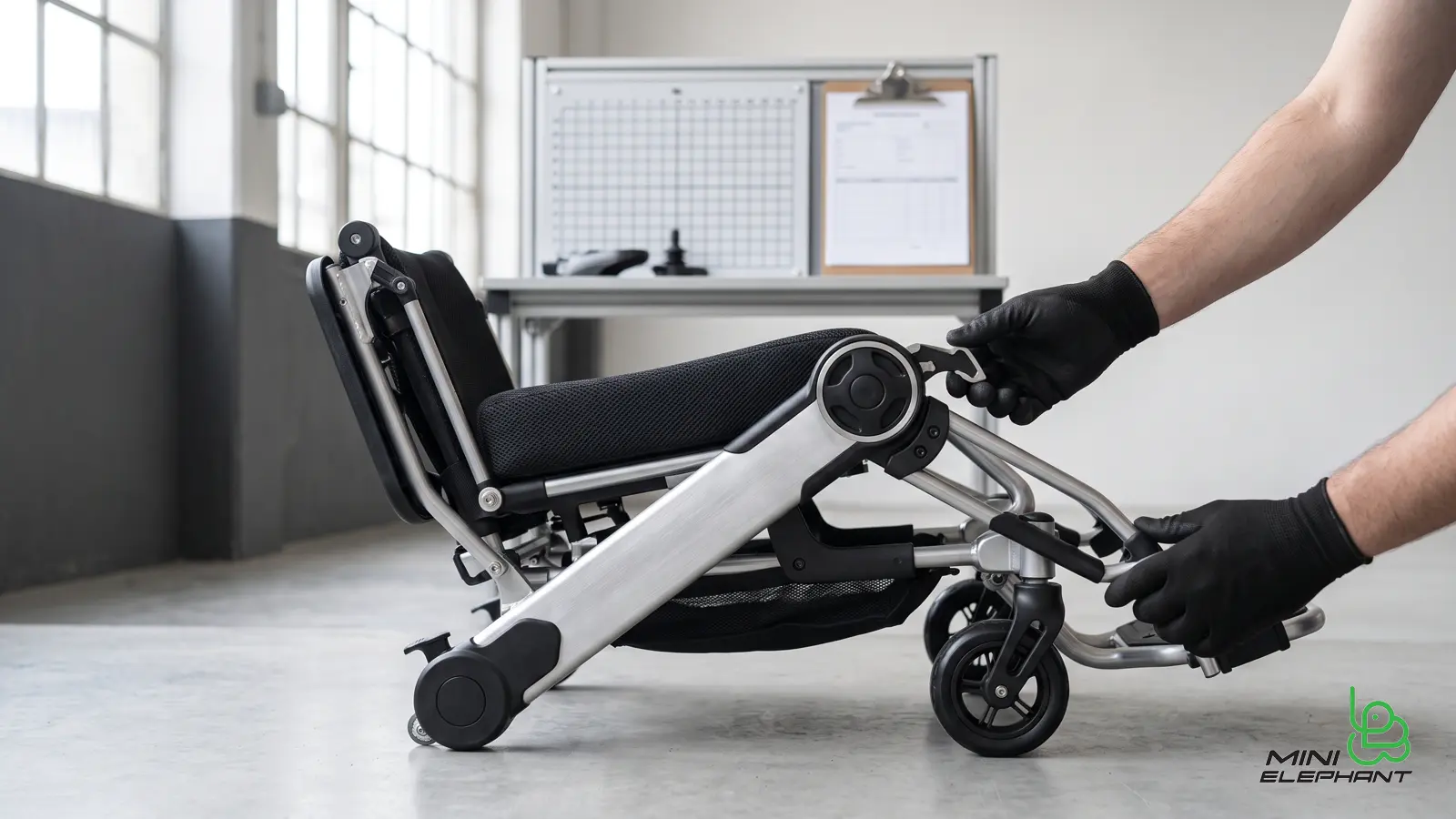
An electric wheelchair folding mechanism should be evaluated as a complete operating sequence, not as a single sales feature. Wholesale buyers need to confirm how the chair folds, which parts move, how the lock engages, what remains attached, and whether the approved sample matches the production configuration.
Why the Folding Mechanism Matters in Electric Wheelchair Sourcing
A folding electric wheelchair may suit dealers whose customers value vehicle transport, compact storage, or quick setup. Every electric wheelchair in a wholesale range should have a documented operating sequence that the sales and service teams can reproduce. But the word “folding” does not describe one universal design. Some frames fold at a central cross-brace, some collapse through a rear-frame joint, and some use removable or swing-away components as part of the storage sequence.
For an importer, the important question is not simply whether an electric wheelchair folds. It is whether the actual folding mechanism fits the planned user journey, product positioning, packaging method, demonstration process, and after-sales capability.
Map the Full Folding Sequence Before Ordering
Ask the supplier to demonstrate the complete sequence on the selected configuration. The video should show the actual electric wheelchair model, not a generic sample. Record the steps in order:
1. Prepare the electric wheelchair for folding, including any power-off or accessory position required.
2. Identify whether footrests, armrests, controller mounts, cushions, or anti-tip parts need to move or detach.
3. Operate the primary latch, release point, or folding handle.
4. Confirm the final folded position and any transport lock that holds the frame securely.
5. Unfold the chair and verify the normal operating lock engages without force.
A simple video is helpful, but it should be paired with the approved model code and visible configuration. A video of a similar electric wheelchair can hide differences in seat width, accessory mounts, wheels, controller position, or frame revision.
Confirm the Folding Points and Locking Hardware
The folding joints, latch parts, pins, cables, and lock surfaces are important inspection points. On an electric wheelchair sample, look for smooth movement, consistent engagement, and sufficient clearance around moving parts. Check whether the user or caregiver must support a heavy section of the frame during folding.
The electric wheelchair should be unfolded after each check so the team can verify the operating lock and seating geometry return to their intended position.
Do not assume a compact folding action is automatically easy to use. A mechanism can be compact yet require awkward hand positions, several separate actions, or a careful order of operations. Ask for the operating instructions and have a representative salesperson or technician repeat the sequence without coaching.
Record Dimensions and Handling as Configuration Data
Folded size should be recorded with the chosen seat, wheels, controller bracket, cushion, and accessories fitted. An electric wheelchair measurement from a base model may not apply to the unit you plan to sell.
For your electric wheelchair purchase specification, list:
- Open and folded length, width, and height.
- Gross chair weight and the handling method expected during lifting.
- Components that remain attached, fold inward, swing away, or are removed.
- Locking positions for storage and transport.
- Any accessory that changes folded size or the folding sequence.
- The approved carton arrangement and packing protection around the folding frame.
These details help a distributor prepare product pages, warehouse handling instructions, customer demonstrations, and spare-parts records without overstating portability or ease of use.
Include Folding Checks in Sample Approval and Inspection
During electric wheelchair sample review, repeat the folding and unfolding process several times with the selected accessories fitted. Observe whether the frame closes consistently, whether cables remain protected, and whether locks align as intended. Document the check with photos or video of the approved electric wheelchair sample.
For electric wheelchair production inspection, use the same written sequence. Confirm that the electric wheelchair configuration, frame revision, latch hardware, labels, and accessories match the approved record. If a supplier proposes a change to the mechanism, handle it as a configuration change that needs written confirmation before shipment.
Questions to Add to an Electric Wheelchair RFQ
Include these questions when requesting a folding electric wheelchair quotation. They help confirm whether the selected electric wheelchair can be demonstrated, packed, serviced, and sold with consistent instructions:
- What is the exact folding and unfolding sequence for this electric wheelchair configuration?
- Which components must be adjusted or removed before folding?
- What locks secure the chair in folded and open positions?
- Which options affect folded dimensions or handling?
- Can the supplier provide operating instructions, drawings, and sample evidence for the chosen model?
- Which replacement parts relate to the folding mechanism and how are they identified for the electric wheelchair service file?
Final Takeaway
A folding electric wheelchair is easier to source when the folding mechanism is treated as an approved, documented system. Validate the complete sequence on the real electric wheelchair sample, record the configuration-specific dimensions and locks, and use the same checklist during electric wheelchair production inspection. This gives wholesale buyers a clearer basis for electric wheelchair sales training, electric wheelchair warehouse handling, and long-term product support.
Interested in MiniElephant Electric Wheelchairs?
Get a customized quotation and product recommendation from our export team. Response within 24 hours.