Electric Wheelchair Suspension Selection Guide for B2B Buyers
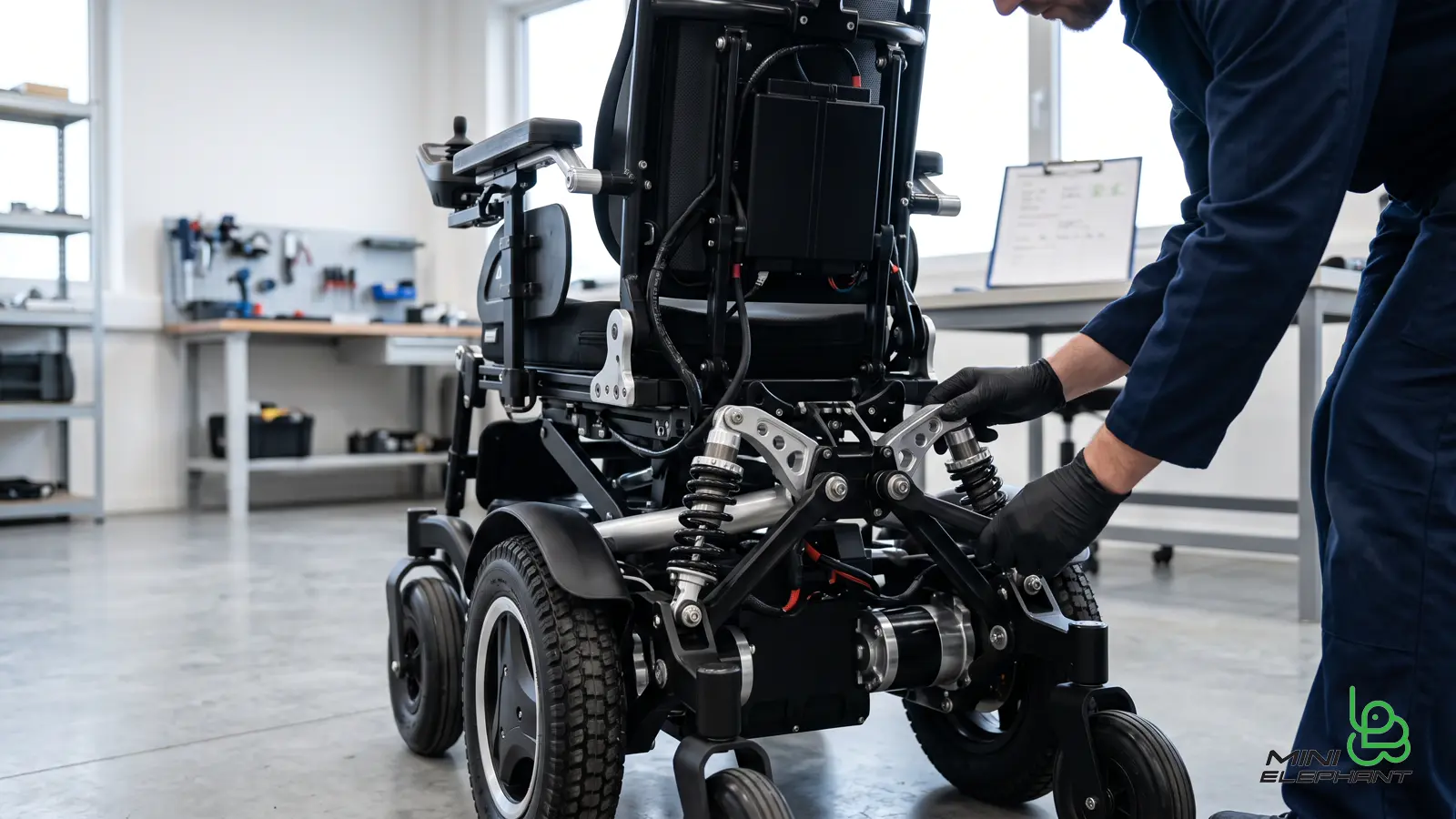
Suspension is a system-level choice in an electric wheelchair. For B2B buyers, it should be assessed alongside wheel size, tires, seating, user weight range and the surfaces the chair is expected to cross. A specification that looks impressive on paper is useful only when its travel, damping and service requirements fit the intended product line.
Why Suspension Matters in Electric Wheelchair Procurement
A suspension system helps drive wheels maintain contact with uneven ground while reducing shocks transferred to the user and frame. On an indoor-focused chair, a simple setup may be appropriate. Where users regularly cross paving joints, ramps, rough sidewalks or mixed indoor-outdoor routes, better shock management can improve perceived quality and reduce fatigue.
For distributors, the goal is not to select the most complex mechanism by default. It is to match the suspension design to real usage conditions, target price and local after-sales capacity.
Suspension Layouts to Compare
Rigid or minimal-compliance frames
Some lightweight or compact electric wheelchairs use a largely rigid chassis, with pneumatic tires providing most of the compliance. This can support lower chair weight, straightforward manufacturing and easier maintenance. Buyers should confirm the intended surface conditions and ensure sales materials do not imply all-terrain performance.
Front, rear or mid-frame shock absorption
A spring, elastomer or damper arrangement at one end of the chassis can reduce impacts from specific obstacles. Ask the supplier which wheels remain in contact during a transition, how the mechanism behaves under different user loads and whether replacement parts are available as separate service items.
Four-wheel or independent suspension
More sophisticated systems can improve stability and comfort over irregular ground, particularly on full-size outdoor-capable models. They may also add weight, complexity and adjustment requirements. Evaluate them through sample testing rather than relying on travel figures alone.
A Practical B2B Evaluation Checklist
Before approving a suspension configuration, request and document:
- Wheelchair gross weight, safe working load and recommended user-weight range.
- Suspension travel, spring or damper type, and any preload adjustment method.
- Tire specification and pressure range, since tires strongly influence ride behavior.
- Test results for vibration, obstacle crossing and braking on intended surface types.
- Exploded views, replacement-part codes and service instructions for wear components.
- Warranty conditions for springs, dampers, bushings and mounting hardware.
Run a controlled sample evaluation with a representative user weight, accessories fitted and battery installed. Test smooth floors, ramp transitions, paving joints and the uneven surfaces common in the destination market. Record changes in steering effort, traction, noise and seat movement.
Balance Comfort, Stability and Transport Weight
More compliance is not automatically better. Excessive movement can affect seat stability, turning behavior and user confidence. A chair intended for frequent vehicle transport may prioritize compactness and lower lifting weight over long suspension travel.
Compare the complete chair rather than one feature. A well-matched tire, seat cushion and frame geometry can make a moderate suspension system appropriate for its segment. Conversely, strong suspension claims cannot compensate for unsuitable tires or poor component integration.
Questions to Include in Your RFQ
Add suspension requirements alongside drive system and terrain use. State the intended terrain, user-weight range, product positioning and target service life. Ask the manufacturer to identify options that change the bill of materials, lead time or certification documentation.
For a private-label range, request consistent option naming and a clear configuration code. This helps dealers order correct spare parts and prevents confusion when similar frames are sold with different suspension packages.
Final Takeaway
The right electric wheelchair suspension supports the intended journey without creating unnecessary cost or service complexity. Validate it on a complete sample, compare maintenance needs with local support capability and document the approved setup in the purchase specification.
Interested in MiniElephant Electric Wheelchairs?
Get a customized quotation and product recommendation from our export team. Response within 24 hours.