
MiniElephant Electric Wheelchair
NEWS & INSIGHTS

Buying Guides

How to compare models, match an application, inspect a shipment and calculate cost of ownership.

Topic

Buying Guides

How to compare models, match an application, inspect a shipment and calculate cost of ownership.

27 articles · page 1 of 2

Electric Wheelchair Tender Specifications: A B2B Buyer Guide

Buying Guides·

Electric Wheelchair Tender Specifications: A B2B Buyer Guide

A clear tender specification helps hospitals, distributors, and public-sector buyers compare electric wheelchairs on safety, fit, service, and total cost instead of incomplete headline features. This B2B guide explains the technical, documentation, delivery, and after-sales requirements to define before inviting supplier quotations.

Read article →
Electric Wheelchair Manufacturer: How to Evaluate a Reliable Factory

Buying Guides·

Electric Wheelchair Manufacturer: How to Evaluate a Reliable Factory

Choosing an electric wheelchair manufacturer is a quality and supply-chain decision, not only a price comparison. This practical B2B guide explains how importers and distributors can assess product consistency, specification transparency, factory communication, sample approval, and after-sales support before placing a repeat order.

Read article →
Electric Wheelchair for Muscular Dystrophy: B2B Guide to MD Mobility

Buying Guides·

Electric Wheelchair for Muscular Dystrophy: B2B Guide to MD Mobility

Muscular dystrophy is a progressive muscle-wasting condition whose users lose strength and motor control over time, so their wheelchair must be re-specified around changing posture, weakening grip, and growing fatigue. This B2B guide covers the features an electric wheelchair needs for MD users — alternative controls, tilt and recline seating, lightweight folding design, and caregiver support — with a decision framework for distributors serving this loyal segment.

Read article →
Electric Wheelchair for Children: Pediatric Mobility Buying Guide

Buying Guides·

Electric Wheelchair for Children: Pediatric Mobility Buying Guide

Children who cannot walk independently face a decade or more of growing inside their mobility equipment, so a pediatric electric wheelchair must adjust as the child grows, support proper postural development, and stay safe under young drivers. This B2B guide covers the features that define a pediatric electric wheelchair — grow-with-the-child sizing, pelvic and lateral positioning, attendant and joystick control, and transport safety — so distributors can serve the pediatric segment with confidence.

Read article →
Electric Wheelchair for Cerebral Palsy: B2B Guide to CP Mobility

Buying Guides·

Electric Wheelchair for Cerebral Palsy: B2B Guide to CP Mobility

Cerebral palsy is the most common childhood motor disability, and its users sit, move, and control differently depending on whether the condition is spastic, dyskinetic, or ataxic. This B2B guide explains how CP affects wheelchair choice — postural support, pelvic stability, alternative controls, and growth adjustability — and gives distributors a framework for matching an electric wheelchair to a CP user's specific movement patterns.

Read article →
Electric Wheelchair for Spinal Cord Injury: B2B Guide to SCI Mobility

Buying Guides·

Electric Wheelchair for Spinal Cord Injury: B2B Guide to SCI Mobility

Spinal cord injury (SCI) is one of the largest clinical markets for powered mobility, and the users are typically younger, more active, and more demanding than the average wheelchair buyer. This B2B guide covers the features an electric wheelchair needs for SCI users — tilt-in-space and pressure management, drive-system selection, transfer-friendly seating, and shoulder-protecting controls — so distributors can serve a lifelong, insurance-funded customer segment with confidence.

Read article →
Electric Wheelchair for ALS Patients: B2B Guide to Adaptive Mobility

Buying Guides·

Electric Wheelchair for ALS Patients: B2B Guide to Adaptive Mobility

ALS progressively weakens the muscles used for walking, sitting, and even breathing, so mobility equipment must adapt quickly as the condition changes. This B2B guide covers the features an electric wheelchair needs for ALS and motor neurone disease patients — head-array and switch controls, tilt-in-space seating, ventilator mounting, and caregiver push mode — with practical advice for distributors serving this high-value segment.

Read article →
Electric Wheelchair for Stroke Survivors: Features and B2B Buying Guide

Buying Guides·

Electric Wheelchair for Stroke Survivors: Features and B2B Buying Guide

Stroke is one of the world’s leading causes of long-term disability, and most survivors lose function on one side of the body — which changes every interaction with a wheelchair. This guide reviews the features an electric wheelchair needs for stroke survivors — one-hand control, transfer-friendly seating, caregiver modes — so B2B buyers can stock models that genuinely serve this large segment.

Read article →
Electric Wheelchair Cost of Ownership: 3-Year Expense Comparison

Buying Guides·

Electric Wheelchair Cost of Ownership: 3-Year Expense Comparison

The invoice price of an electric wheelchair is only 40-60% of what it costs to own over three years, and B2B buyers who ignore total cost of ownership leave margin on the table. This comparison reviews electric wheelchair costs across entry, mid-range, and premium tiers — battery replacement, maintenance, warranty, and parts — with a decision framework for importers.

Read article →
Electric Wheelchair vs Manual Wheelchair: 2026 B2B Buyer Guide

Buying Guides·

Electric Wheelchair vs Manual Wheelchair: 2026 B2B Buyer Guide

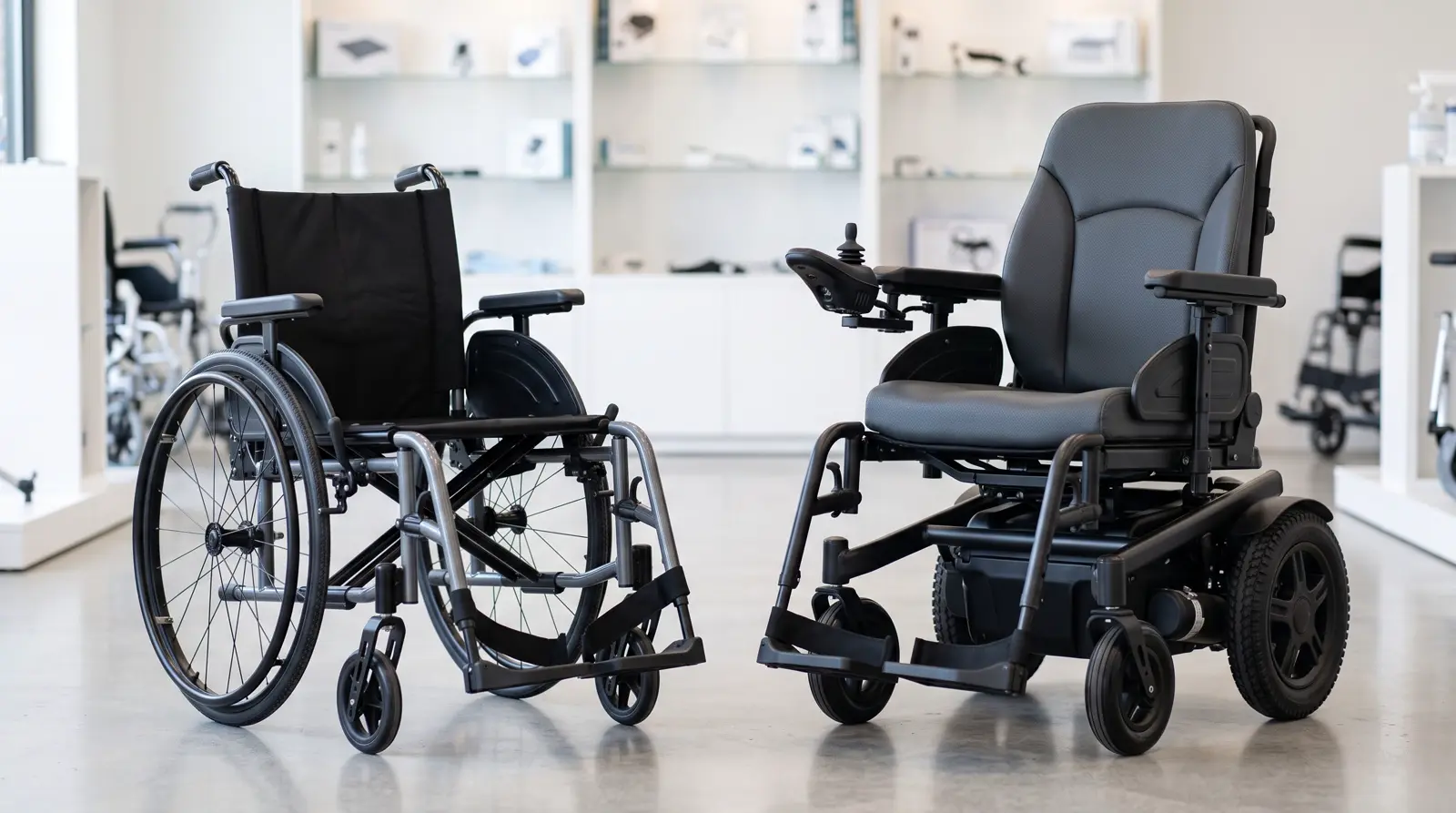
Electric wheelchairs and manual wheelchairs serve different end users, cost structures, and logistics profiles, and most B2B distributors need both in their catalog. This data-driven comparison covers weight, speed, range, total cost of ownership, caregiver load, and a four-step decision framework for stocking the right mix.

Read article →
Electric Wheelchair for Parkinson's Disease: A B2B Guide to the PD Market

Buying Guides·

Electric Wheelchair for Parkinson's Disease: A B2B Guide to the PD Market

Parkinson's disease affects more than 10 million people worldwide, making it one of the most important neurological conditions for electric wheelchair distributors. This B2B guide covers the specific mobility needs of Parkinson's patients — tremor, rigidity, postural instability, freezing of gait, and fatigue — with recommended wheelchair features, model selections, and marketing guidance for the PD segment.

Read article →
Electric Wheelchair for Senior Citizens: A Complete B2B Guide to the Elderly Mobility Market

Buying Guides·

Electric Wheelchair for Senior Citizens: A Complete B2B Guide to the Elderly Mobility Market

The global senior population aged 65+ exceeds 780 million, making elderly mobility the largest addressable market for electric wheelchair distributors. This B2B guide covers the specific needs of senior users — including ease of operation, comfort for extended use, caregiver-friendly features, and fall prevention — with model recommendations for different care scenarios.

Read article →
Electric Wheelchair Pricing Strategy for B2B Importers: Margins, Tiers and Landed Cost Analysis

Buying Guides·

Electric Wheelchair Pricing Strategy for B2B Importers: Margins, Tiers and Landed Cost Analysis

Setting the right price for electric wheelchairs in your target market requires understanding the full landed cost structure, competitive positioning, and margin expectations across distribution channels. This guide covers FOB vs landed cost breakdown, pricing tiers for different market segments, margin benchmarks for distributors and dealers, and strategic recommendations for B2B importers entering new markets.

Read article →